CUNA: restoring Carlson Park and beautifying Valley West 

by Ruby Cayenne 

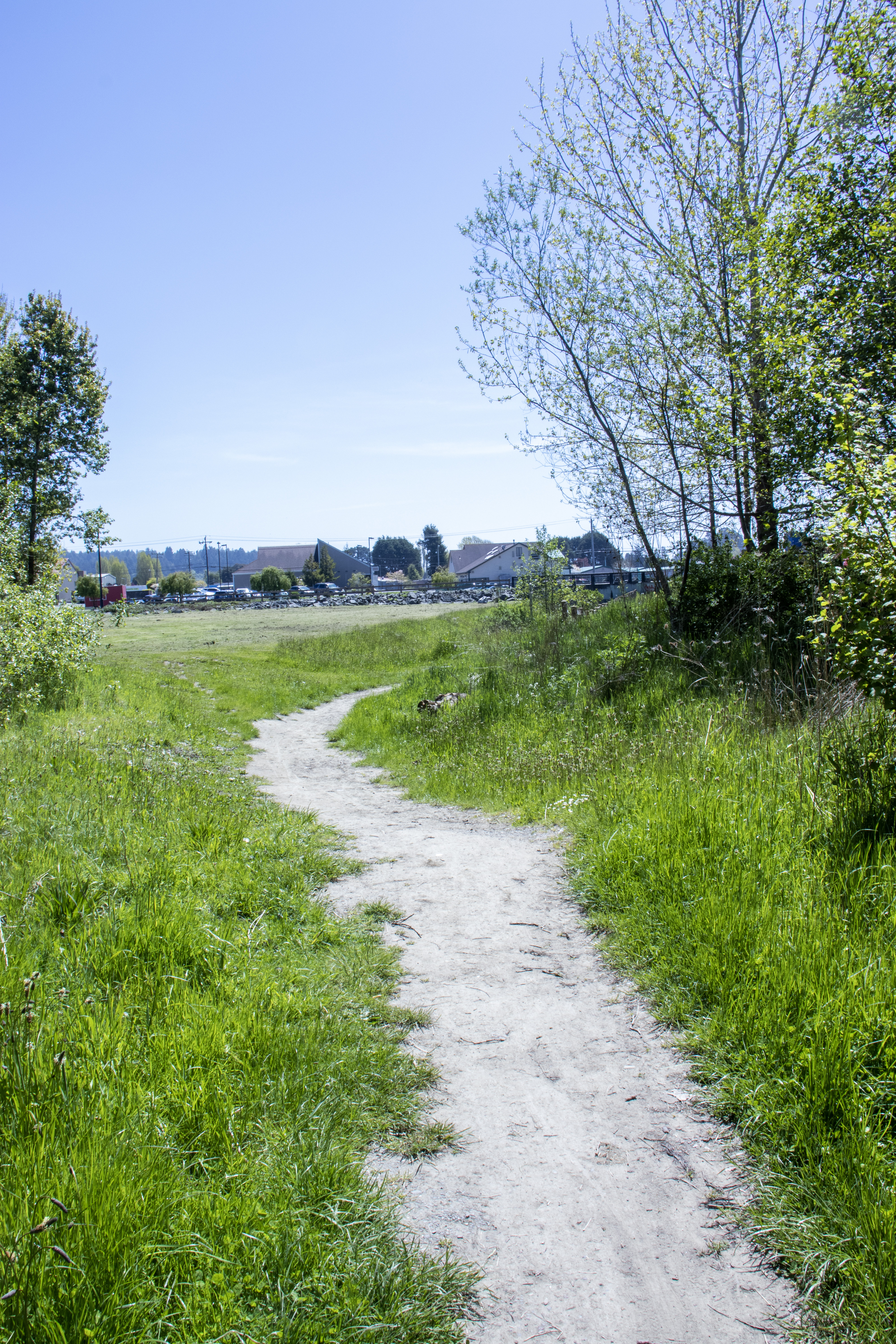
 Carlson Park in Valley West | Photo by Ruby Cayenne

On Thursday, April 6, State Senator Mike McGuire joined Arcata City Council members and Comunidad Unida Del Norte De Arcata (CUNA) co-coordinators to give $1 million for the development of Carlson Park in Valley West. In total, the park has been endowed with $2.5 million in funding for restoration. Other grants came from the Wildlife Conservation Board and Rural Recreation and Tourism. 

CUNA has been a vital motivator of this project, by adopting the park, holding clean-ups and continually advocating for it to the City of Arcata. CUNA is deeply involved with the beautification of the entire North Arcata area since its formation during the COVID-19 pandemic. 

The grants funding the Carlson Park restoration will be used to build a playground, a picnic area, and a special events area. Improving river access and trails will allow for boating and swimming in the Mad River. The park will also have public restrooms, pickleball, and multi-use courts. 

“Redwood Coast Energy Authority will be collaborating for EV charging stations at a planned parking lot,” said Emily Sinkhorn, Director of Environmental Services. 

CUNA is co-coordinated by three women who have been living or serving in the community of Valley West for decades. Kimberly White is an Arcata City Council member and graduate of Cal Poly Humboldt. Eibar Romero is currently studying Critical Race, Gender and Sexuality Studies at CPH. Laura Muñoz is a “bilingual dance and theater maker, educator, somatics practitioner, and community organizer,” according to the CUNA website. 

“They’re [the City of Arcata] going to be doing bilingual signage on the trails in Spanish, English, and Wiyot language, invasive species removal, and planting native species. There’s going to be an Americans with Disabilities Act (ADA) compliant lookout. So, those who cannot make it down the trails are going to get this incredible view of our wonderful Mad River right there,” White said. 

I’m excited about the opportunities to really build community and hopefully also bridge the different demographics,” Muñoz said. “It’s not a moment too soon that Carlson Park is going to be available for families, for kids, for recreation, and really to work for a better way of living like kids playing outside and being outdoors.” 

In the Valley West community, CUNA has incorporated the participatory budgeting process into its work by speaking with a wide range of demographics in the community including the elderly, Latinx and unhoused. These conversations brought attention to the fact that there was less of a desire for grand gestures and more for securing essential services. “They were not thinking big. They were just like we need police out here. We need a garbage can. You know, just the basics,” White said. 

Not only did CUNA provide those basics to Valley West, but they were also able to secure barbecue facilities that are ADA compliant, plant fruit trees, have dance classes and have children’s theater. They have organized and facilitated tianguis, a Latinx style open-air market and block parties for disaster preparedness and community building. This showcased local mariachi bands and artists and intent on developing a community garden, reported CUNA co-coordinators. 

“Valley West hasn’t received a lot of attention years back, so it’s super awesome and I think it makes the Latinx community feel heard or seen that there is going to be attention to that community where they live,” Romero said. 
Unangax̂ nigilax̂ built in community partnership

by Ruby Cayenne

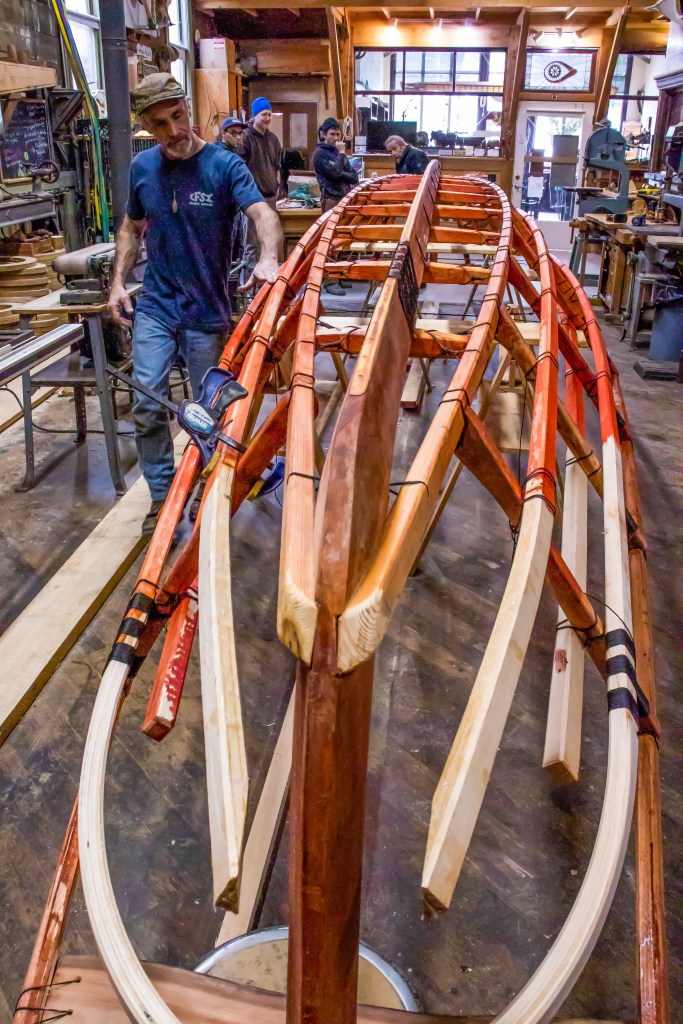
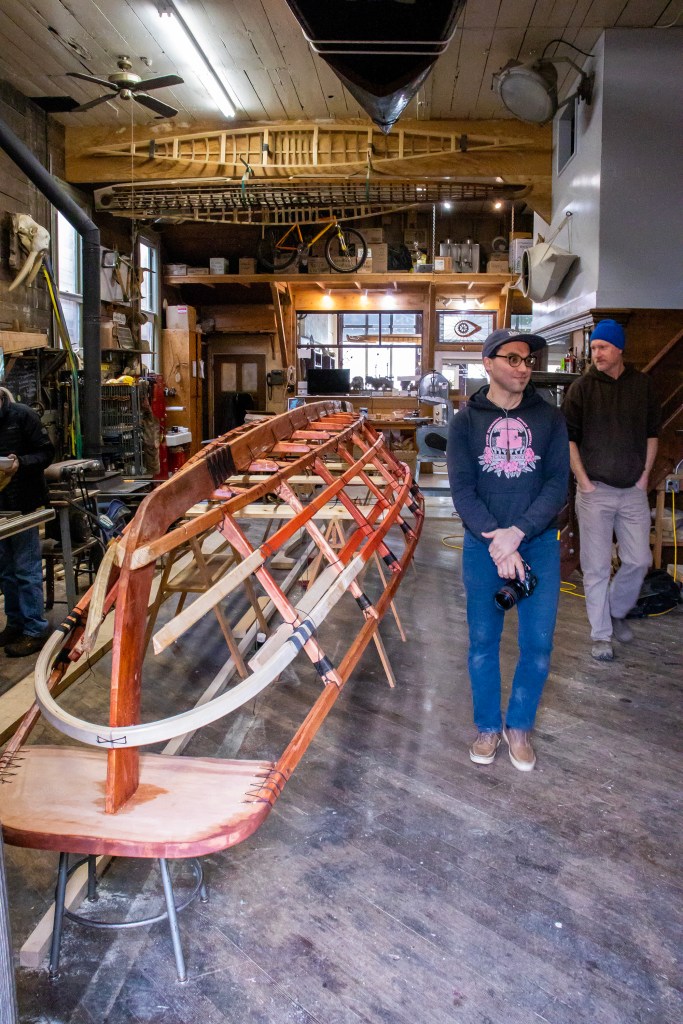
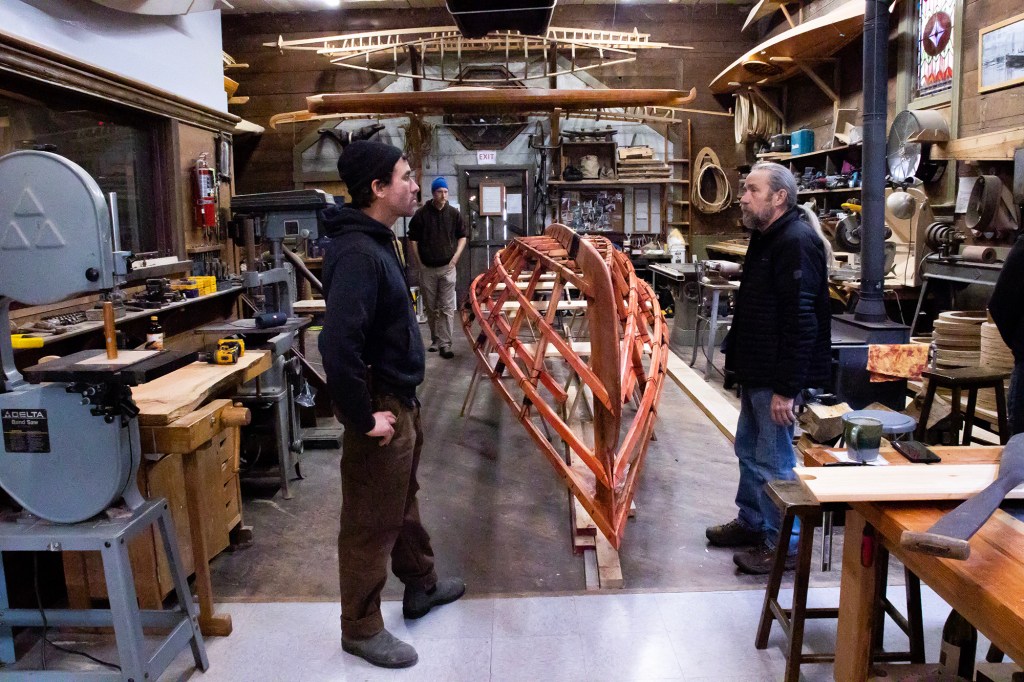
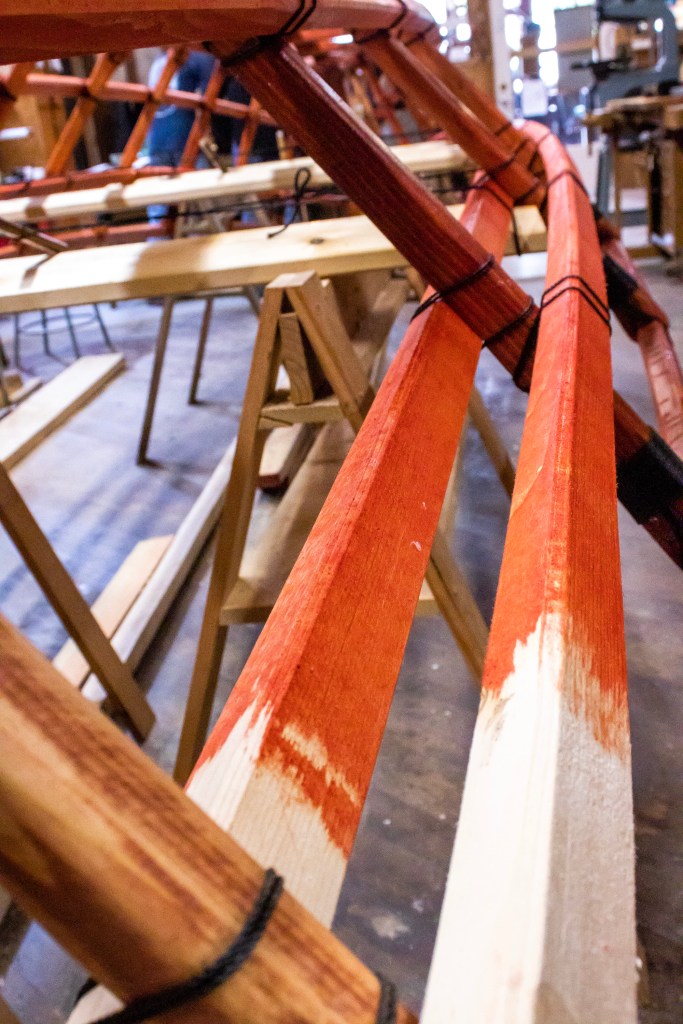
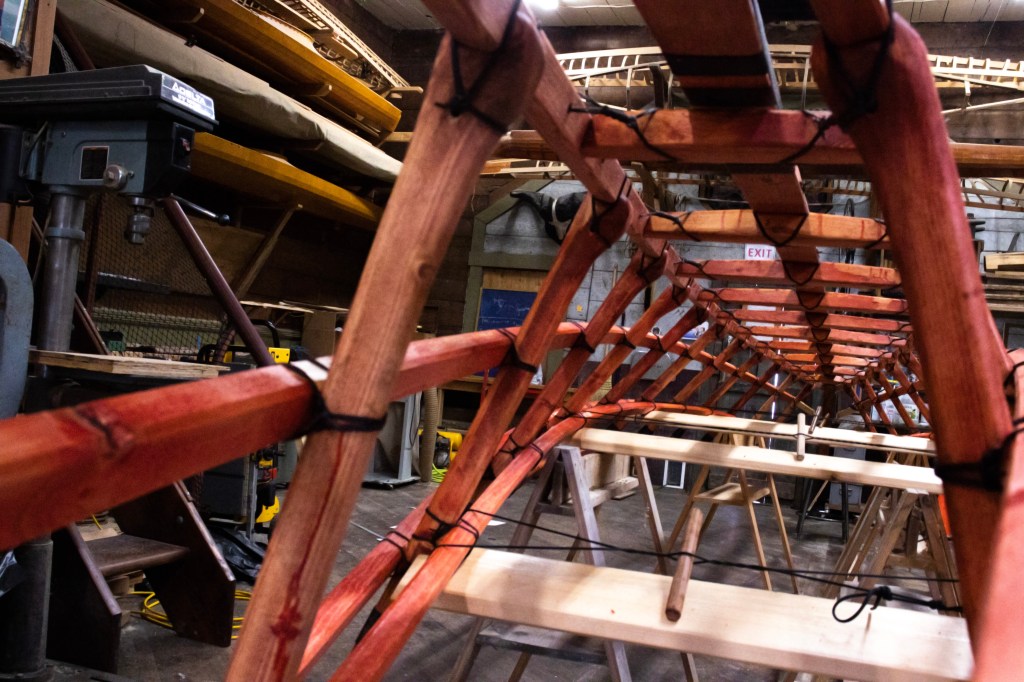
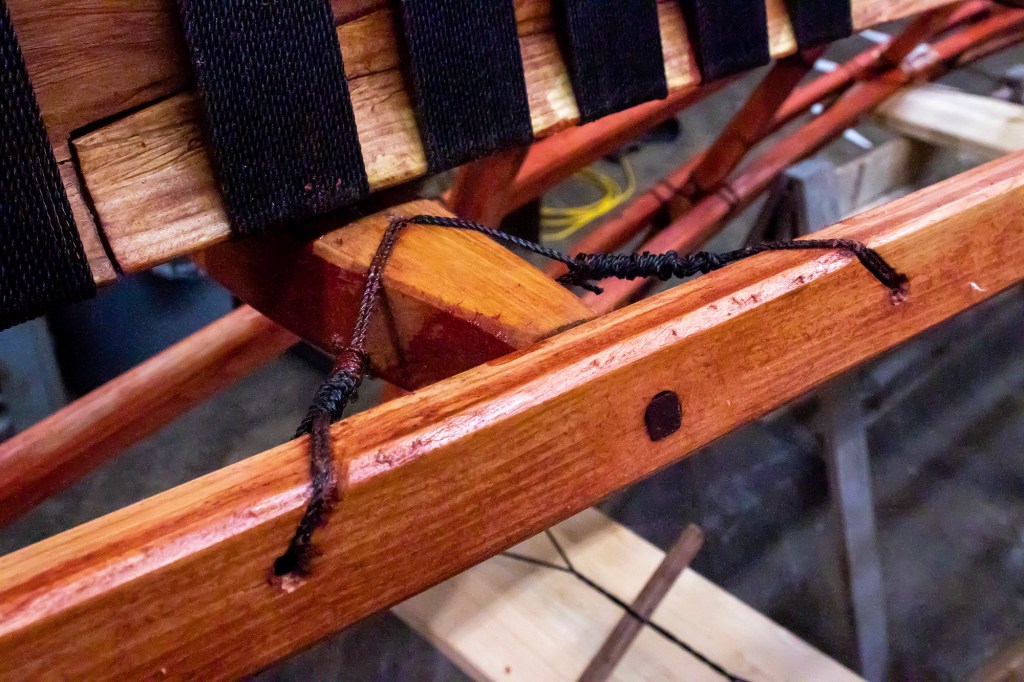
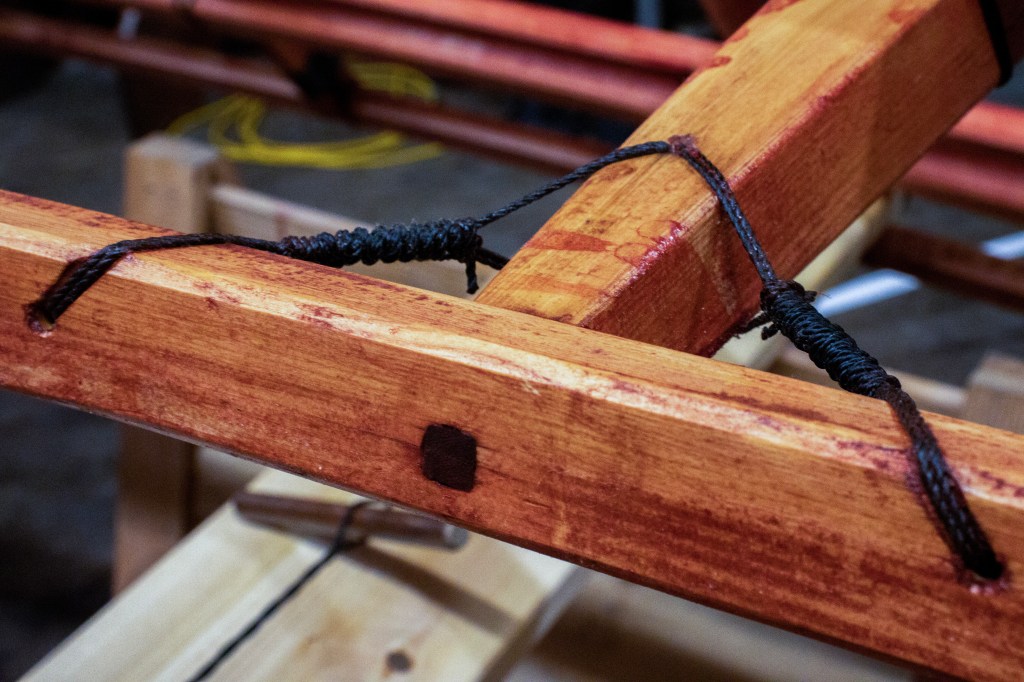
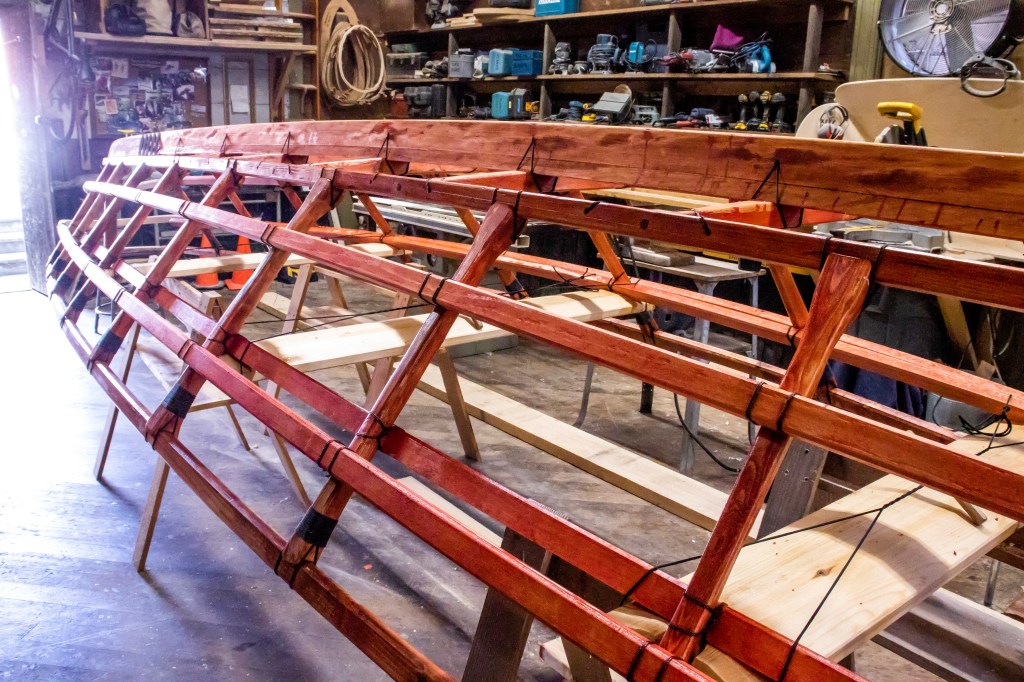
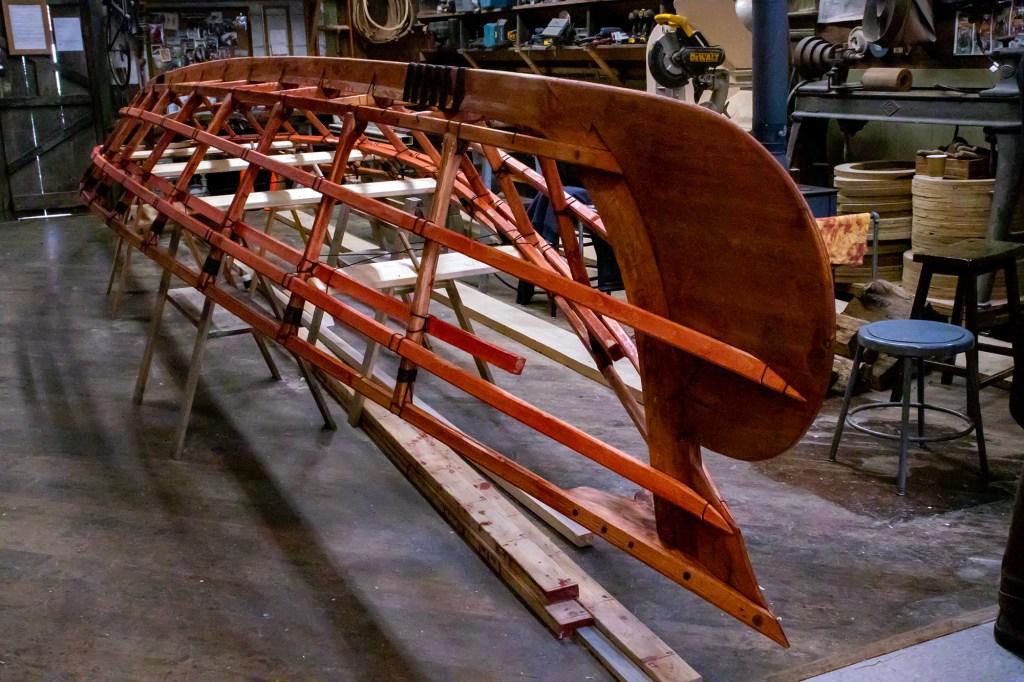
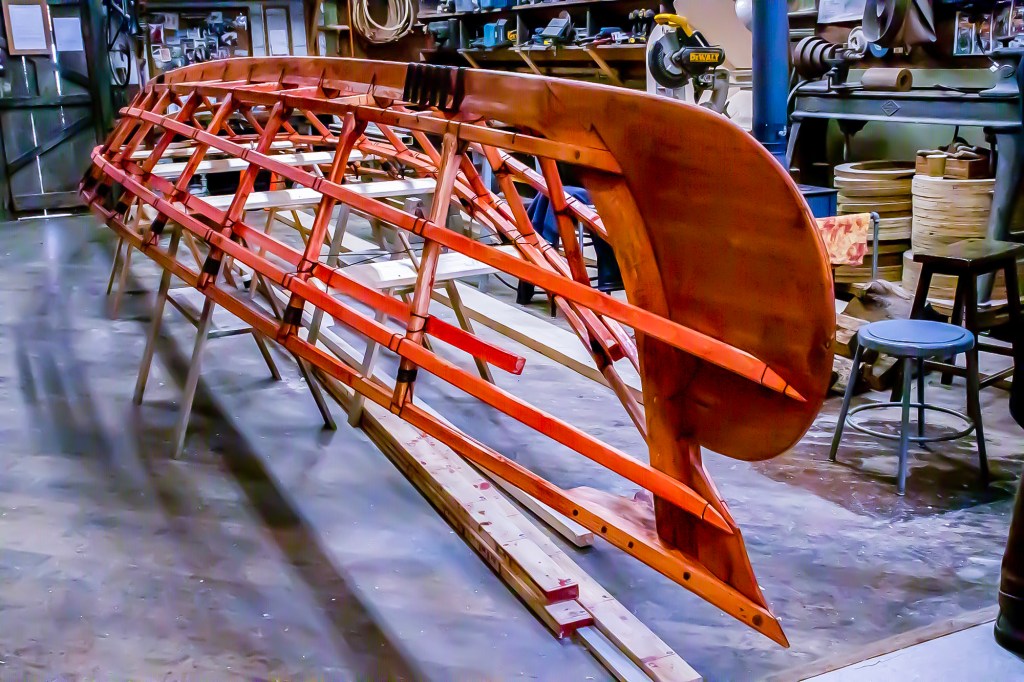
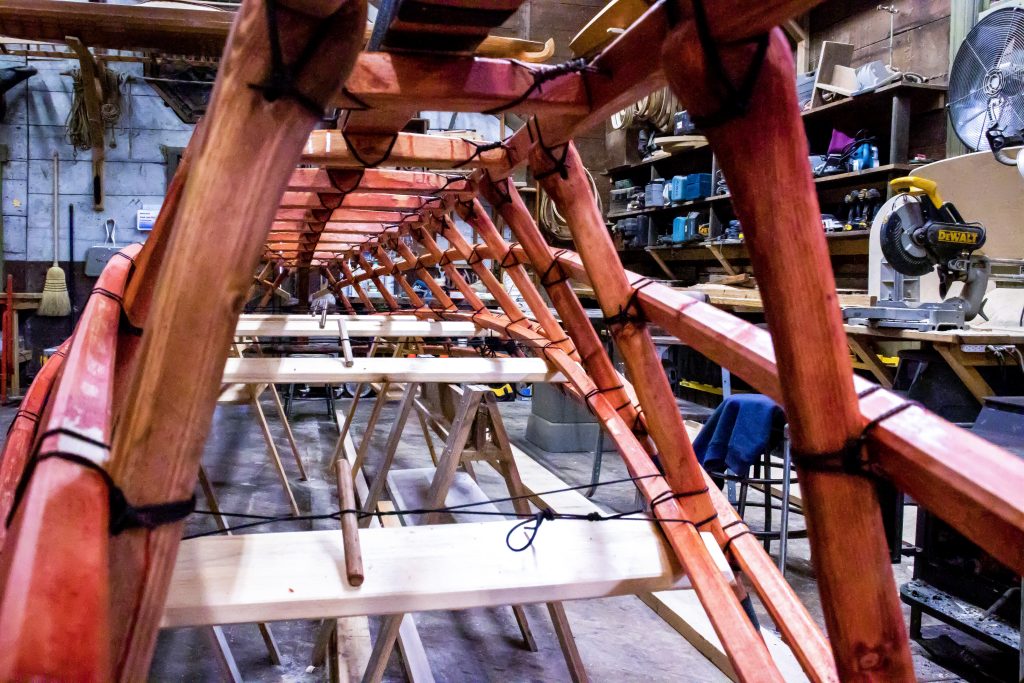
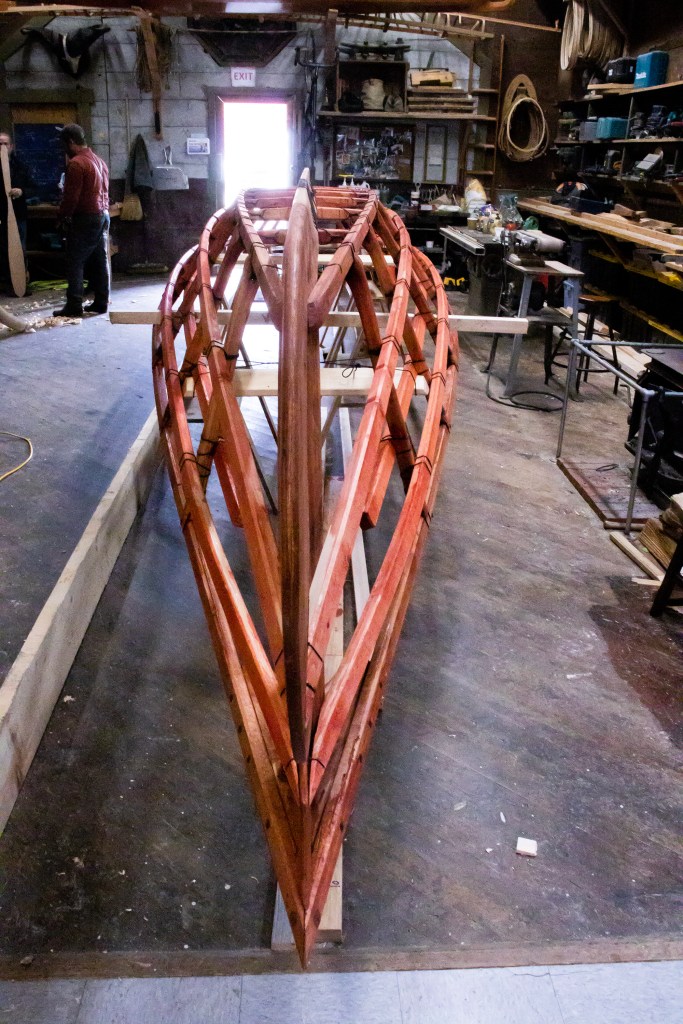
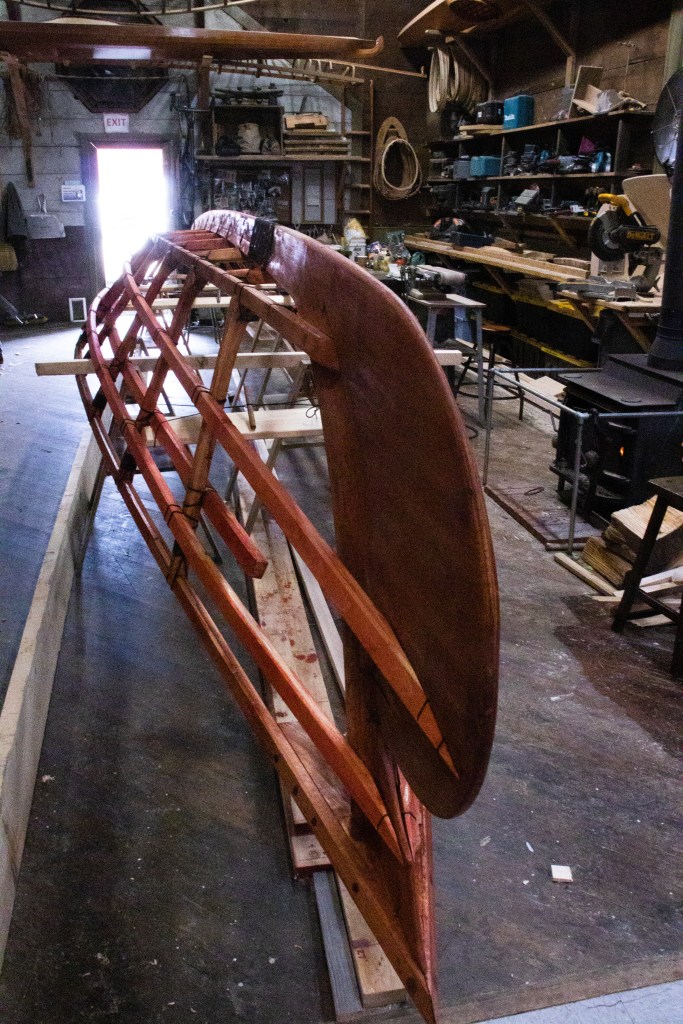
The nigilax̂ vessel from below. | Photo by Ruby Cayenne

Editor’s Note: Ruby Cayenne’s family has participated in the building of the nigilax̂ at Mind’s Eye Factory.

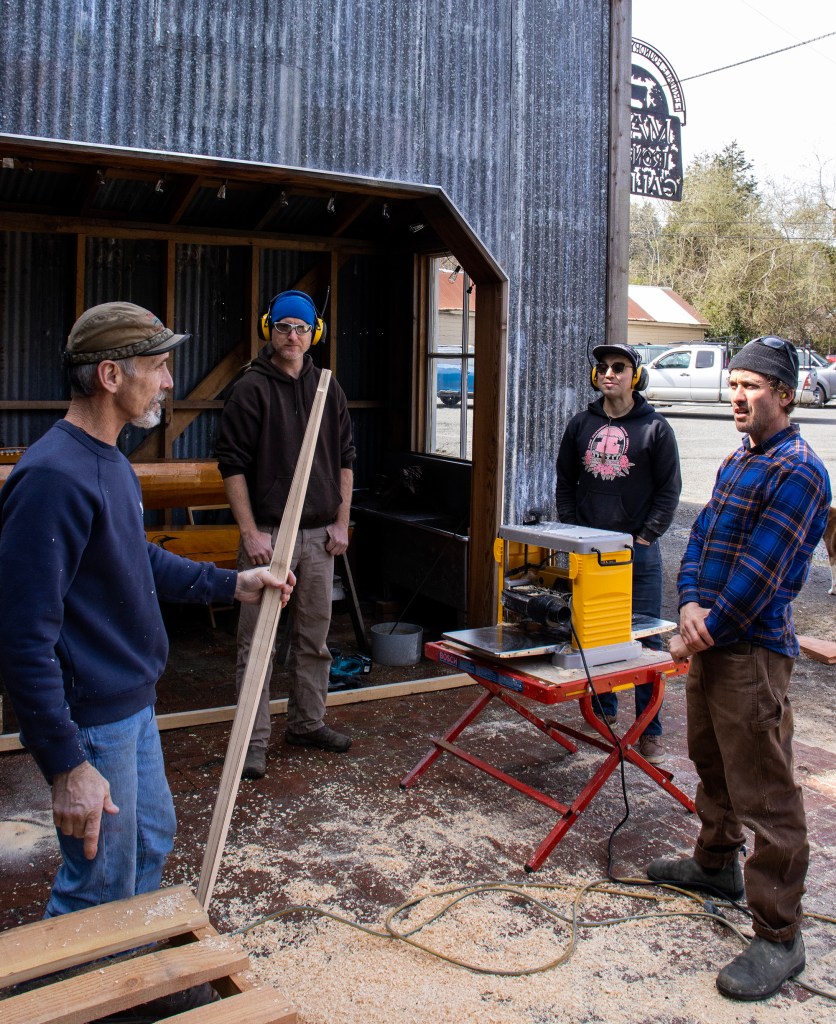
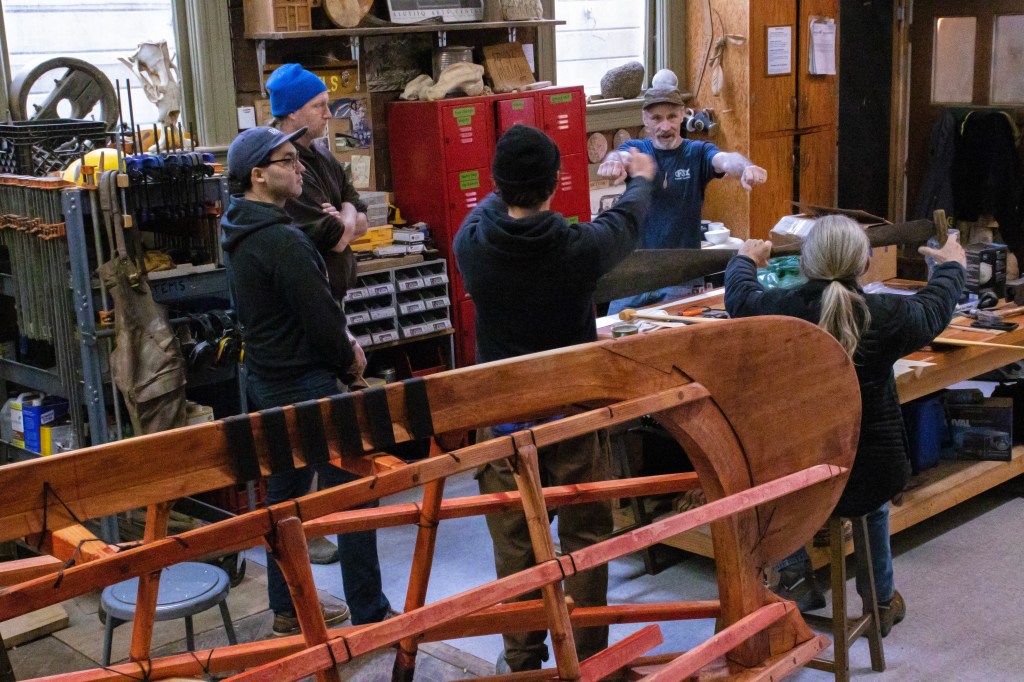
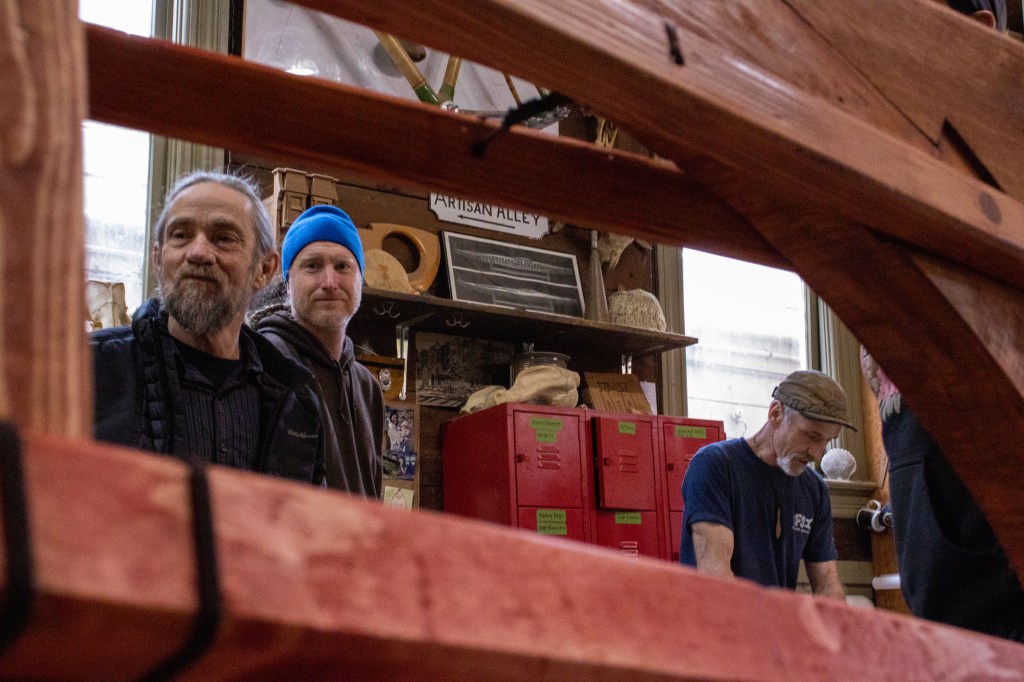
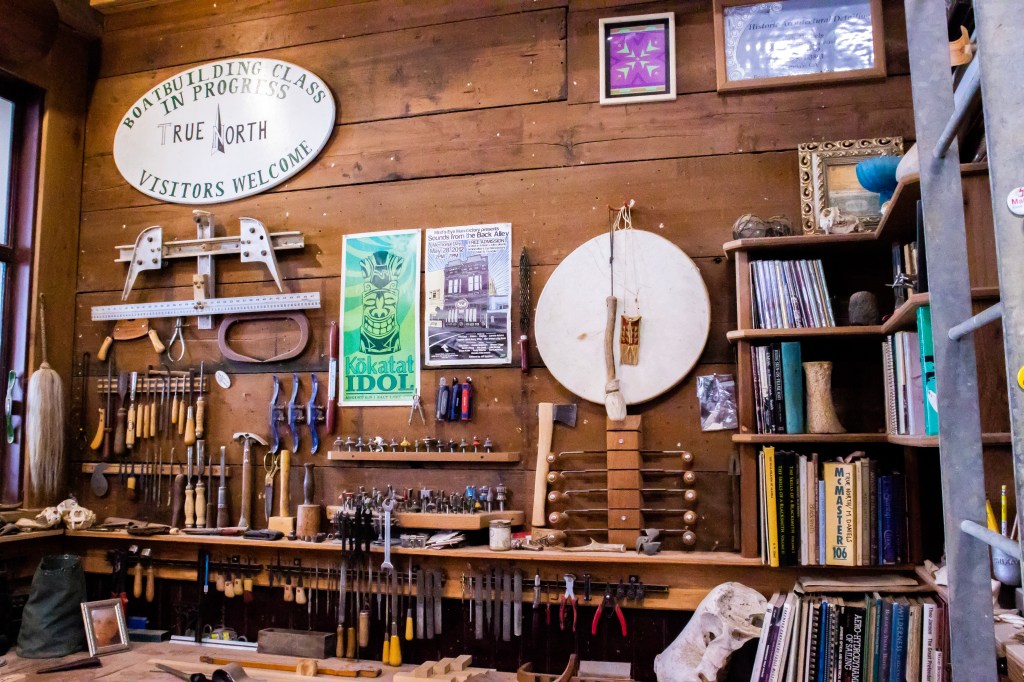
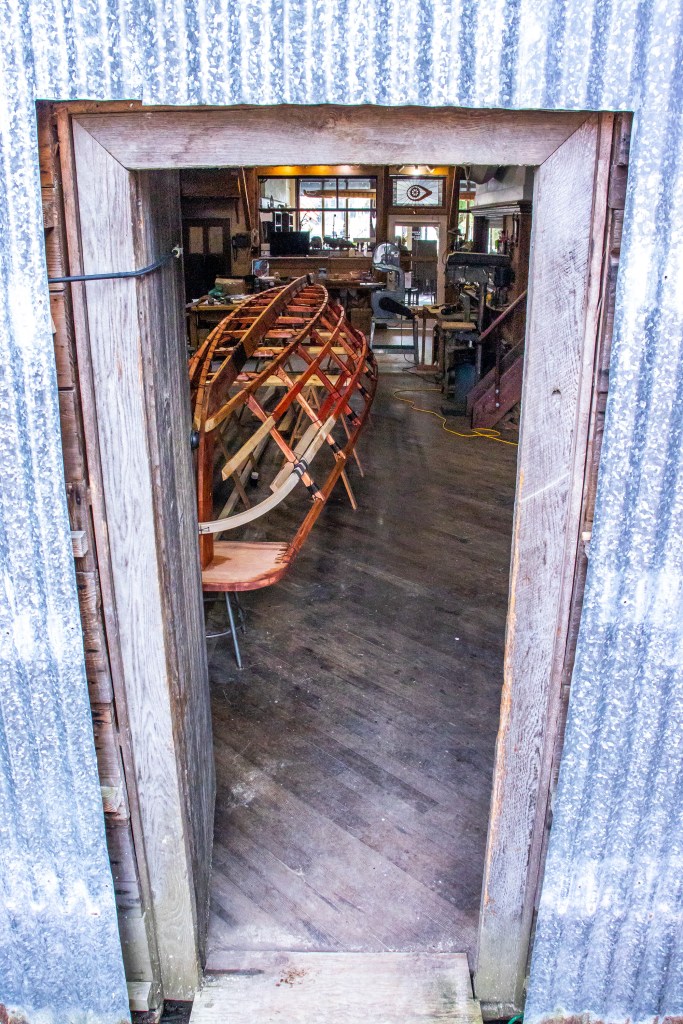
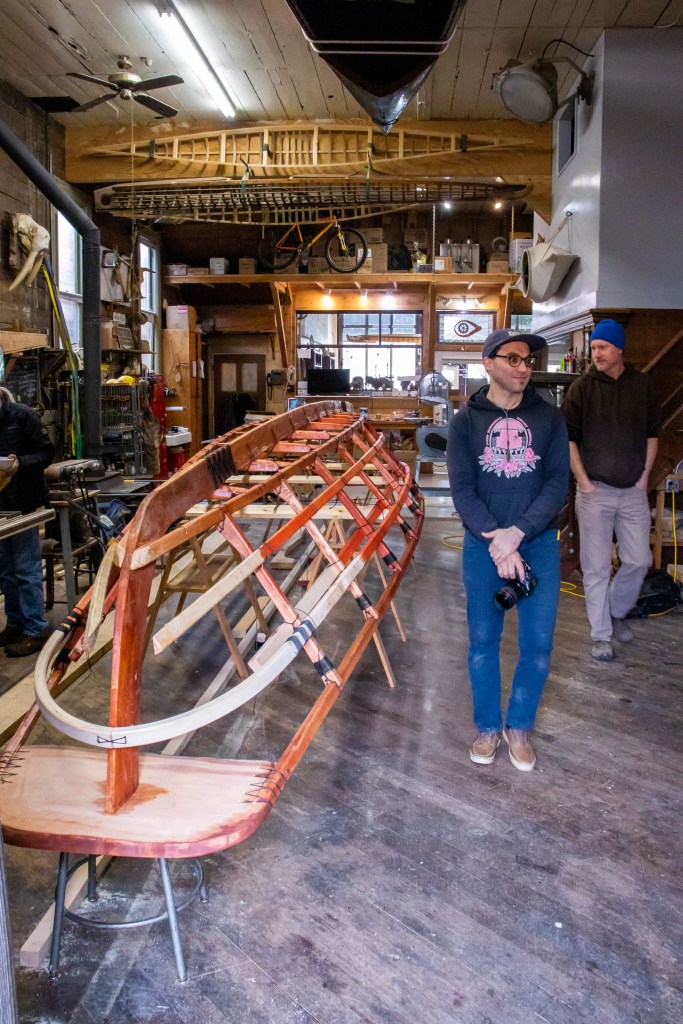
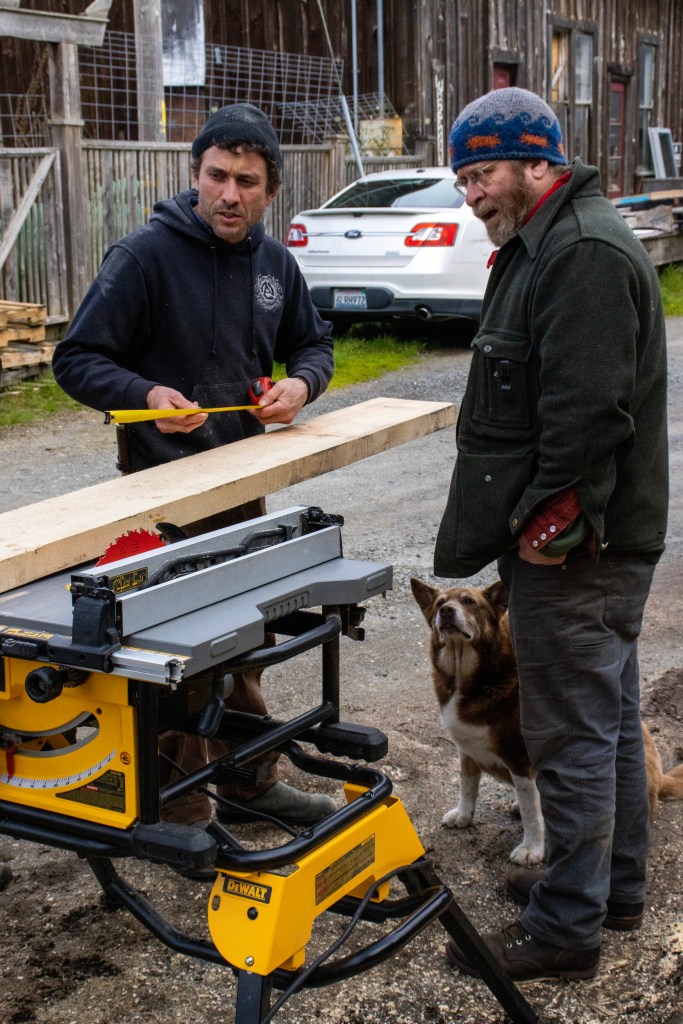
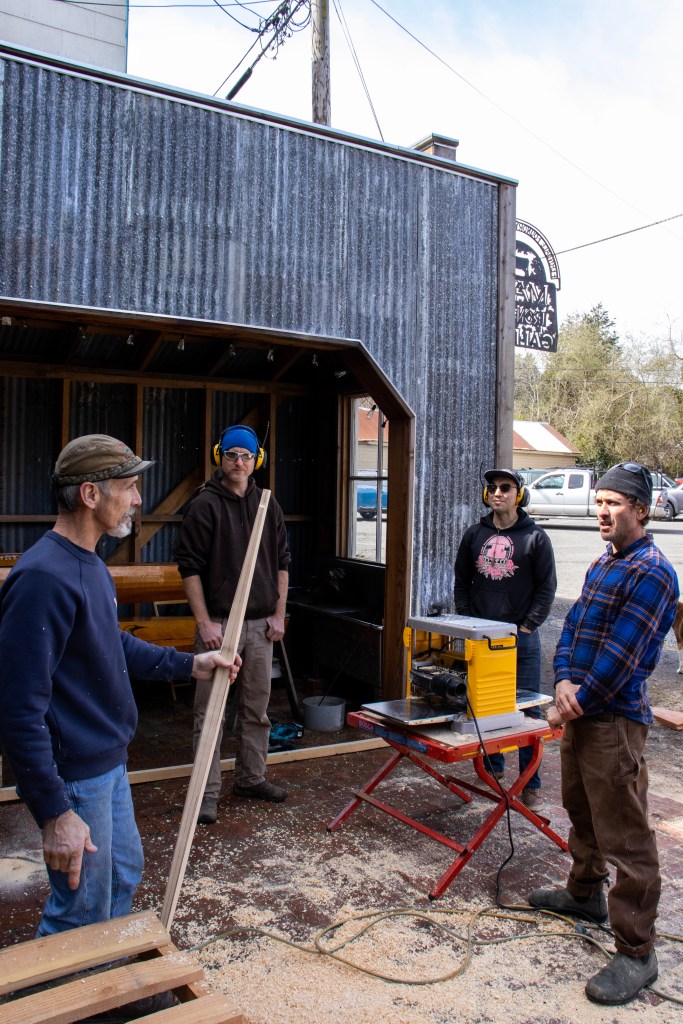
A Journey Across Time is an intertribal and community project bringing to life one of the first nigilax̂ in many centuries, the traditional vessel of the Unangax̂ people of Unalaska. It is being built at Mind’s Eye Manufactory in Ferndale, owned and run by Marc Daniels-Aygagnax̂.

Centuries ago, all the nigilax̂ vessels in existence were intentionally destroyed by Russian colonizers who arrived with extractive intentions. They enslaved many of the Unangax̂ people to take advantage of their superior hunting abilities and took “Unangan women and children hostage, demanding furs in exchange for their lives,” the National Institute of Health said.

Many Unangax̂ people were forcefully taken on an otter hunt that spanned the continent from Alaska, and down through the pacific coast. They stopped in what is now called Metini by Indigenous peoples and Fort Ross, CA by the U.S. government.

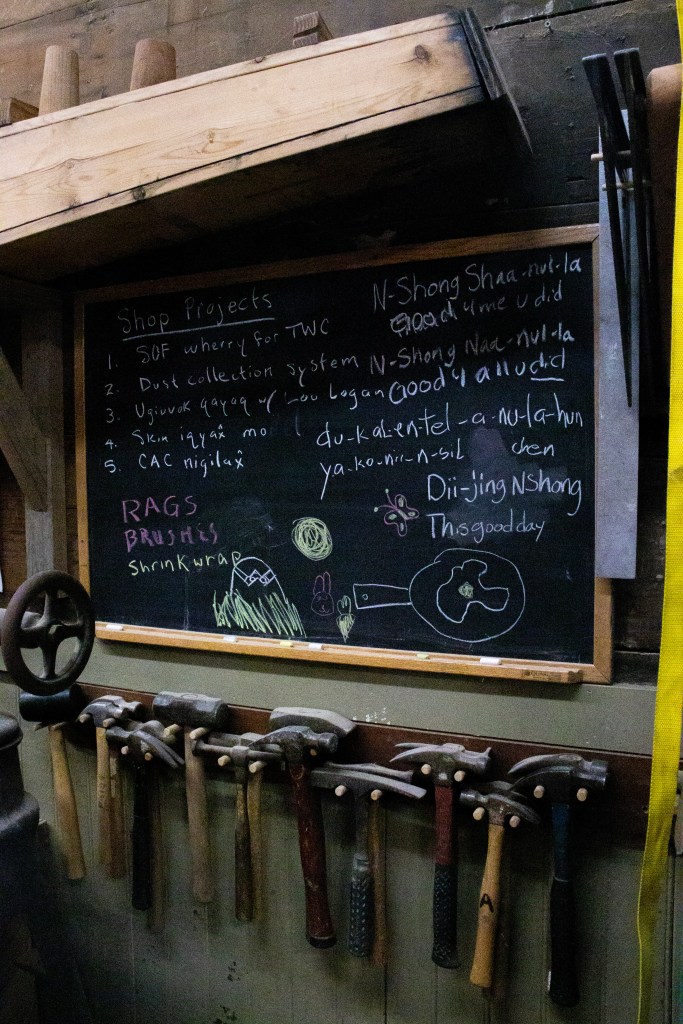
“They were taken thousands of miles and intermarried with the native people on the California coast, and they’re still here. Some of them have joined us on this build. It is a time of embracing their heritage and healing for them,” Daniels-Aygagnax̂ said.

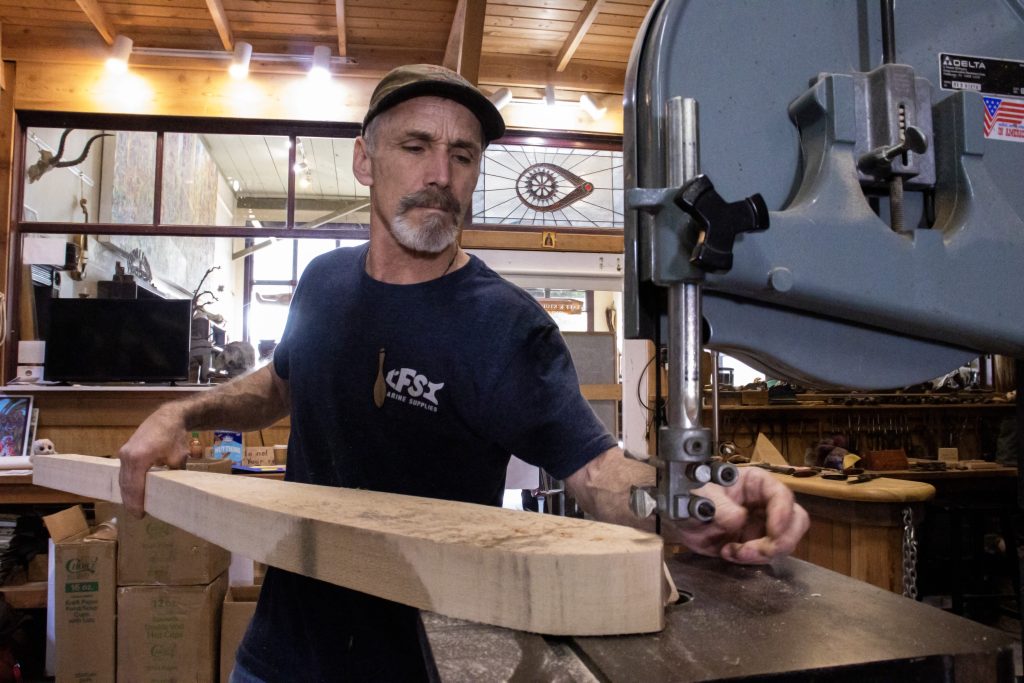
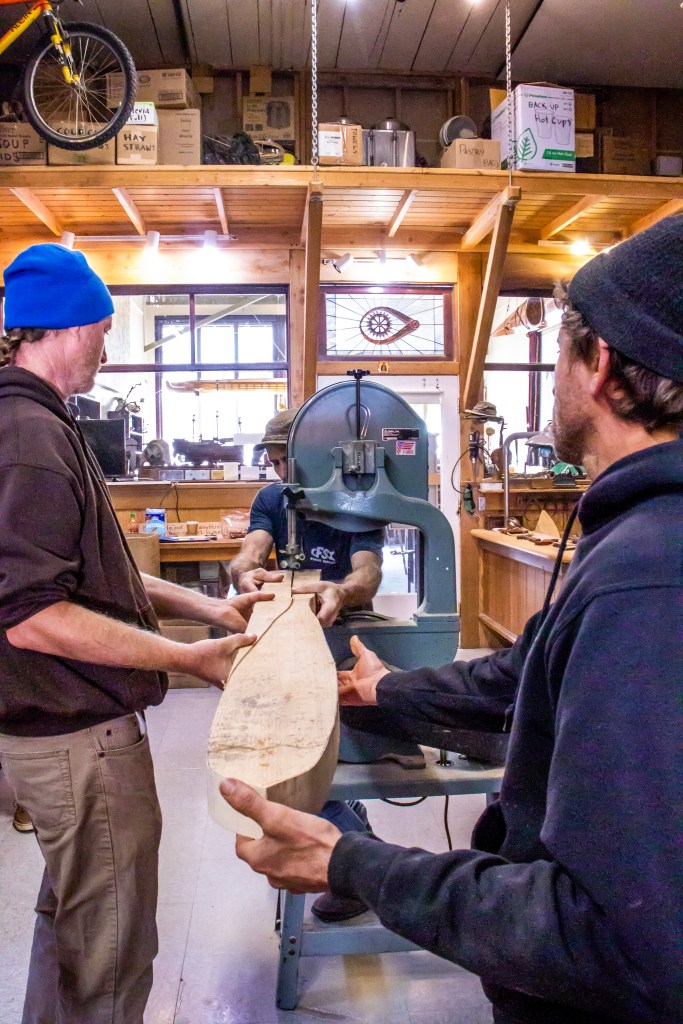
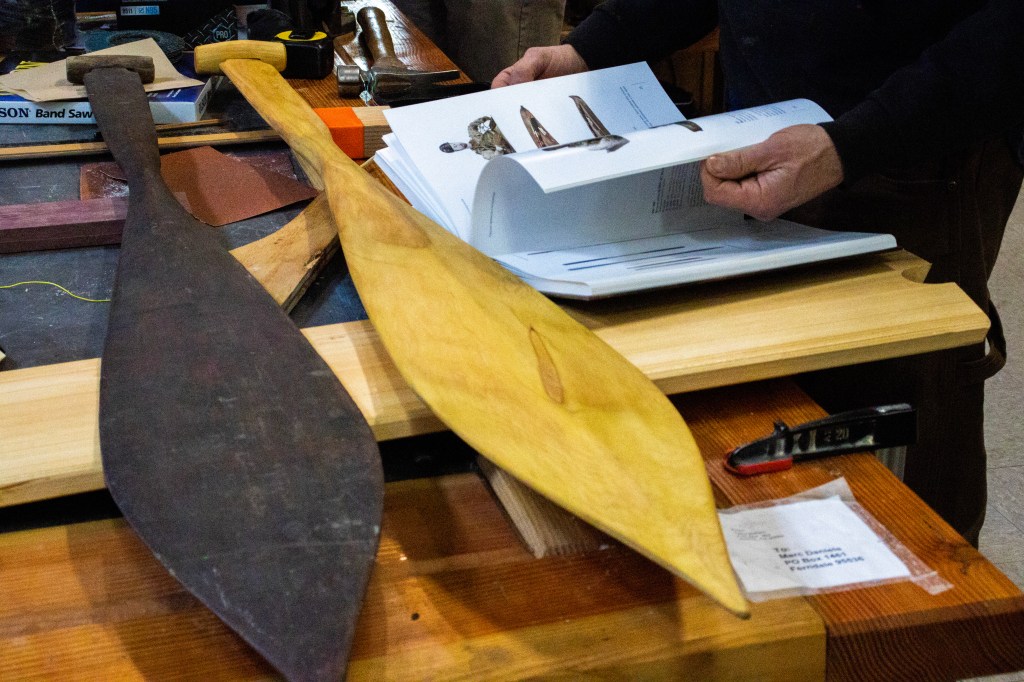
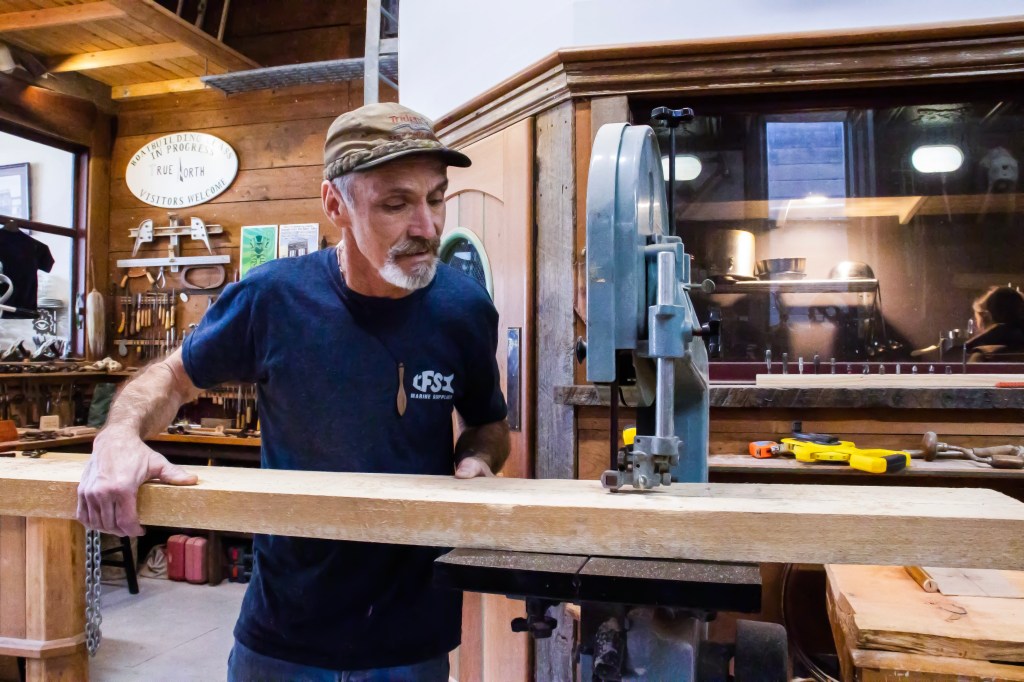
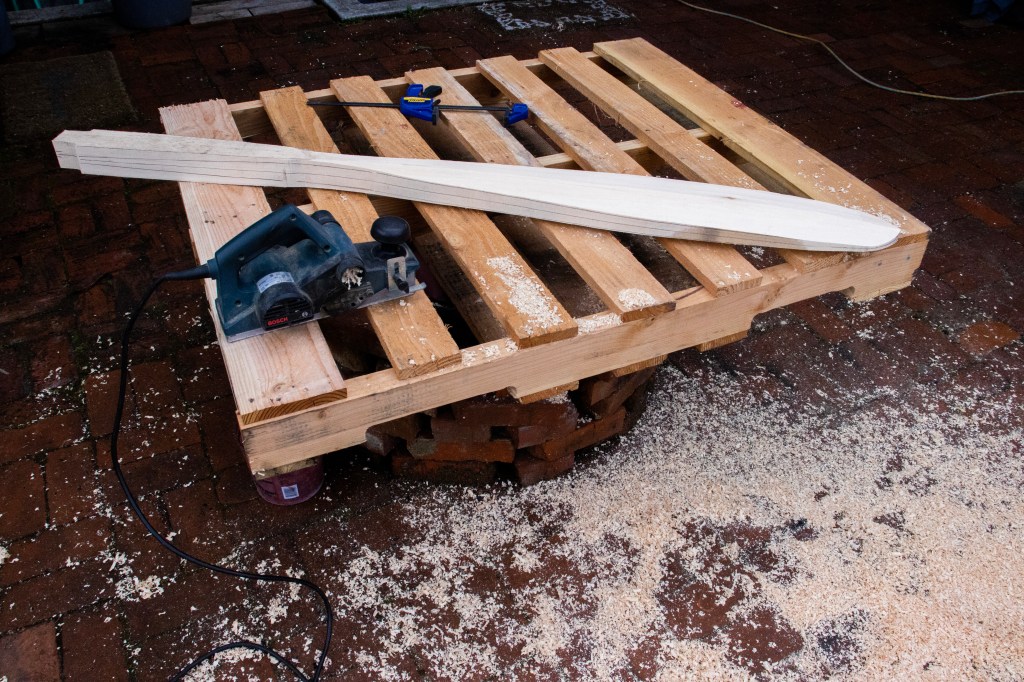
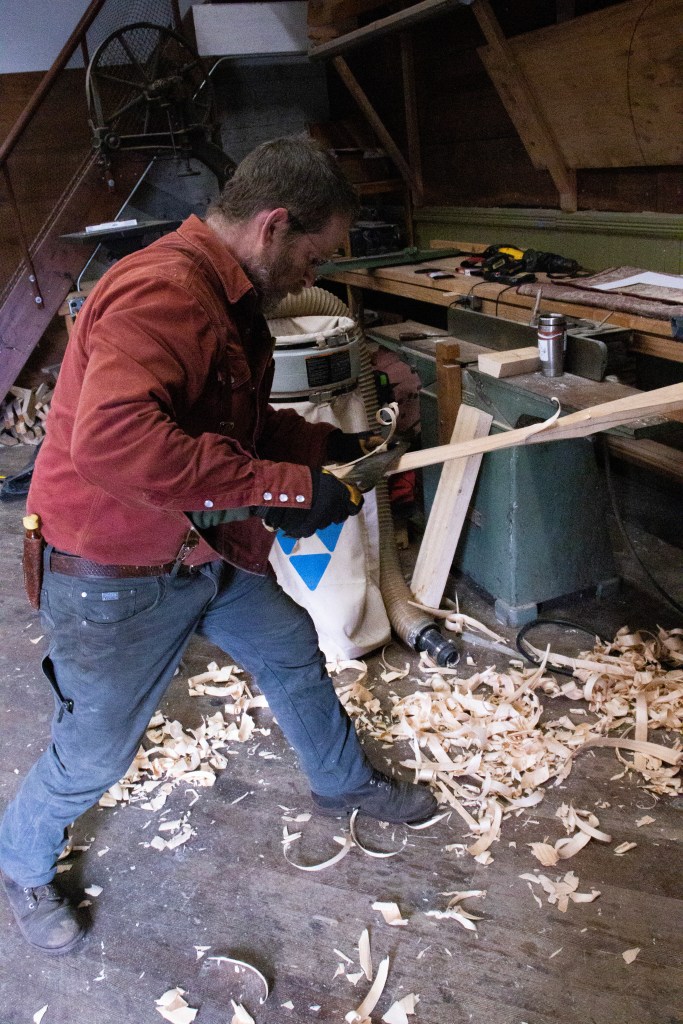
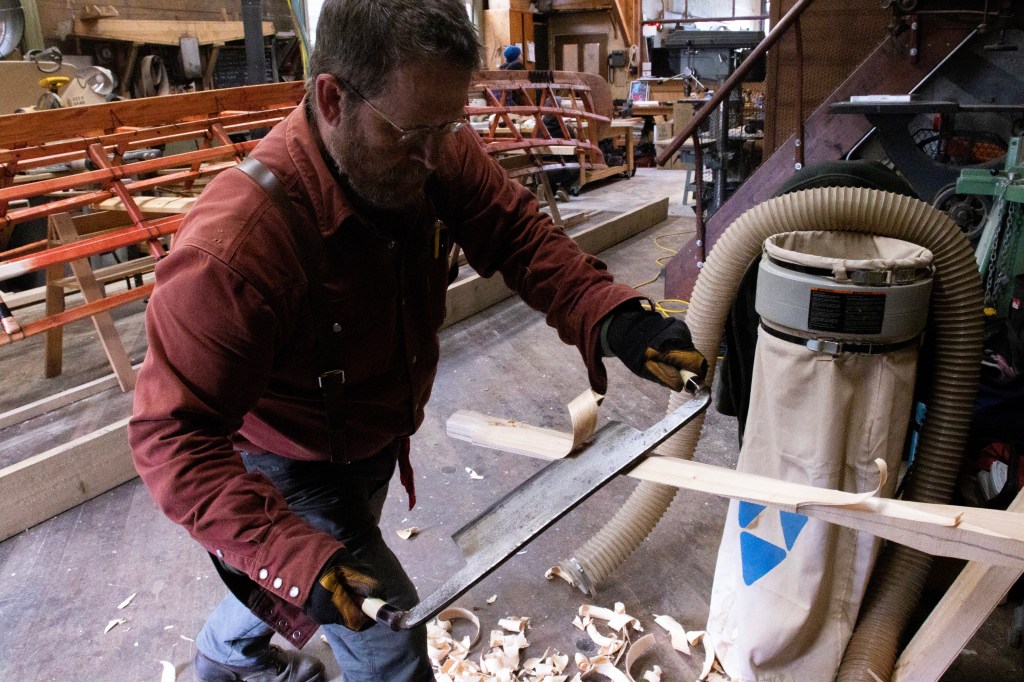
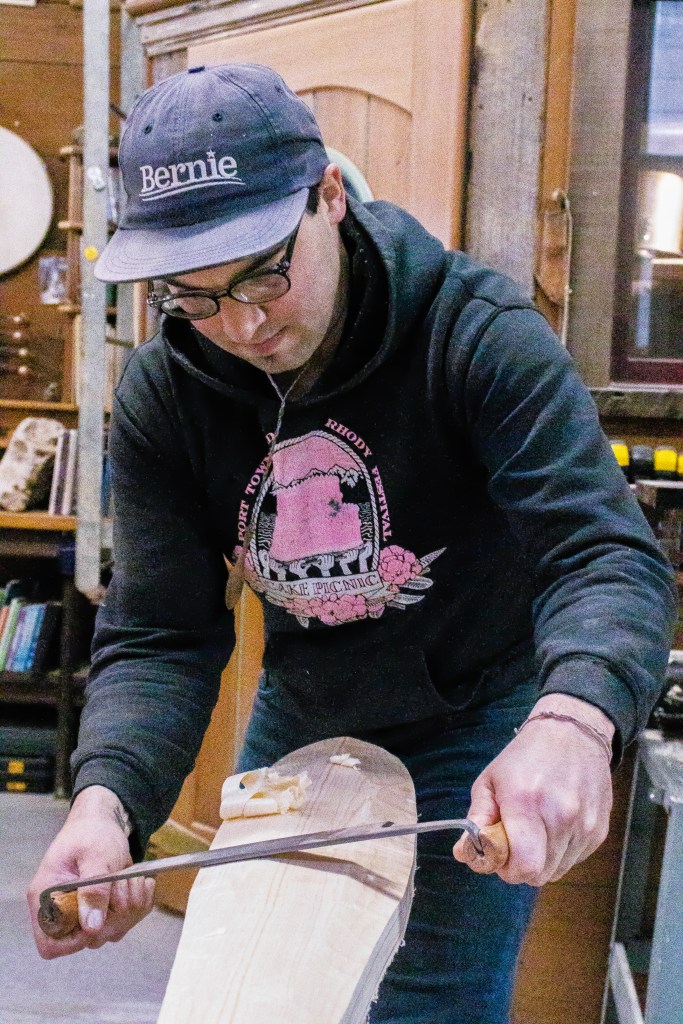
Marc Daniels-Aygagnax̂ and Mike Ferguson carving a traditional paddle. | Photo by Ruby Cayenne

“We started off by meeting with Wiyot people and asking for the tribal blessing to begin the project since we’re on Wiyot ancestral lands,” Daniels-Aygagnax̂ said. He received blessings from the tribal government of Saint Paul Island, Alaska and the Qawalangin Tribe of Unalaska. At the beginning of the build, Perry Lincoln and his niece, both members of the Wailaki Tribe, sang a song of blessing.

Mike Ferguson is a liberal political activist and a descendant of the Unangax̂ people on his mother’s side. In adulthood, he has been finding a reconnection to his culture through Indigenous boat building. His cousin, Kaneshia McGlashan-Price, is a Unangax̂ tribe member who has been helping build the nigilax̂.

“I feel that’s really made it both a cohesive group process, but also has allowed us to get to know each other. It’s been an intense process, personally and interpersonally. It’s allowed each of us to grow,” Ferguson said when speaking about the building process. 

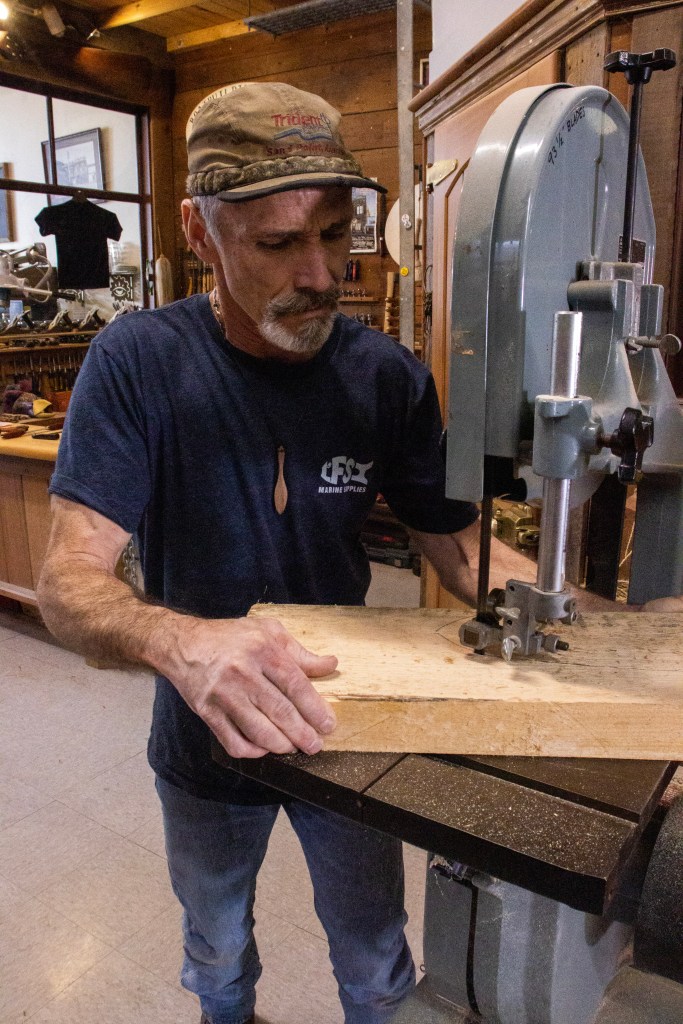
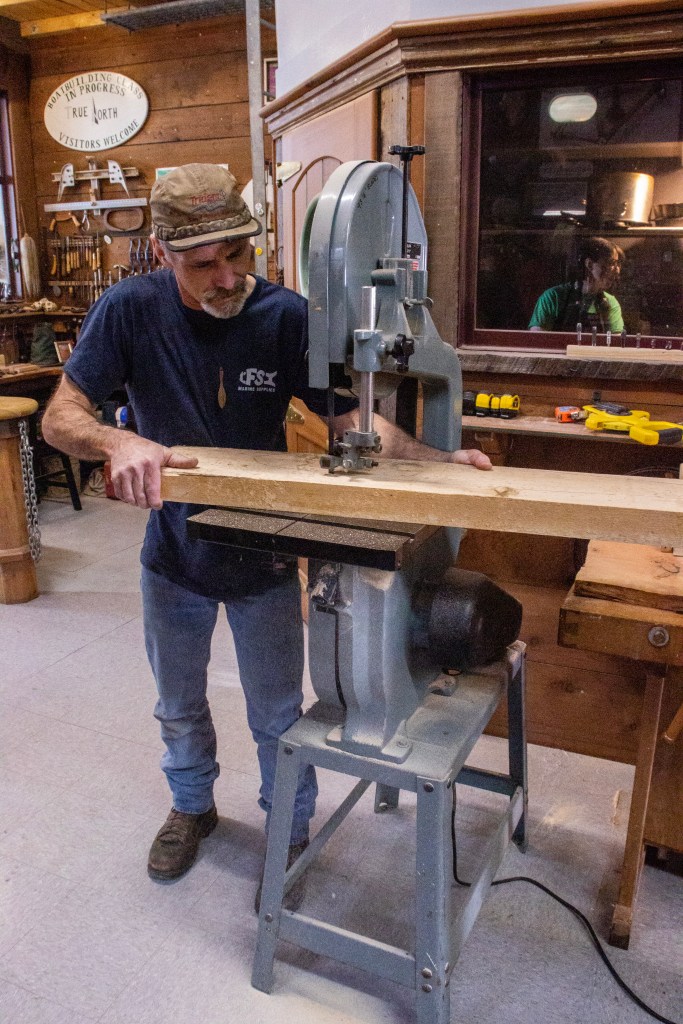
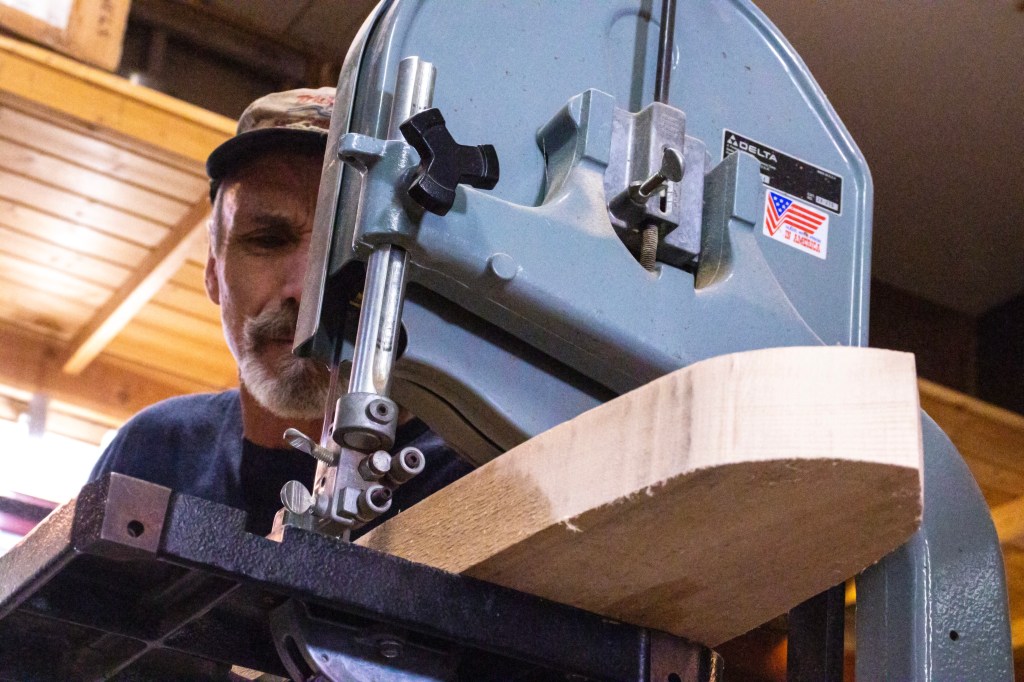
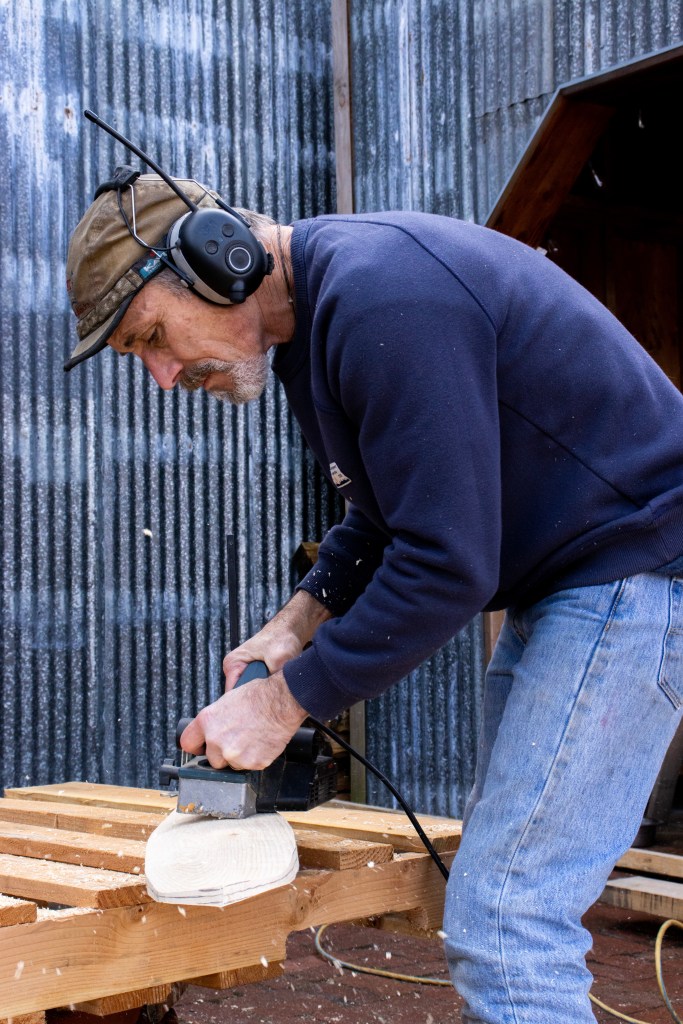
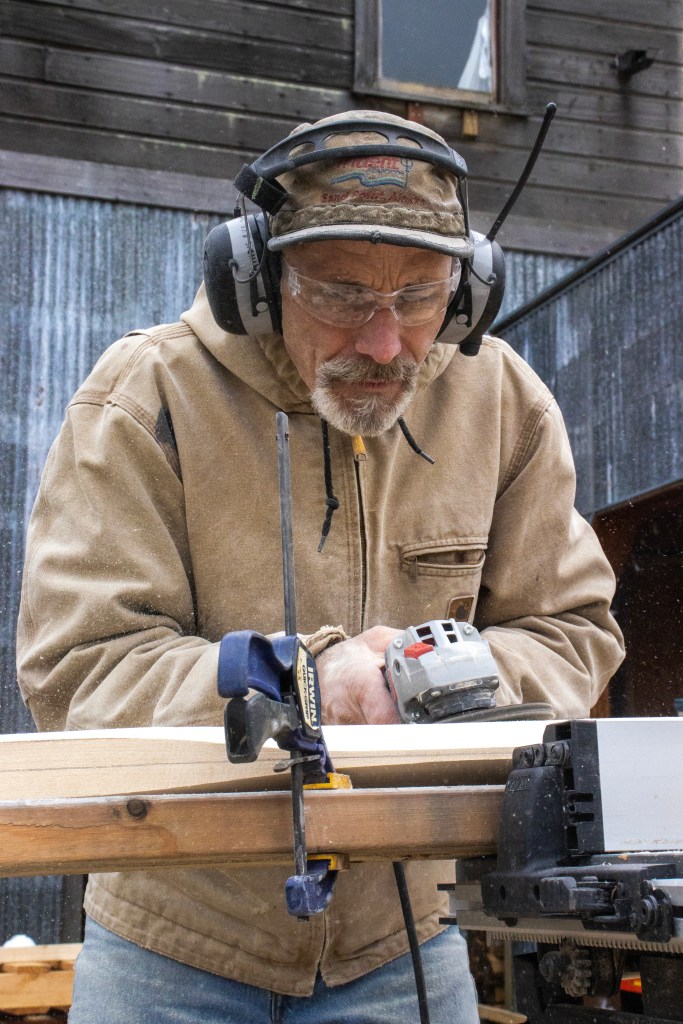
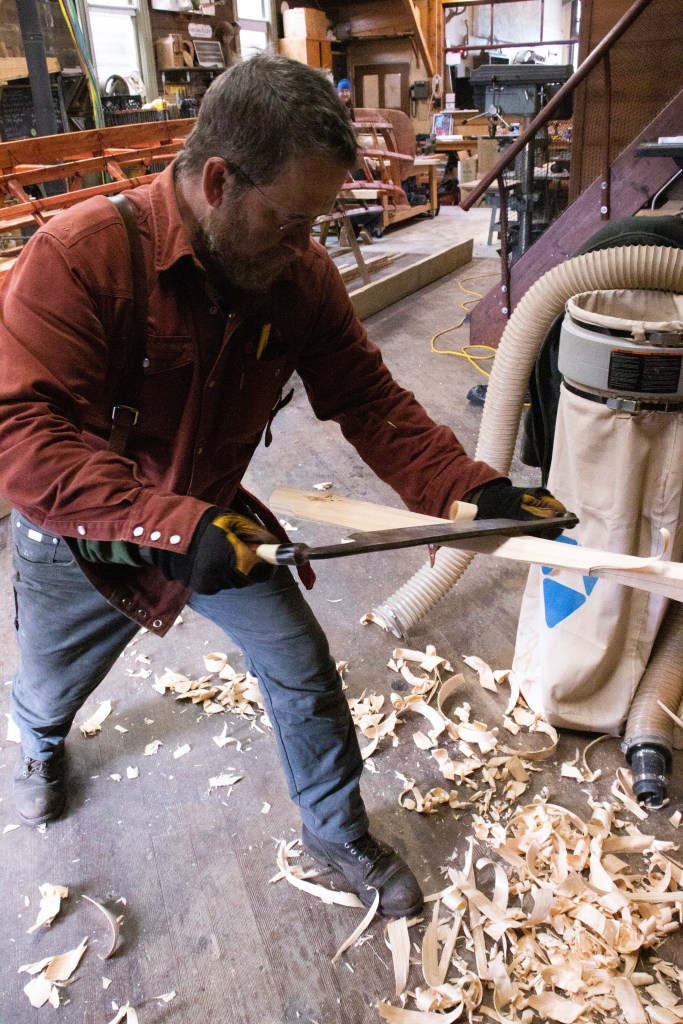
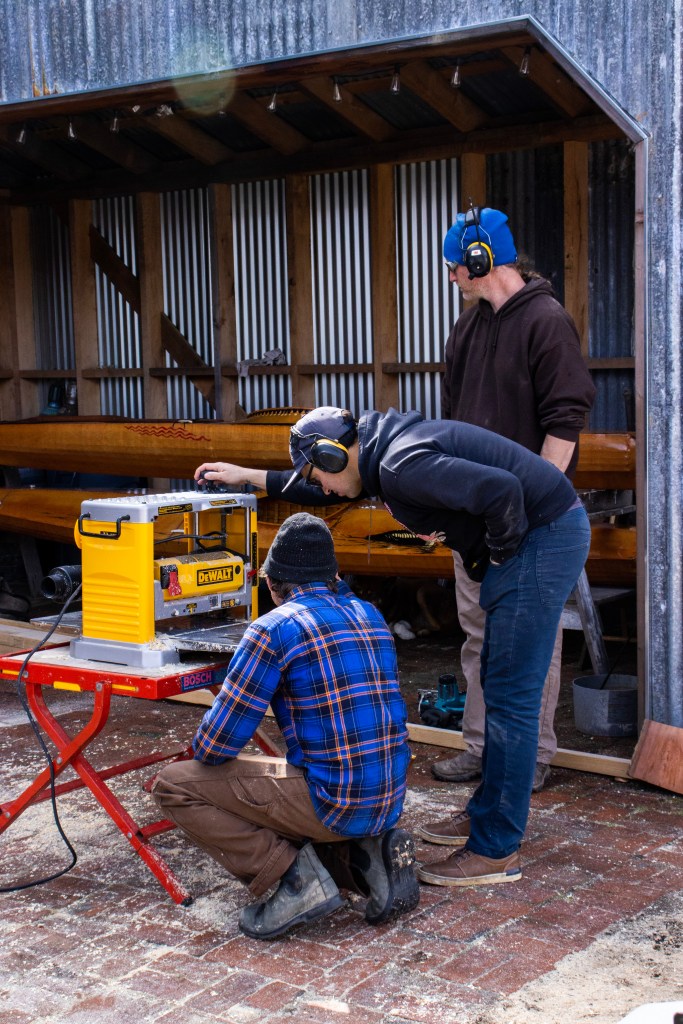
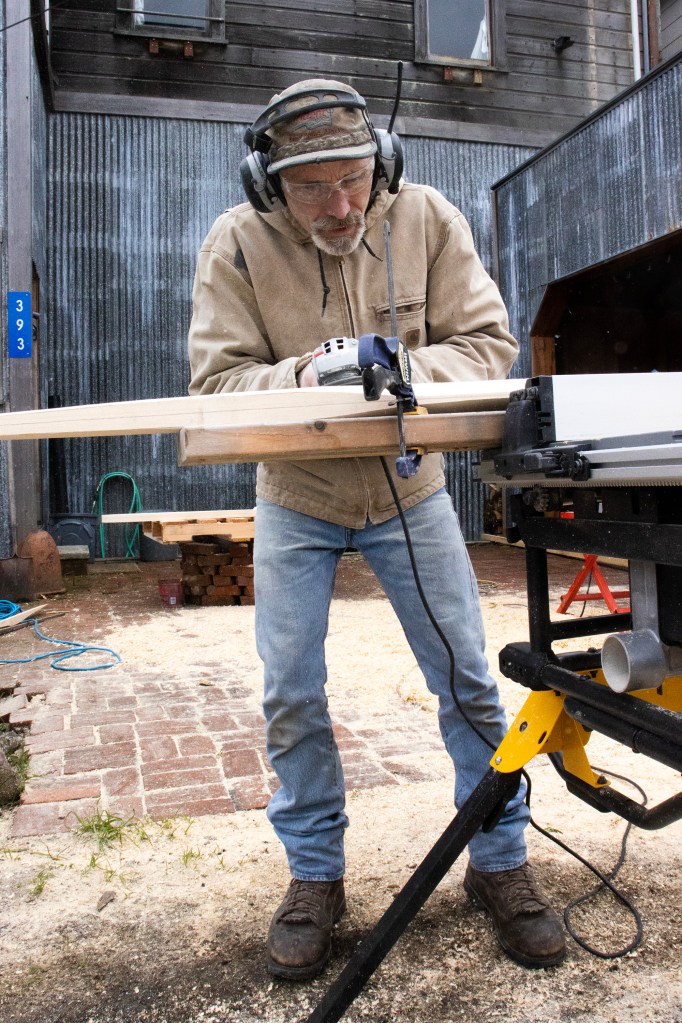
Marc Daniels-Aygagnax̂ carving a paddle with modern machinery. | Photo by Ruby Cayenne

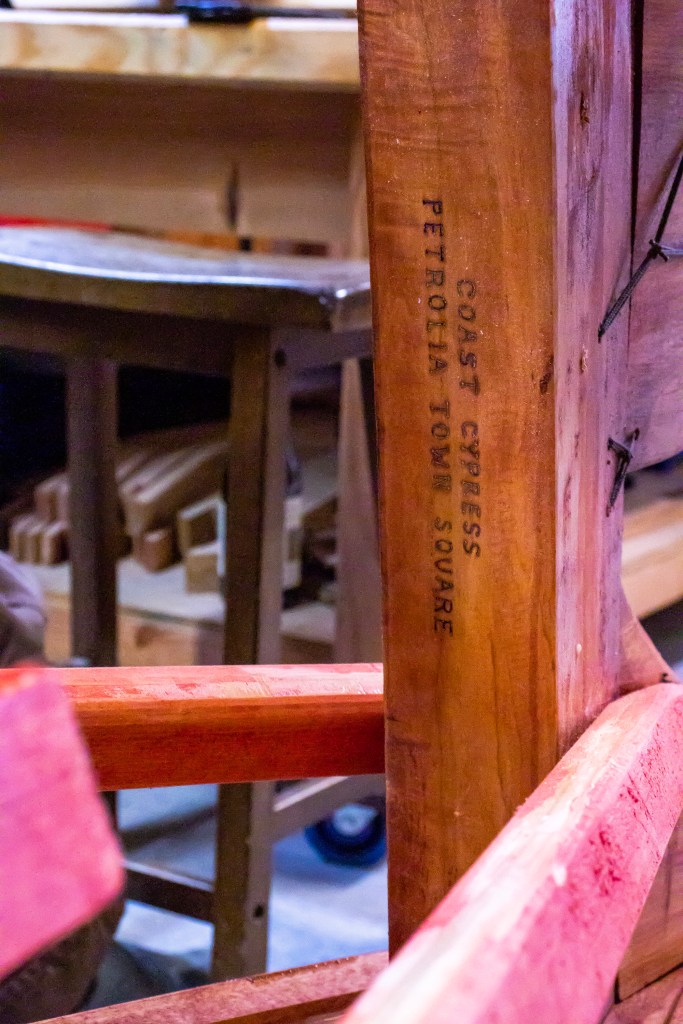
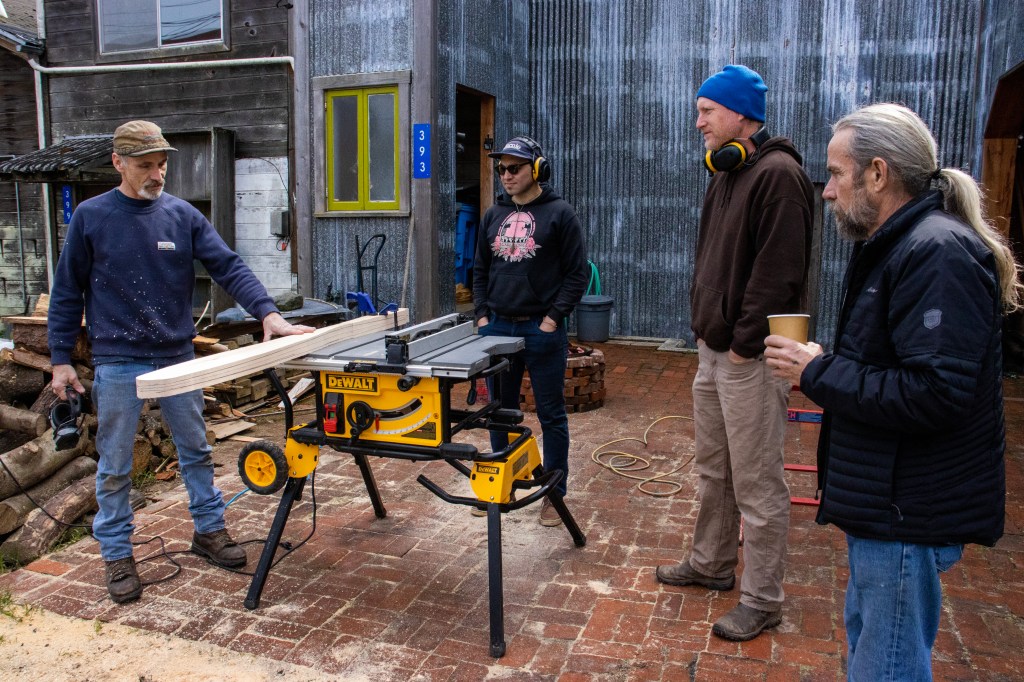
According to Daniels-Aygagnax̂, search for wood used in the nigilax̂ starts on the beach and is collected in the traditional way to be used in curved parts of the boat such as the bow and stern. Synthetic alternatives to some of the traditionally used materials like whale baleen and sea lion skin are being used for sustainability purposes. Steel edged hand tools and power tools being used differ from the ivory and stone tools used traditionally.

“Honestly there’s some trauma from doing the lashings, which became very painful on my hands,” Ferguson said. “To go from a flat piece of wood, to shape it into something beautiful that’s going to be used by somebody, is rewarding.”

Alaska Native Day at the Fort is held at Metini yearly and was first organized by an Unangax̂ woman several years ago. This event is where the nigilax̂ built in Humboldt will be launched this spring. There are plans to have dance groups from the Unangax̂ tribe, Kashia Band of Pomo Indians and Wiyot tribe in attendance. 

Daniels-Aygagnax̂ was given the name Aygagnax̂ by an Unangax̂ mentor, with the closest translation being “one who walks.” He has been practicing Indigenous boat building for 30 years and teaches the skill. 

“I work towards healing and creating better community environments that can empower people to live the lives that they want to live,” Ferguson said.

First Latina on the Board of Supervisors in Humboldt: For Print

by Ruby Cayenne

Natalie Arroyo, Fourth District Supervisor of Humboldt County. | Photo by Ruby Cayenne

Natalie Arroyo started off 2023 as Humboldt County’s first Latina to be elected to office on the Board of Supervisors to represent District 4.

Arroyo was introduced to the Watershed Stewards Project through AmeriCorps and started working in this area doing fisheries conservation in Petrolia, California. Coming from a Puerto Rican background and growing up in Miami, Florida, she first came to Humboldt in 2006 from New Orleans.

Arroyo stayed in Humboldt largely due to the natural and architectural beauty of the area. Having grown up primarily on military bases, these features intrigued her.

The small and rural characteristics of most towns in Humboldt County reminded her of her family’s Puerto Rican culture, where people are very welcoming and embrace one another. Food and culture are ways that Arroyo remains connected to her heritage.

“Growing up Puerto Rican and eating all the flavors, and the family experiences that come with food, are some of the warmest experiences in my personal life,” Arroyo said.
To Arroyo, Puerto Rican tradition values warmth and kindness towards all people, as well as a connection to other Latinx cultures. “That’s something I grew up with that I have to pull back in our culture here,” Arroyo said. “I feel I’m very warm and familiar with people in a way that they’re not expecting. Sometimes that can seem confusing to them when I’m just bringing what’s normal for my family into the space.”
Arroyo began her political path in her early twenties by volunteering to serve on nonprofit boards of directors. She served two terms on the Eureka City Council before advancing in her career to now serve on the Humboldt County Board of Supervisors.

“I think a lot about language and policymaking and whether information is accessible to people in their language. There’s also a lot of need for more housing,” Arroyo said. “Just as much as it’s important to house students and house people who are currently houseless it’s also important to welcome people in from outside the community including people who have immigrated here from other countries.”
As a politician, Arroyo is a vocal advocate for women’s rights, in favor of abortion rights and is passionate about
supporting organizations that provide reproductive healthcare. She wants people to have the right to make their own bodily decisions. Arroyo acknowledges that the right to choose has been pivotal to where many people are in life today.

When it comes to her work, she is excited to be an example for other Latinx people to see that they can potentially serve their community as government officials in ways that are meaningful to them. Also teaching a class at Cal Poly Humboldt on Environmental Conflict Resolution, she expressed that Latinx students had taken her class because they felt that familiarity and inspiration from her being a Latina.

“It’s interesting to me how people sometimes don’t want to talk about racial, cultural, or ethnic diversity. There
are times when I’ve been in a room to make a decision and if I hadn’t been there, the decision would not have gone that way,” Arroyo said. “I’m very proud to be Latina and to be in a leadership role. It’s groundbreaking for this place and this moment in time.”
Redwoods Listening Post Talk Show

I am hosting a live talk show once a month, Monday night 6-7 p.m., on community voices of Humboldt County through the Redwoods Listening Post of Access Humboldt.

I am looking for people to come on the show and discuss subjects they know about that bring them a sense of passion, frustration, curiosity, or any other emotion or sensation.

I encourage people to join me as a guest and highlight their community voice.

Contact me to be on the show.