by Ruby Cayenne

| All photos by Ruby Cayenne
Spanning continents and borders, there are some who go the distance to bring their professional dreams to fruition, in fields that are typically populated by ethnicities and genders unlike them.
“I think folks, Latino folks have a lot of things to show. And oftentimes we don’t get the same attention that other people do,” said Associate Professor of Biological Sciences Catalina Cuellar-Gempeler.
Some people are not as welcome in certain spaces, even in a self-proclaimed modern world. This is particularly visible in the sciences and academia of Western society. People from under-served communities and ethnicities may no longer be shunned from academics, but their lack of representation is still felt.
“There are other historically excluded groups in our fields, women being one of them,” said Jose Marin Jarrin, assistant professor for the Department of Fisheries Biology at Cal Poly Humboldt. “If you look at our numbers in our department, we have few, percentage wise, we have less women than we have Latinx. Like it’s just mind blowing how poorly we’re doing in some of these other areas, let’s not even talk about LGBTQ.”
EXPERIENCES BEING LATINE
Jarrin felt like an outlier because his father went to graduate school. It allowed him to have access to a familial manual for navigating college.
“I still faced a lot of the issues that other Latinx people do. I did poorly in GREs, for example, which we know are biased against people of color,” Jarrin said.
Jarrin described being congratulated on a talk at a conference, despite that it was an entirely different person of color who looked nothing like him that gave the talk.
“It’s these small paper cuts,” Jarrin said. “Some days it doesn’t hurt, some days it really stings. And it takes a while to shake it off.”

Jarrin has also been supported on his path. His PhD advisor, Dr. Jessica Miller, accepted him as a graduate student regardless of his GRE scores because of her admiration for Jarrin’s character.
“We need those allies that can help us and that can show us the way where no one else is showing, right”, Jarrin said. “It’s not on books, it’s not on anything written. We need those people to say, hey, this is the way.” His advisor played a significant supportive role in his academic career, which he hopes to be for his students.
Jarrin said Latine people were not traditionally scientists because the idea of an expert on a single subject did not apply to their way of life.
“We would have known about marine fish and freshwater fish and plants. Because for our cultures, this idea of separating things into their own little boxes, it makes no sense,” Jarrin said.
Cuellar-Gempeler’s experience in the sciences is shaped by being an immigrant from Colombia.
“It takes a little piece of yourself to move to another country,” she said “I’m not saying you lose a piece. You definitely gain a lot, but it changes, you know, it’s a different environment and it’s a different language and it’s a different culture.”
She said that no matter where you are an immigrant from, that experience changes how you perceive the world. Growing up in Colombia in the ‘90s exposed her to violent politics.
“You know, nothing happened to me and my immediate family was fine, said Cuellar-Gempeler. “But it was a context of kidnappings and bombings and just really horrid assassinations and a lot of horrible things that are just around, you know, and it permeates your reality even as a kid. And then it influences your reality as an adult.”
When Cuellar-Gempeler works with a diverse group of students, she emphasizes that it does not matter where you come from, there is a lot of growth you can accomplish.
“I understand a lot of the aspects of their experience because you know, my family is back home and I’m far and I miss them and it’s hard to plan the visits and it’s expensive,” Cuellar-Gempeler said. “When they [her students] speak Spanish, I speak Spanish to them and, you know, we talk about food and we talk about music and it makes it good for them, good for me.”
She has been disrespected as a Latina in the sciences at times.
“It’s hard to know whether it’s because I’m a woman, or I’m Latina and I have an accent, or if I’m short,” she said. “The treatment that you get sometimes is just so disparaging of, like not recognizing that you’re capable or important.”

Her frustration and exhaustion that comes from having to prove herself wears on her. She figures it out internally but does not enjoy having to explain herself when she is an accredited professional scientist. She has found ways to be less affected by these situations and more strategic in preparing for those kinds of interactions.
First, she advised to be careful about who you pick to be your principal investigator in graduate school or who your boss is.
“I am of the policy that you should express all of yourself in those interviews. And if people don’t like that, then that’s not the people that you want to work with,” Cuellar-Gempeler said.
Secondly, she says to remind yourself that racist and discriminatory comments and actions are their problem, not yours. She also suggests practicing how to react to disrespect.
“In the moment, it’s really hard to react appropriately, right,” Cuellar-Gempeler said.
Oscar Mauricio Vargas Hernandez, professor of botany at Cal Poly Humboldt, has been successful as a Latine person in the sciences. However, when applying for professorships, there were times he felt his accent and youthful appearance might have caused the people to be biased.
Surrounded by violence growing up in Colombia in the ‘80s and ‘90s, he expressed a deep desire to change the way that Colombia was perceived by the world.
“You were in constant, really like constant fear,” Mauricio Vargas Hernandez said. “There was a bomb that was [found] next to the office of my dad. It’s just so normalized… that’s what you see in the news every single day.”
He feels a lot of Colombians work to show that the country is much more than Pablo Escobar and cocaine, that Colombians are very welcoming.
There is great work being done in the sciences in South America that doesn’t often get translated back to the United States and other marine researchers, says Natalie Cosentino-Manning, a habitat restoration specialist for NOAA Fisheries.
She wants the Latine community in the United States to understand that you can have a very successful career working in the marine and environmental sciences. To make this a reality, Latines need to study marine science in college, and ideally in highschool. She has gone to a number of high schools in her community to talk with them about the opportunities and possibilities there are with NOAA.
Malcolm Edwards-Silva, a student at Cal Poly Humboldt, stressed the importance of young Latine individuals seeing Latine breakthrough scientists.
“Definitely I want to be someone that inspires them to kind of show you can do anything,” Edwards-Silva said. “It doesn’t matter who you are, where you’re from, any upbringing or whatever. You are you… and you can do what you want.”
He is proud of his heritage and is very grateful his mother chose to raise him in Mexico. He feels it has given him a different perspective on life and allowed him to be more in touch with his ancestors and his family. Edwards-Silva explained that he has found a greater connection to his heritage as he matures. If he ever has children he wants to pass down his appreciation of his ancestry and have them grow up with the same culture he was raised in.
Silvia Pavan, museum curator and assistant professor at Cal Poly Humboldt, says she has encountered bias being Latine in the sciences. She feels that at Cal Poly Humboldt, people are somewhat conscientious about the importance of having diversity to build up conversations and have an enriched environment.
“You can see the bias on how you get higher approval for people that are not minorities, on when they submit the paper, the rejections, the rejection levels, so you kind of always feel that you should be really good in what you do to surpass any potential biases that might exist,” Pavan said.
She thinks that diversity in the sciences is going in a better direction because many people are acknowledging diversity as an important component and that bias is prevalent on several lines such as research and education. “Because you add diversity, you enrich, right?” Pavan said.
BEFORE COLLEGE
Jarrin is originally from Guayaquil, a coastal city in Ecuador, and also spent some years as a child in Michigan where his dad went to graduate school before moving back to Ecuador. He was raised bilingual and has lived close to the ocean for most of his life. His parents are both naval engineers and his father has a particular love of the ocean.
Cuellar Gempeler grew up with the smells of the vast city that is Bogota Colombia and the subtropical paradise of her grandfather’s coffee farm intertwined together. At the farm there were fruits hanging down from trees all around her, animals about and a beautiful and constant state of weather. At the same time, she had access to education and other opportunities in the city.
“I feel enormously privileged in all the opportunities that I had but that life in the farm also cemented my interest in nature, and just thinking about how things grow and how they interact with one another,” Cuellar Gempeler said.
Also in Bogota, Mauricio Vargas Hernandez was born and raised in a middle class family. He considers himself to be a “city boy,” but his great grandfather had a farm he often visited, which inspired his desire to study nature.
Cosentino-Manning’s parents are both from Argentina, so she is the first generation to grow up in the United States. Her hard-working parents insisted she spoke Spanish at home and instilled a sense of care for being in nature through frequent camping trips.
She grew up in Southern California close to the beach and found her love of marine biology in high school. “And so I always wanted to have some part of my life be part of the marine environment,” she said.
“To be able to communicate the importance of these habitats…that we need these habitats to be able to keep these fish, you know, to keep our whales, our marine mammals,” Cosentino-Manning said.
Malcom Edwards-Silva was born in Southern California but lived in Cuernavaca Mexico until he entered kindergarten.
“My mother wanted me to be raised near her family, wanted me to grow up with her culture and everything, wanted me to have Spanish be my first language,” Edwards-Silva said.
Silvia Pavan was born and raised in Southeastern Brazil in a coastal province called Espírito Santo. Before deciding to study small mammals, she described falling in love with work she did in a lab that studied and collected mammals as well
as studying the evolution and morphology of mammals. From then on, she knew that was her focus.
DURING COLLEGE
Jarrin attended high school in Ecuador and stayed in the country to earn his undergraduate degree in general biology at the University of Guayaquil. He focused his thesis on invertebrates, specifically small shrimp and crablike organisms. He got his masters degree at the University of Oregon and his PhD at Oregon State University.
He researched small bug-like creatures, and the ecosystem importance of Chinook salmon, surf perch, smelt, Dungeness crab and many others.
His academic focus is marine fisheries ecology, specifically fishes and invertebrates that are of commercial importance. “We say commercial, but what I really mean is its ecological, commercial, and cultural importance, because some of the species that we work with are not necessarily sold, but they’re eaten for consumption by different communities, both here in the U.S. and in Ecuador,” Jarrin said.
Cosentino-Manning remarked that her parents somewhat struggled with her decision to work in the marine science field. Her father thought she would follow in his footsteps as a mechanic, but she followed her dreams
She did two years at Saddleback Community College and got her Associates of Arts before transferring to then-Humboldt State University to study environmental biology.
“[A subject] I really enjoyed a lot was marine phycology, which is the study of seaweed,” she said.
Cuellar Gempeler got her bachelor’s degree at Universidad de los Andes in Bogotá in both biology and microbiology. Her interest is in how microorganisms interact with plants and animals, and ecology to see how interspecies interactions impact microbes.
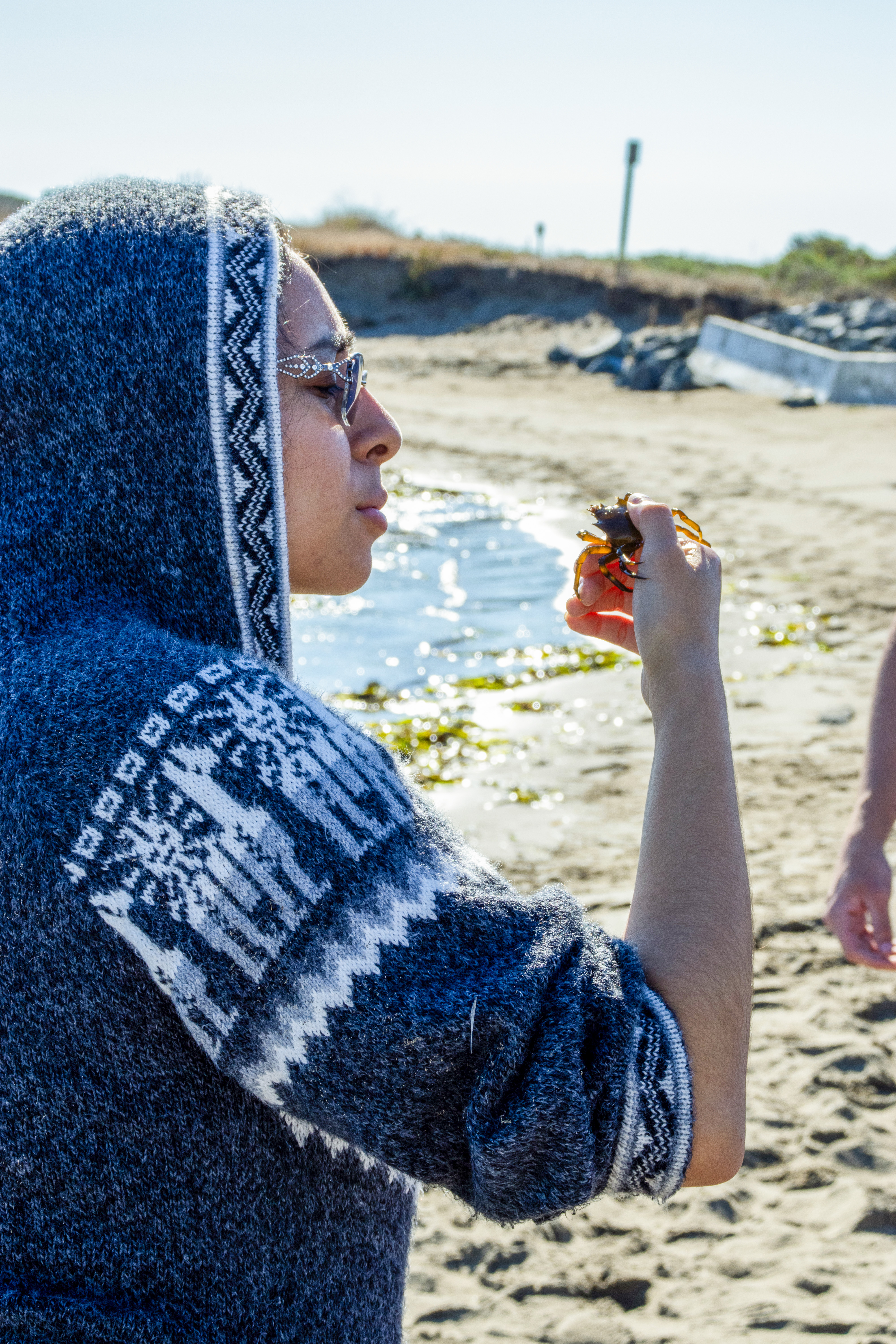
Her research focus was on fiddler crabs, which she conducted at a lab in the Yucatan. To collect crabs she used little plastic cups, bringing them back to the lab in a cooler on her bicycle. Each crab had a separate cup so that they would not contaminate each other’s bacterial biome.
Once, Cuellar Gempeler had maybe 50 crabs all organized in their cups and a gust of wind lifted the chest cooler up into the air and all the crabs and cups just went flying away.
“From then on, I carried two rocks inside of the chest so it wouldn’t fly away,” she said.
She moved to the United States to get a PhD at the University of Austin.
“Fortunately, I had a good support system of Latino people mostly, and Colombian people that were fantastic,” Cuellar-Gempeler said. “It’s a transformational kind of growth, not only academically, but also personally and culturally.”
Her PhD was centered around crabs’ bacterial biomes; how many species of bacteria there were, what the quantity of them was, what they were doing and how they related to one another.

Crabs are a particularly interesting subject for this study since they shed most of their exoskeletons and replace it with one that is completely sterile, and the entire bacterial community has to reattach. This allowed Cuellar-Gempeler to study the rules of bacterial colonization.
Mauricio Vargas Hernandez did his undergraduate and masters degree in Bogota at Universidad de los Andes. He researched plants that have not been studied in a long time,and created an identification guide for them. He developed the common name for the species he researched, dubbing them “wooly daisies.”
For his masters, he found that the group of plants with the genus name Diplostephium is actually two groups by sequencing their DNA, and discovered a new genus.
For this project he traveled through the mountains in Peru.
“We were going to stay in a house and the owners of the house didn’t speak Spanish, they only spoke Quechua,” Vargas Hernandez said. “I have met indigenous people in Colombia, but they were always able to speak Spanish.”
In Austin, Cuellar Gempeler played in a band called Gajeenaz, an informal spelling of the word gallinas (hens in Spanish).
The band included cello, guitar, ukulele, banjo, and small latin-american guitars, the cuatro and the charango.
She and her husband now write science-focused tunes to do outreach by playing in bars and at events. They use their music to bring science into the conversation, so everyone can just “nerd out about how cool the world is.”
From a young age Edwards-Silva was interested in the sciences. When he first went to school, he studied environmental engineering but didn’t enjoy the coursework and dropped out.

Once he started doing field work in the marine sciences at Orange Coast College he found his passion and ended up transferring to Cal Poly Humboldt and pursuing an oceanography degree.
He primarily focuses on larger scale global processes of wave motions, upwelling and other factors that affect all organisms.
He also investigates how genetic and environmental factors affect photosynthesis in sub-aquatic vegetation, with eelgrass being his main focus.
His capstone project cohort is approximately 40% Latine, it makes him feel more confident and at ease. One of his friends in the cohort is fluent in Spanish, “and it keeps my tongue sharp,” Edwards-Silva said.
Pavan and her team found a new species in genus Juliomys through specimen examination.
“We describe that, this one as [Juliomys] ossitenuis, and the name has to do with the skeleton being really delicate, and comparatively to the others, it’s kind of like a very delicate species,” Pavan said.
She moved to the Amazon to get her masters degree in a combined program between Museu Paraense Emílio Goeldi and Universidade Federal do Pará in Northern Brazil.
Her PhD was done at the City University of New York. She did postdoctoral research at the Smithsonian Institute, the Center for Conservation Genomics at the National Zoo in Washington, D. C., and at Universidade Federal do Pará in Brazil. She also got some experience teaching at the City University of New York and in Northern Brazil for a graduate program.
PROFESSIONAL CAREER
When Pavan moved to this country she left her extended family in Brazil. It’s hard for her to be away from them, but she’s grateful that her husband and two children came to the United States with her. At Cal Poly Humboldt, she is the Head Curator at the Vertebrate Museum and an Assistant Professor.
She wants to show how important biodiversity is and how important it is to preserve the environment through her work with museums.
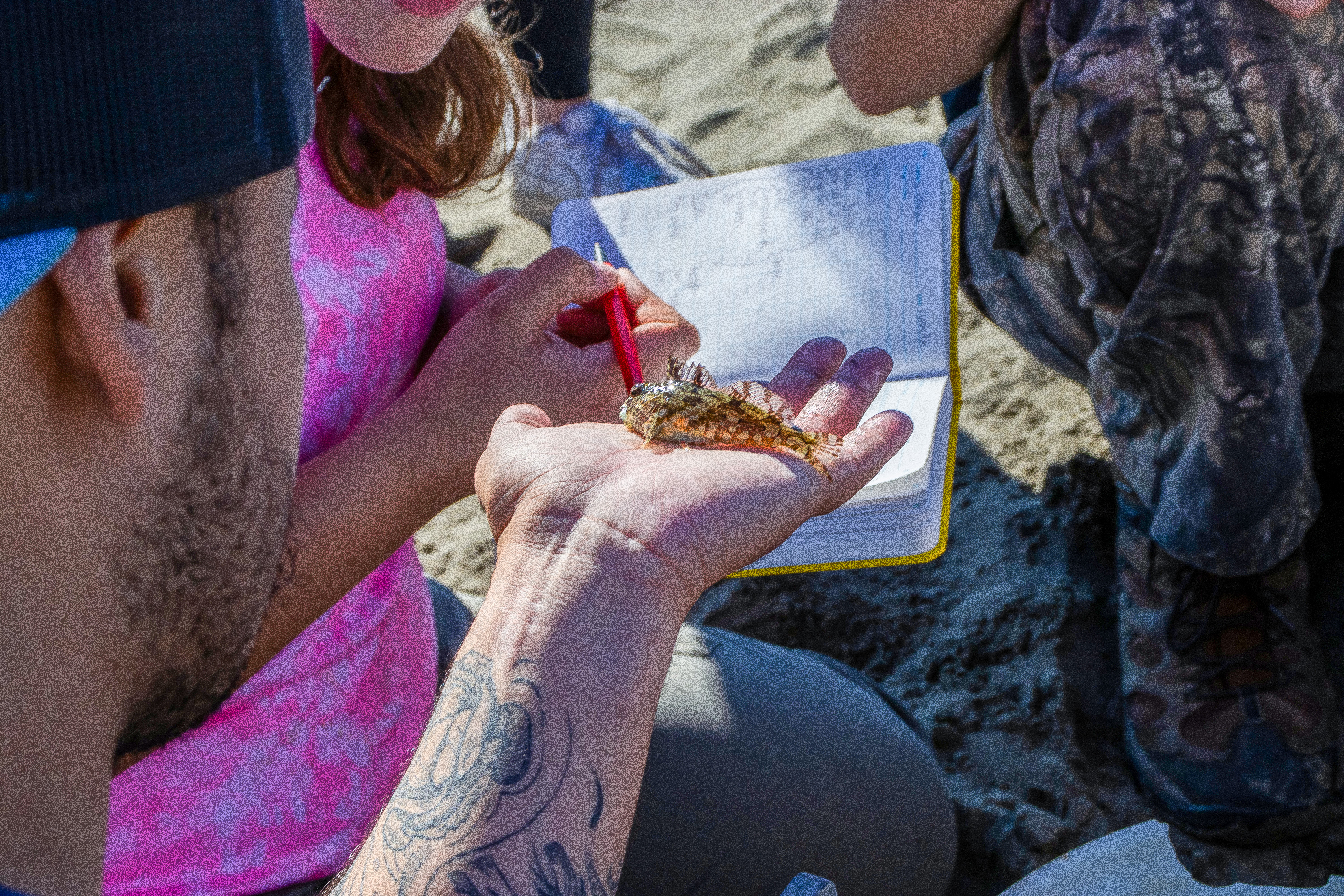
Her work has primarily focused on marsupials, opossums and rodents. At Humboldt she is continuing her postdoctoral research on squirrels and shrews because they are here locally. She also travels to South America about once per year to keep working with marsupials.
On an expedition in Peru her team started getting daily visits at their campsite from the only species of South American bear, the Tremactus ornatus. At first, the group was thrilled to see this rare bear grace them with its presence, but as it continued to show up, the thrill diminished and it became an issue when the bear discovered their traps and severely damaged them.
Since the bear became such a frequent visitor of the research team, they decided to name it Gustavão. At some point, the bear found the makeshift latrina that the group had been using as a restroom and took a bath in it.
“And then they [the group] were saying, Oh, Gustavão, Gustavão! Coberto em mierda, Gustavão! Vá te embora!” Pavan said.
Currently, she teaches mammalogy at Cal Poly Humboldt, and facilitates the organization of tissue sample and cryogenic collections at the Vertebrate Museum of Cal Poly Humboldt. The goal of this project, Ranges: Building Capacity to Extend Mammal Specimens from Western North America, is to have all of the information of the samples available online for researchers to access.
Edwards-Silva plans to continue his education into graduate school, taking a biological approach to his programs of interest rather than physical or geological oceanography.
He is interested in the problems with overfishing and wants to develop sustainable fishing practices, as well as adaptations of marine organisms to ocean acidification.
Jarrin’s work with species in Humboldt County considers the limited number of fishes present and ensures that there will be enough left for years to come. He finds this process to be similar to the values of traditional ecological knowledge.
“Only take what you need, make sure that you leave some for the next person, or for the other animals that are, that need this food,” Jarrin said. “It’s the same idea for fisheries management.”
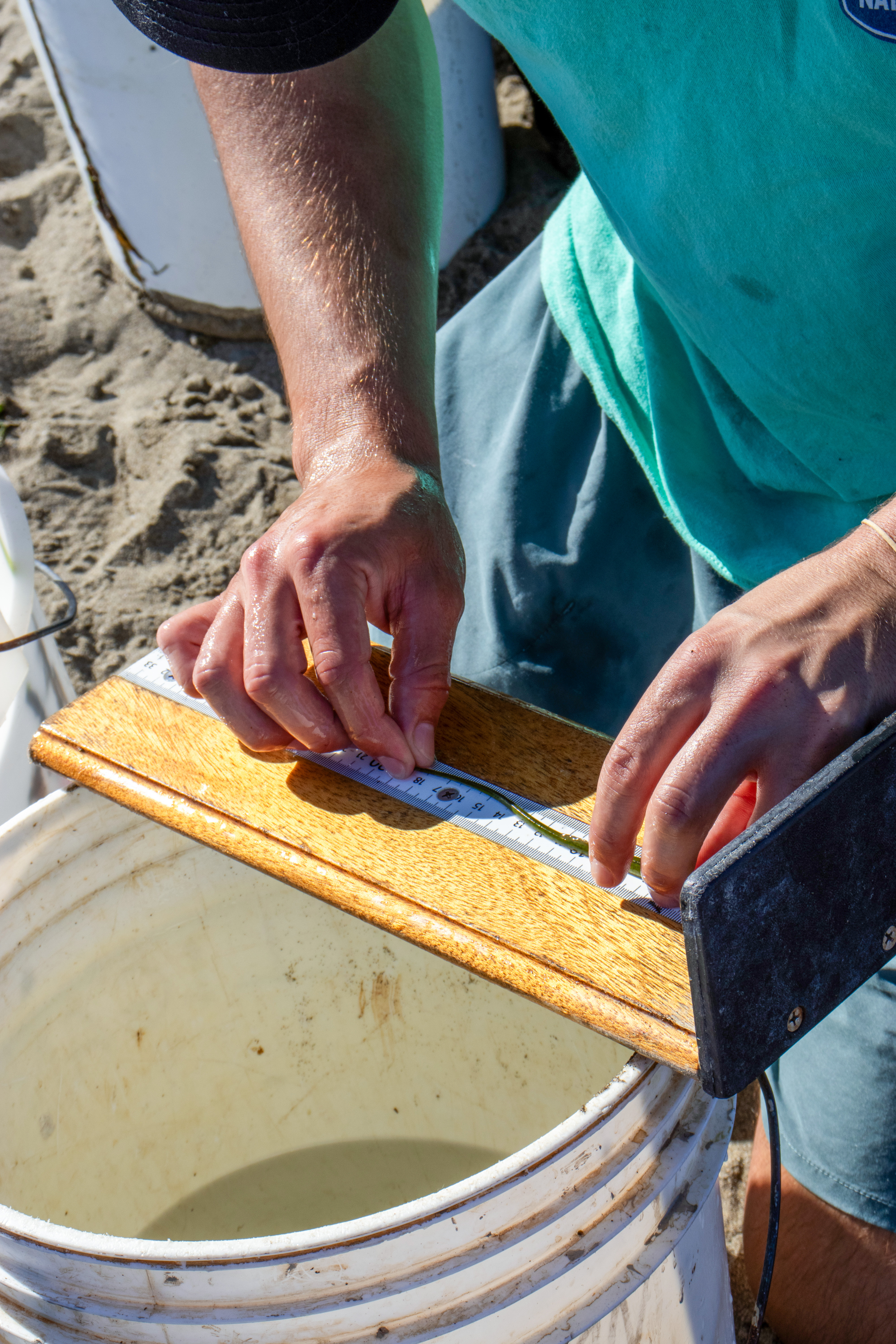
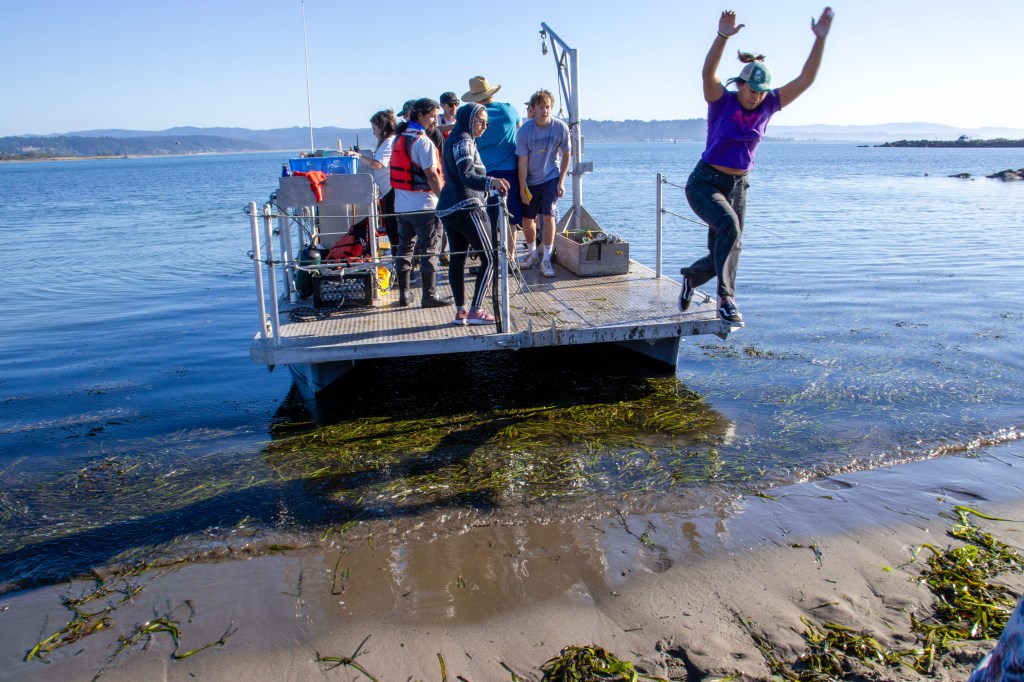
Jarrin works in collaboration with the Tolowa Deni Nation, Resighini Rancheria, Yurok Tribe, Wiyot Tribe, Trinidad Rancheria and Blue Lake Rancheria to exchange knowledge and assist in their existing research on coastal habitats. They work together to collect, measure and age fish as well as use different technologies, such as satellite imagery and spatial analysis.
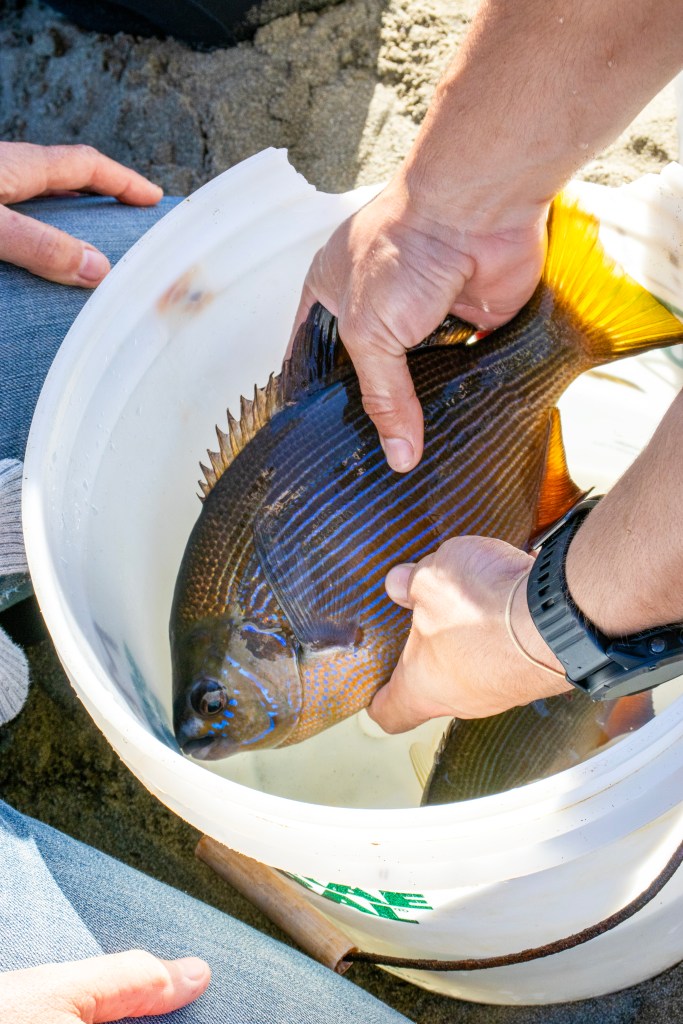
He teaches two classes and one lab per semester at Cal Poly Humboldt. Depending on the semester, he teaches fishery science communication, ichthyology, U.S. and world fisheries, ecology of marine fish and biology of sharks, rays and skates.
Cuellar-Gempeler’s research in Florida during her postdoctoral studies was primarily focused on pitcher plants and other carnivorous plants called Sarracenia purpurea. In California, she works with Darlingtonia californica, the California pitcher plant.
Pitcher plants use a cup-like modified leaf to attract and trap insects, in order to use their nitrogen to survive in soils low in nutrients.
Cuellar Gempeler’s work with these plants seeks to understand how microbes come together in communities and how the diversity and composition of these communities leads to the function of consuming animals and insects.
She loves how field work connects her to nature, and interrogates who she is. She wants to give everyone that opportunity.
“We have a lot of students that are, you know, Latinos from inner cities, that have not had the opportunity to go out there and, or be in a lab and really experience that. Just try things, make mistakes.”
After graduating, Mauricio Vargas Hernandez did two post doctoral research studies in the tropics, studying the phylogenetics and evolution of the Brazil nut family in the Amazon then transitioning to researching spiral gingers in Central America.
At this point in his career he aims to do research that is informative to conservation efforts in California.
“I’m in a really good position to do that type of research,” he said. That’s what my students are doing.”
Currently he is teaching Plant Taxonomy at Cal Poly Humboldt.
“My class is about…being friends with plants,” Mauricio Vargas Hernandez said. “You just spend time with them. This knowledge about their names, their colors, their features is going to come to you naturally.”
He cherishes seeing his students have “aha” moments when they are looking into a microscope and understand something that he was trying to explain.

“I’m really passionate about plants,” he said. “So passing that passion to somebody else or like, maybe they already have the passion, but it just needs to be ignited, that’s really cool.”
Cosentino-Manning now works on oil spills and contaminant leaks that impact these habitats, developing plans to restore them and working with those responsible. She has worked on very large oil spills such as Deepwater Horizon, Costco Busan, the Refugio oil spill and the Long Beach Pipeline spill.”
During her time at NOAA she has gone down in a one person submersible, received training through the sanctuary program and worked with the National Marine Fisheries Service restoration center. She is a part of a group within NOAA doing equity and environmental justice work.
“I’m part of that national strategy group to make sure that we are looking inward and outward,” Cosentino-Manning said. “Making sure that we’re inclusive of…all races, all genders and making sure that our work reflects our communities.”
Cosentino-Manning recently returned to Argentina for the first time in 30 years with her 18-year-old son and husband.
“My heart was just bursting to be able to see my son with my cousins and my aunt and get to really know more about me too,” Cosentino-Manning said.
Her son is now at UCLA studying environmental science and biology.
Now that her parents have seen firsthand how successful she is in her profession, they’ve changed their views on her going into the science field.
“It’s kind of bittersweet, you know, my mom passed three years ago and I wish she would have been able to know that my son is also successful and is following the same career path.”

 Ruby Cayenne