CUNA: Restaurando Carlson Park y embelleciendo Valley West 

por Ruby Cayenne traducido por Desiree Osornio 

El jueves 6 de abril, el Senador Estatal Mike McGuire se unió con los miembros del Ayuntamiento de Arcata y los coordinadores de Comunidad Unida Del Norte De Arcata (CUNA) para entregar $1,000,000 en el desarrollo del Parque Carlson en Valley West. En total, el parque ha sido dotado con $2.5 millones de dólares para su restauración. Otras subvenciones vinieron de Wildlife Conservation Board y de Rural Recreation and Tourism. 

CUNA ha sido un motivador esencial de este proyecto, adoptando el parque, realizando limpiezas y defendiéndolo continuamente ante la ciudad de Arcata. CUNA está profundamente implicada en el embellecimiento de toda la zona norte de Arcata desde su formación durante la pandemia de COVID-19. 

Las subvenciones que financian la restauración del Carlson Park se utilizarán para construir un parque infantil, una zona de picnic y un área para eventos especiales. La ampliación del acceso al río y de los senderos permitirá navegar y nadar en Mad River. El parque también tendrá baños públicos, canchas de pickleball y de usos múltiples. 

“Redwood Coast Energy Authority colaborará para instalar estaciones de carga de vehículos eléctricos en un estacionamiento previsto,” dijo Emily Sinkhorn, Directora de los Servicios Medioambientales. 

CUNA está coordinado por tres mujeres que llevan décadas viviendo o sirviendo en la comunidad de Valley West. Kimberly White es miembro del Consejo Municipal de Arcata y graduada de Cal Poly Humboldt. Eibar Romero estudia actualmente Estudios Críticos de Raza, Género y Sexualidad en CPH. Laura Muñoz es “creadora bilingüe de danza y teatro, educadora, practicante de somática y organizadora comunitaria,” según el sitio web de CUNA. 

“Ellos [la ciudad de Arcata] van a hacer señalizaciones bilingües en los senderos en español, inglés y el idioma wiyot, van a eliminar especies invasoras y van a plantar especies indígenas. Habrá un mirador conforme al Americans with Disabilities Act (ADA). Así, quienes no puedan bajar por los senderos van a tener allí mismo una vista increíble de nuestro maravilloso Mad River,” dijo White. 

“Estoy entusiasmada con las oportunidades de construir realmente una comunidad y espero que también de unir los diferentes grupos demográficos,” dijo Muñoz. “No es demasiado pronto para que Carlson Park esté disponible para las familias, para los niños, para el recreo, y realmente para trabajar por una forma de vida mejor, como que los niños jueguen fuera y estén al aire libre.” 

En la comunidad de Valley West, CUNA ha incorporado el proceso de elaboración participativa de presupuestos a su trabajo, hablando con una amplia diversidad demográfica de la comunidad, como las personas mayores, Latinx y las personas sin vivienda. Estas conversaciones llamaron la atención sobre el hecho de que había menos deseos de grandes gestos y más de garantizar los servicios esenciales. “No pensaban a lo grande. Se limitaban a decir que necesitamos policía aquí. Necesitamos un basurero. Sólo lo básico,” dijo White. 

CUNA no sólo dio esos servicios básicos a Valley West, sino que también pudo conseguir instalaciones para las carne asadas que cumplen los requisitos de la ADA, plantar árboles frutales, dar clases de danza y hacer teatro infantil. Han organizado y facilitado tianguis, un mercado al aire libre de estilo latino y fiestas de la cuadra para la preparación ante los desastres y la fundación de la comunidad. En ellas se presentaron mariachis y artistas locales y se intentó desarrollar un jardín comunitario, informaron los coordinadores de CUNA. 

“Hace años que Valley West no recibía mucha atención, así que es súper impresionante y creo que hace que la comunidad Latinx se sienta escuchada o vista de que va haber atención en la comunidad donde viven,” dijo Romero.

CUNA: restoring Carlson Park and beautifying Valley West 

by Ruby Cayenne 

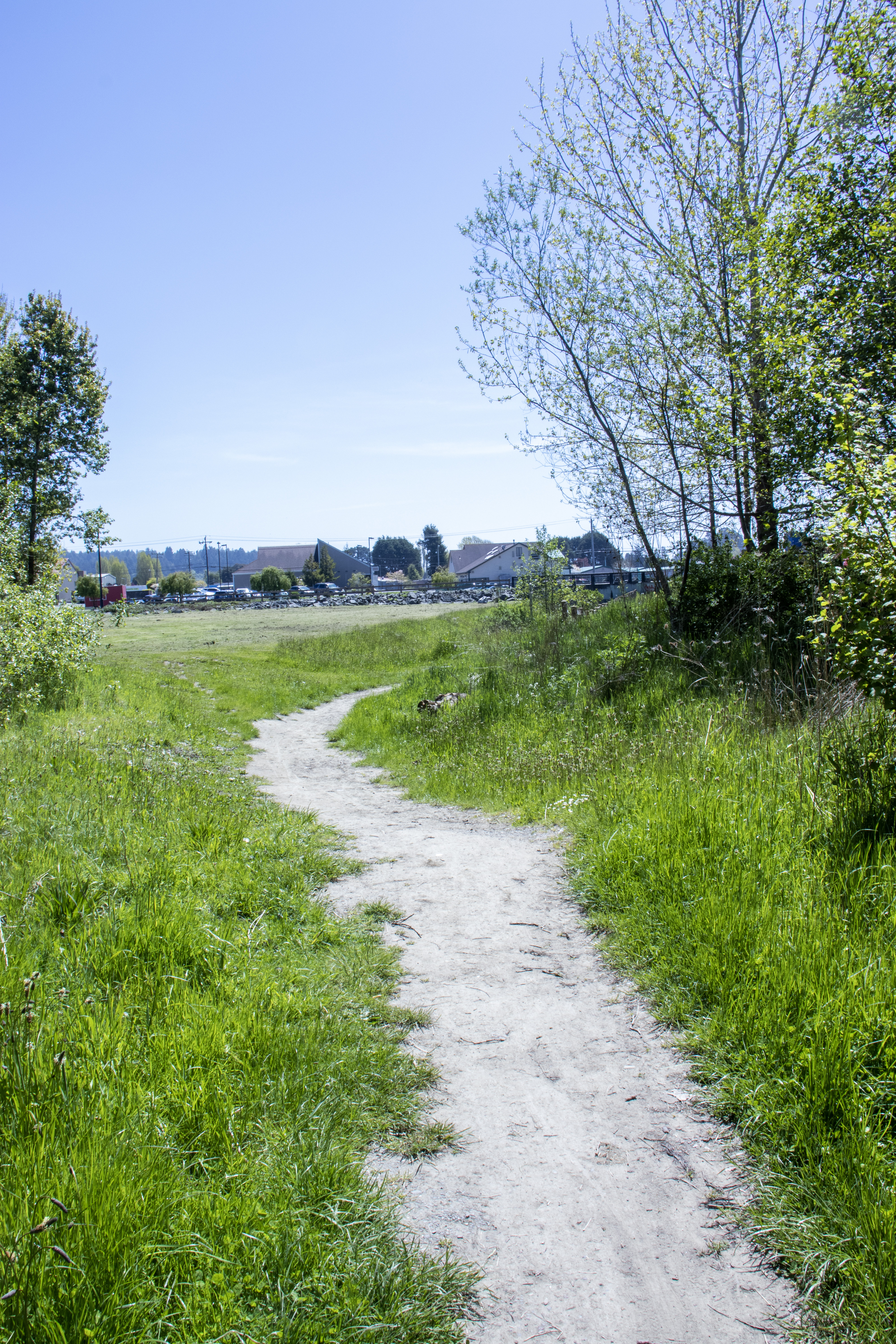
 Carlson Park in Valley West | Photo by Ruby Cayenne

On Thursday, April 6, State Senator Mike McGuire joined Arcata City Council members and Comunidad Unida Del Norte De Arcata (CUNA) co-coordinators to give $1 million for the development of Carlson Park in Valley West. In total, the park has been endowed with $2.5 million in funding for restoration. Other grants came from the Wildlife Conservation Board and Rural Recreation and Tourism. 

CUNA has been a vital motivator of this project, by adopting the park, holding clean-ups and continually advocating for it to the City of Arcata. CUNA is deeply involved with the beautification of the entire North Arcata area since its formation during the COVID-19 pandemic. 

The grants funding the Carlson Park restoration will be used to build a playground, a picnic area, and a special events area. Improving river access and trails will allow for boating and swimming in the Mad River. The park will also have public restrooms, pickleball, and multi-use courts. 

“Redwood Coast Energy Authority will be collaborating for EV charging stations at a planned parking lot,” said Emily Sinkhorn, Director of Environmental Services. 

CUNA is co-coordinated by three women who have been living or serving in the community of Valley West for decades. Kimberly White is an Arcata City Council member and graduate of Cal Poly Humboldt. Eibar Romero is currently studying Critical Race, Gender and Sexuality Studies at CPH. Laura Muñoz is a “bilingual dance and theater maker, educator, somatics practitioner, and community organizer,” according to the CUNA website. 

“They’re [the City of Arcata] going to be doing bilingual signage on the trails in Spanish, English, and Wiyot language, invasive species removal, and planting native species. There’s going to be an Americans with Disabilities Act (ADA) compliant lookout. So, those who cannot make it down the trails are going to get this incredible view of our wonderful Mad River right there,” White said. 

I’m excited about the opportunities to really build community and hopefully also bridge the different demographics,” Muñoz said. “It’s not a moment too soon that Carlson Park is going to be available for families, for kids, for recreation, and really to work for a better way of living like kids playing outside and being outdoors.” 

In the Valley West community, CUNA has incorporated the participatory budgeting process into its work by speaking with a wide range of demographics in the community including the elderly, Latinx and unhoused. These conversations brought attention to the fact that there was less of a desire for grand gestures and more for securing essential services. “They were not thinking big. They were just like we need police out here. We need a garbage can. You know, just the basics,” White said. 

Not only did CUNA provide those basics to Valley West, but they were also able to secure barbecue facilities that are ADA compliant, plant fruit trees, have dance classes and have children’s theater. They have organized and facilitated tianguis, a Latinx style open-air market and block parties for disaster preparedness and community building. This showcased local mariachi bands and artists and intent on developing a community garden, reported CUNA co-coordinators. 

“Valley West hasn’t received a lot of attention years back, so it’s super awesome and I think it makes the Latinx community feel heard or seen that there is going to be attention to that community where they live,” Romero said. 

Unangax̂ nigilax̂ construido en colaboración con la comunidad

por Ruby Cayenne traducido por Desiree Osornio
Nota del editor: La familia de Ruby Cayenne ha participado en la construcción del nigilax̂ en Mind’s Eye Factory.

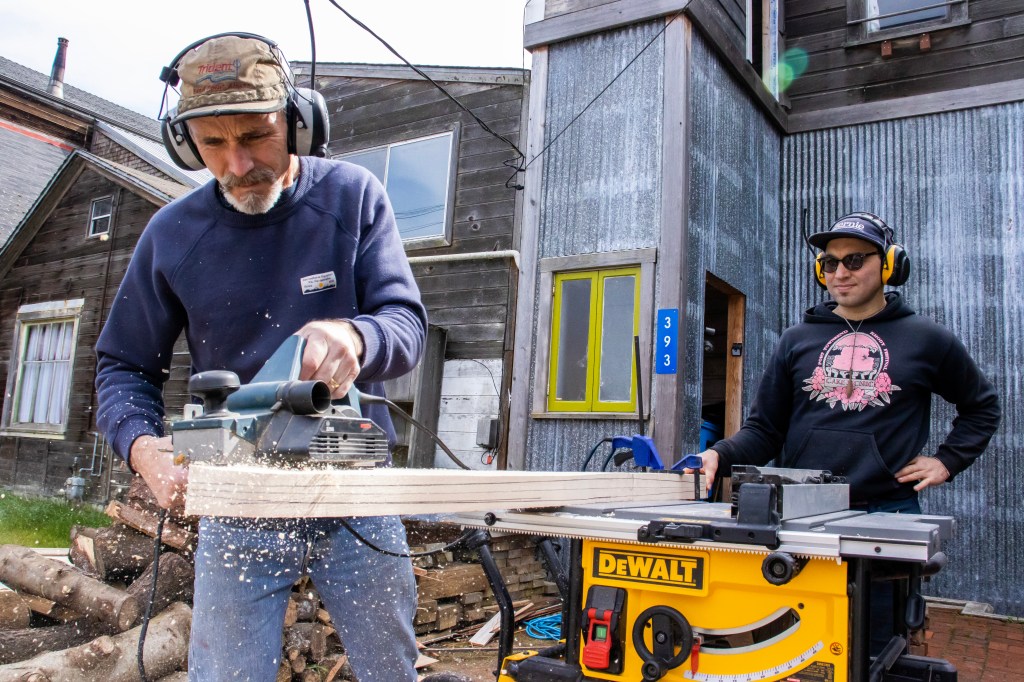
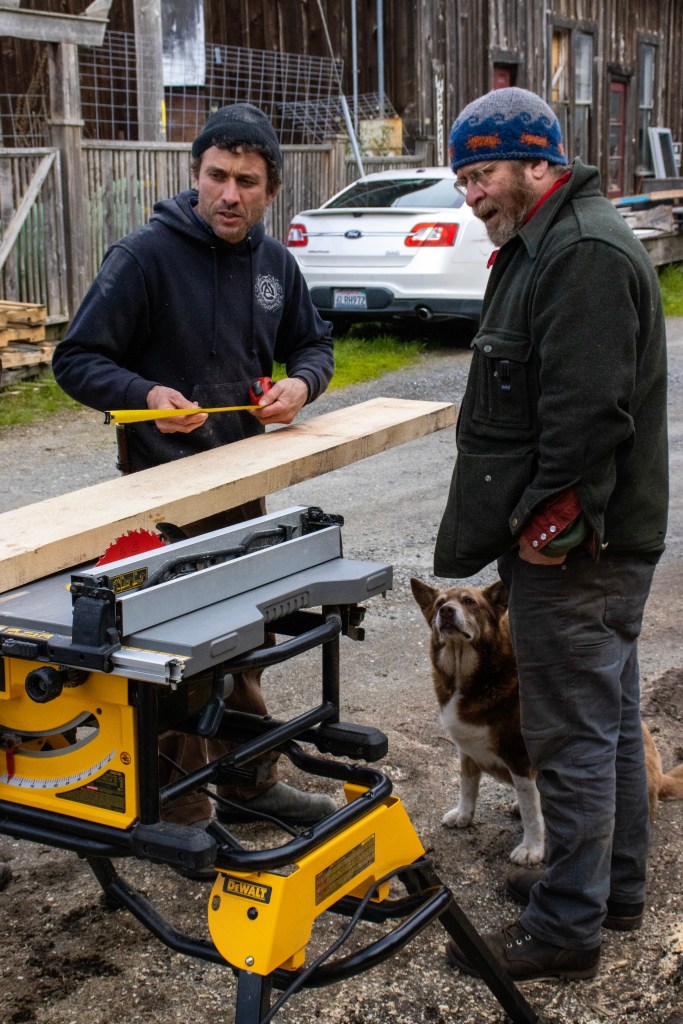
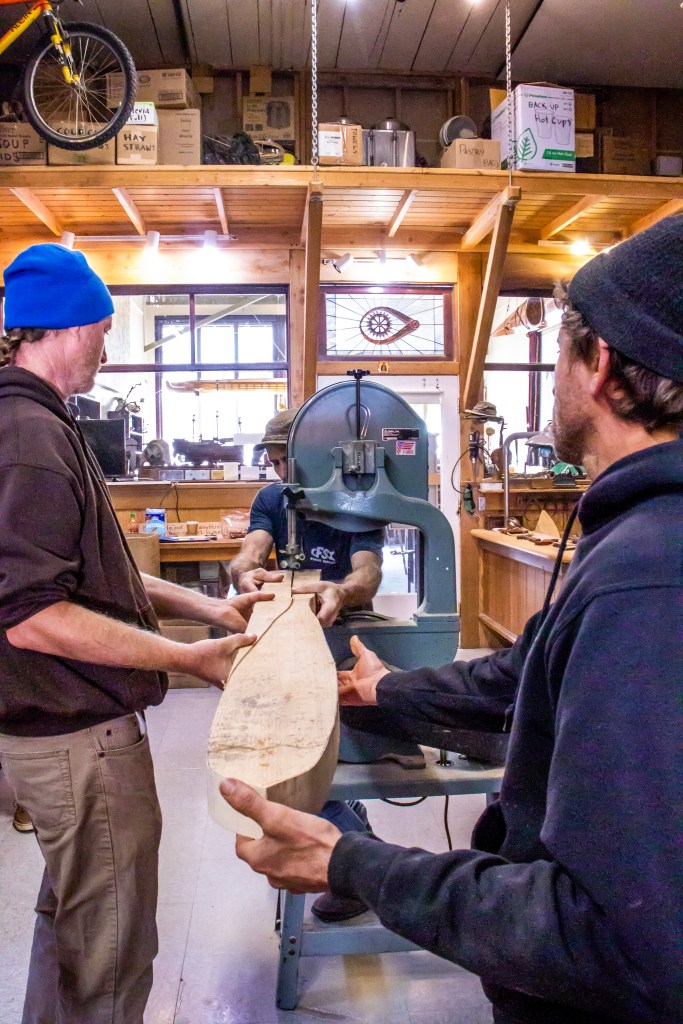
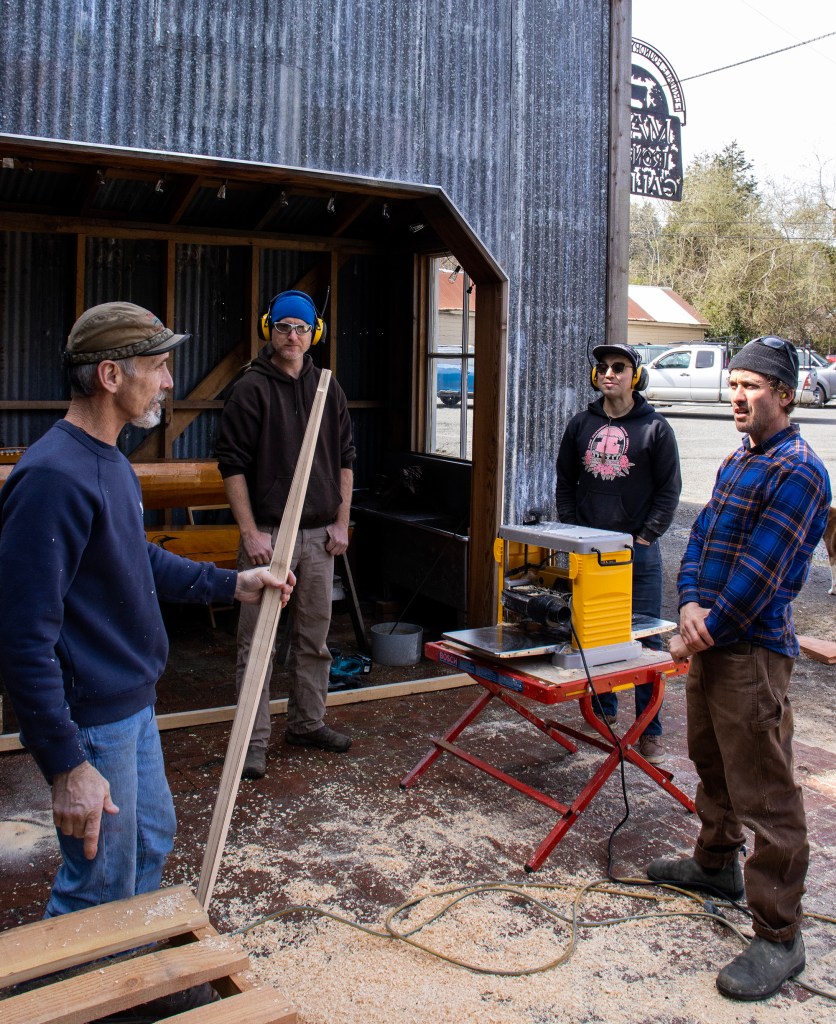
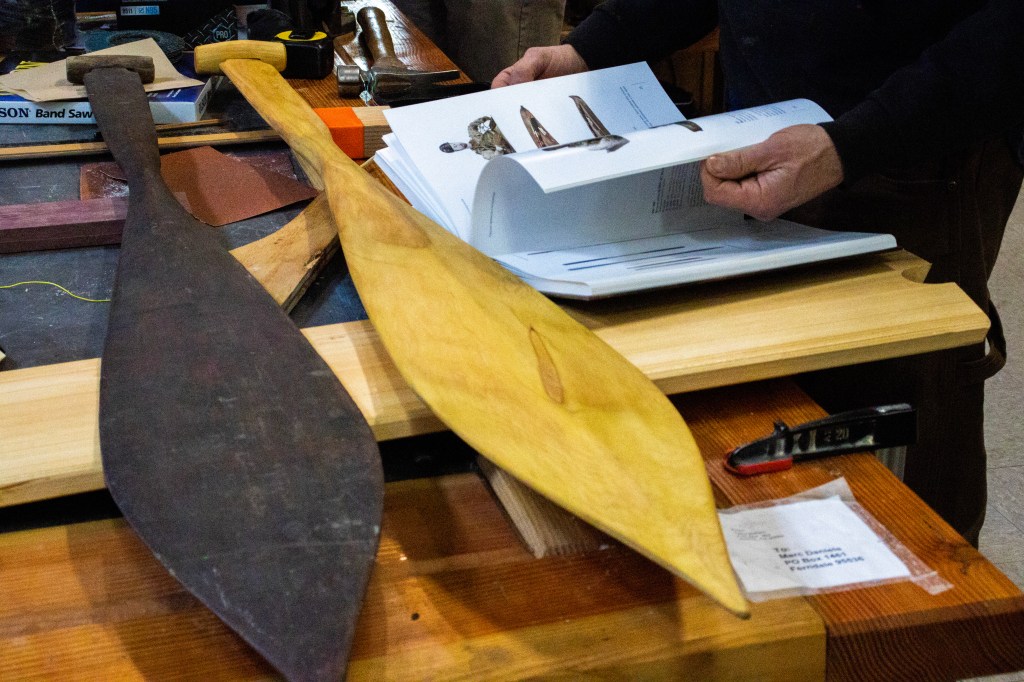
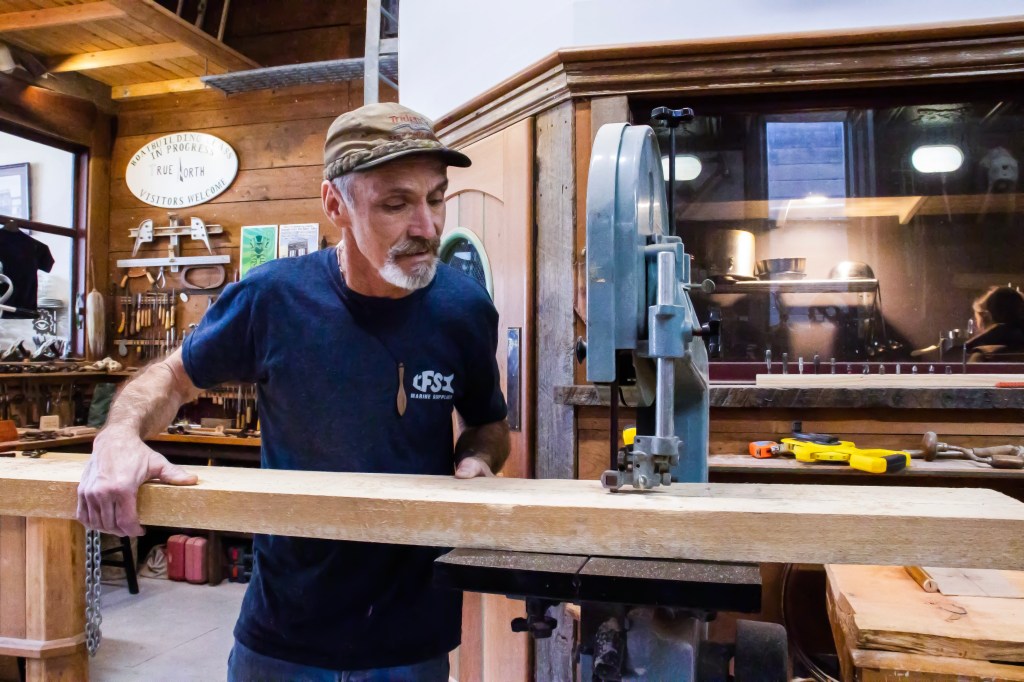
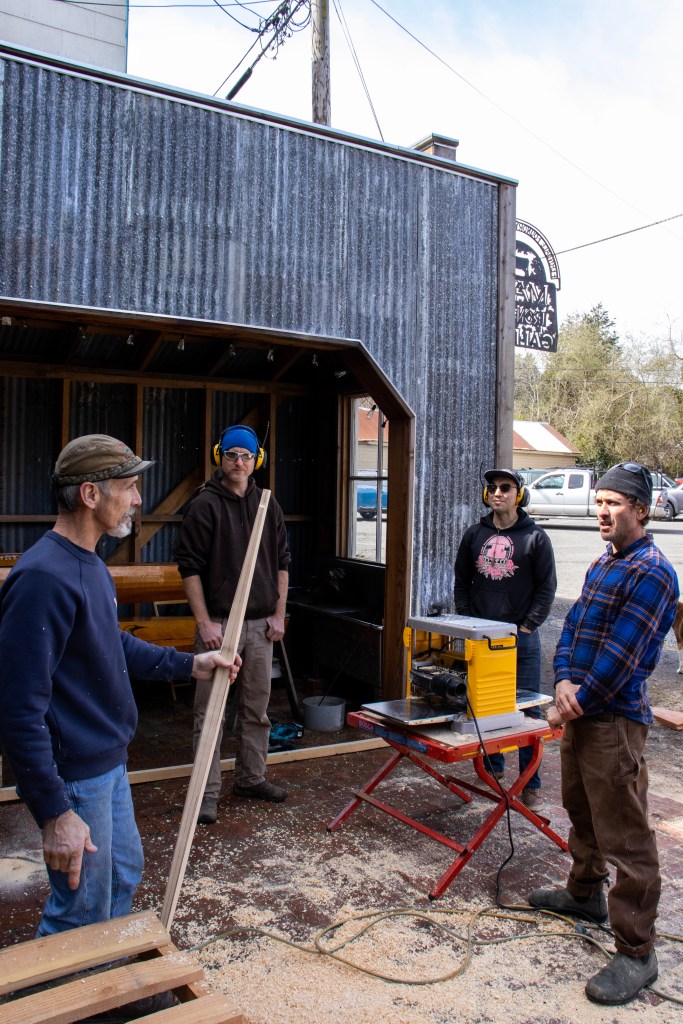
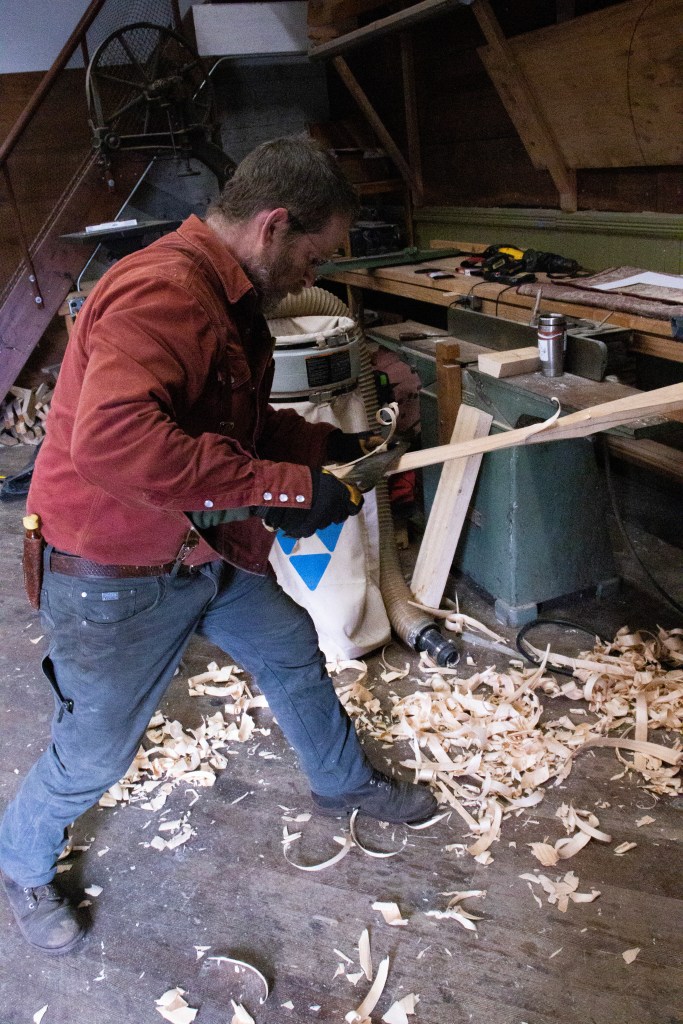
Marc Daniels-Aygagnax̂ y Mike Ferguson tallando un remo tradicional. | Foto por Ruby Cayenne 

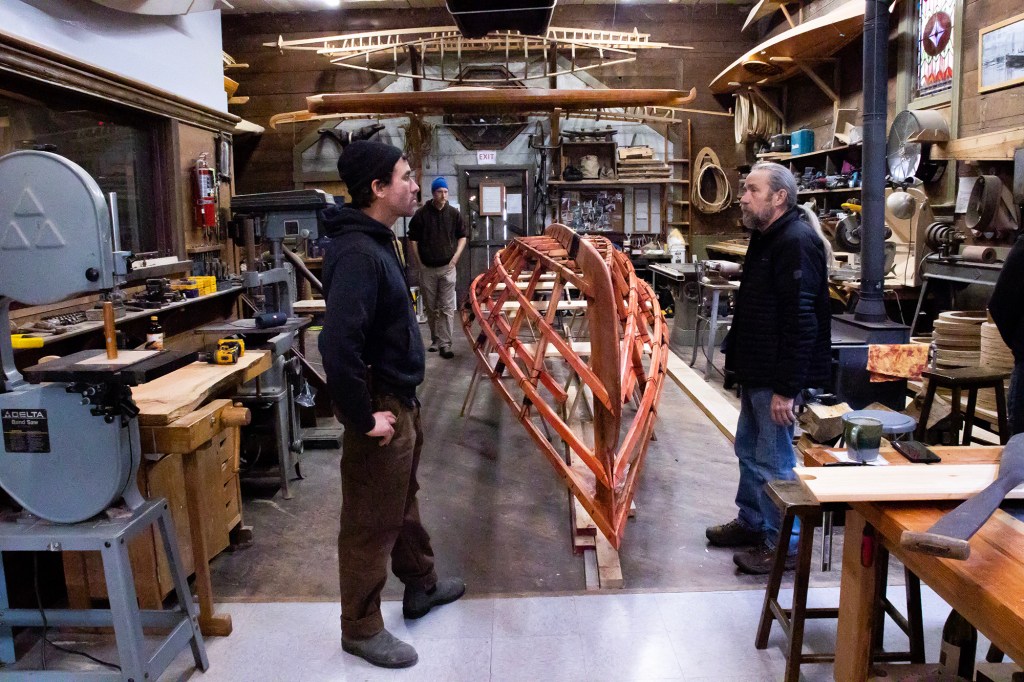
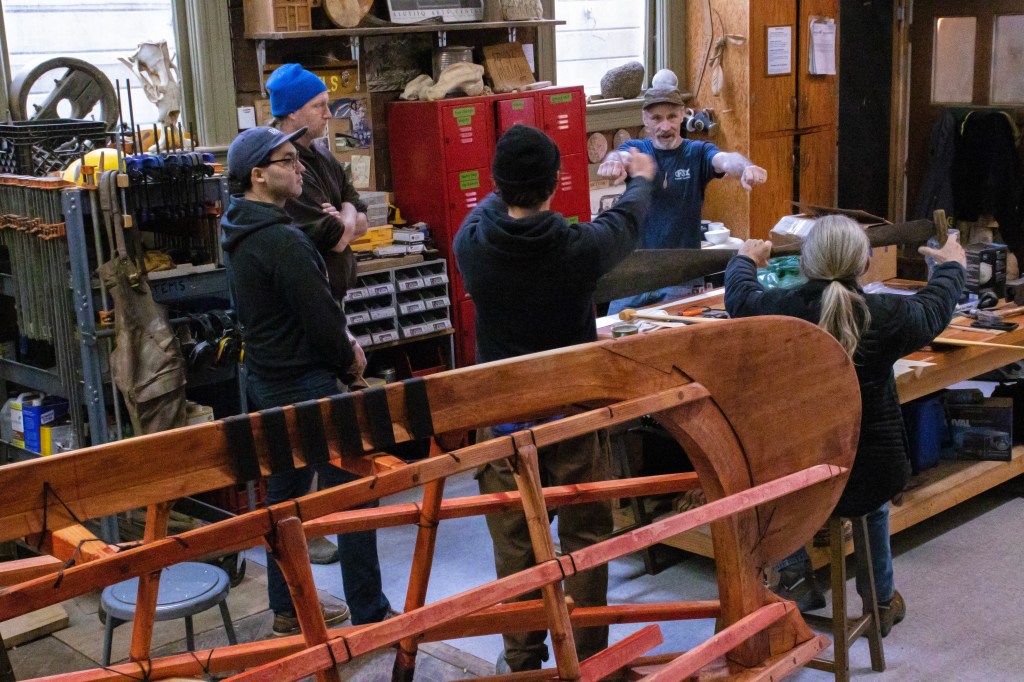
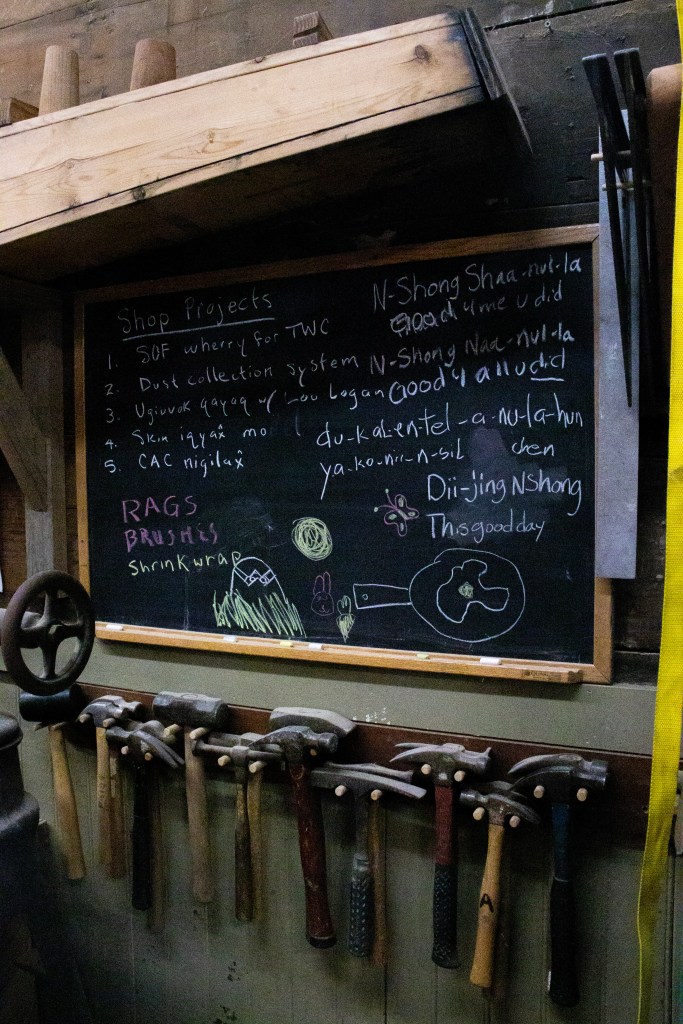
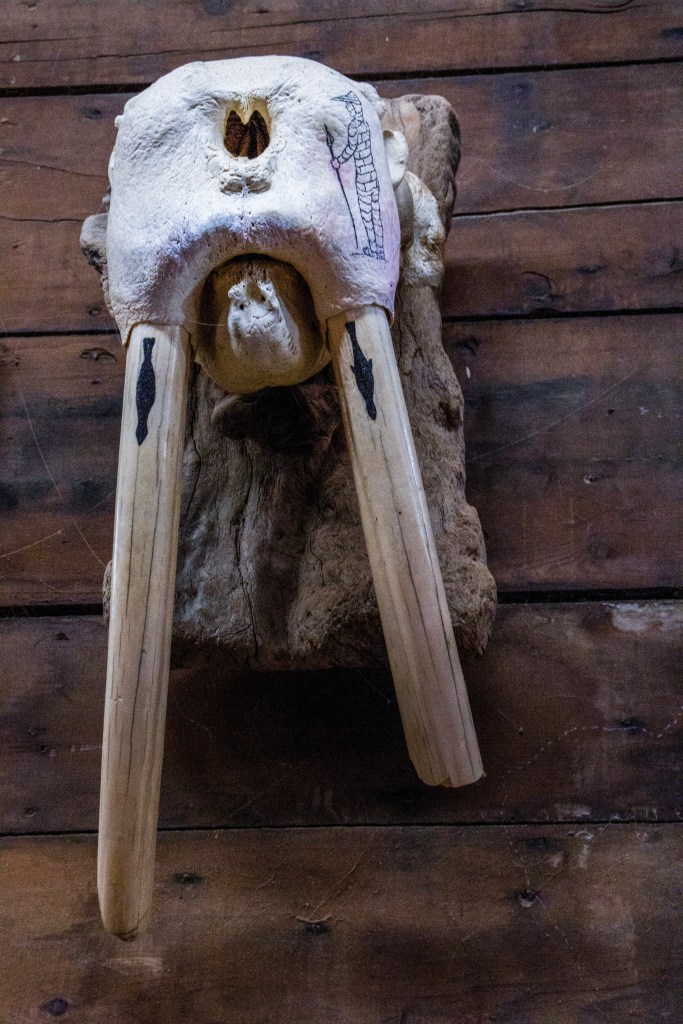
Un viaje a través del tiempo es un proyecto intertribal y comunitario que da vida a uno de los primeros nigilax̂, la embarcación tradicional de la gente Unangax̂ de Unalaska, en muchos siglos. Se está construyendo en la fábrica Mind’s Eye de Ferndale, propiedad de Marc Daniels-Aygagnax̂ y dirigida por él.

Hace siglos, todas las embarcaciones nigilax̂ existentes fueron destruidas intencionalmente por los colonizadores rusos que llegaron con intenciones extractivas. Esclavizaron a muchos de los Unangax̂ para aprovecharse de su superior capacidad de caza y tomaron como rehenes a “mujeres y niños Unangan, exigiendo pieles a cambio de sus vidas,” dijo el National Institute of Health.

Muchos Unangax̂ fueron llevados a la fuerza a una cacería de nutrias que abarcó el continente desde Alaska hasta la costa del Pacífico. Se detuvieron en lo que ahora los pueblos indígenas llaman Metini y el gobierno de los Estados Unidos Fort Ross, CA.
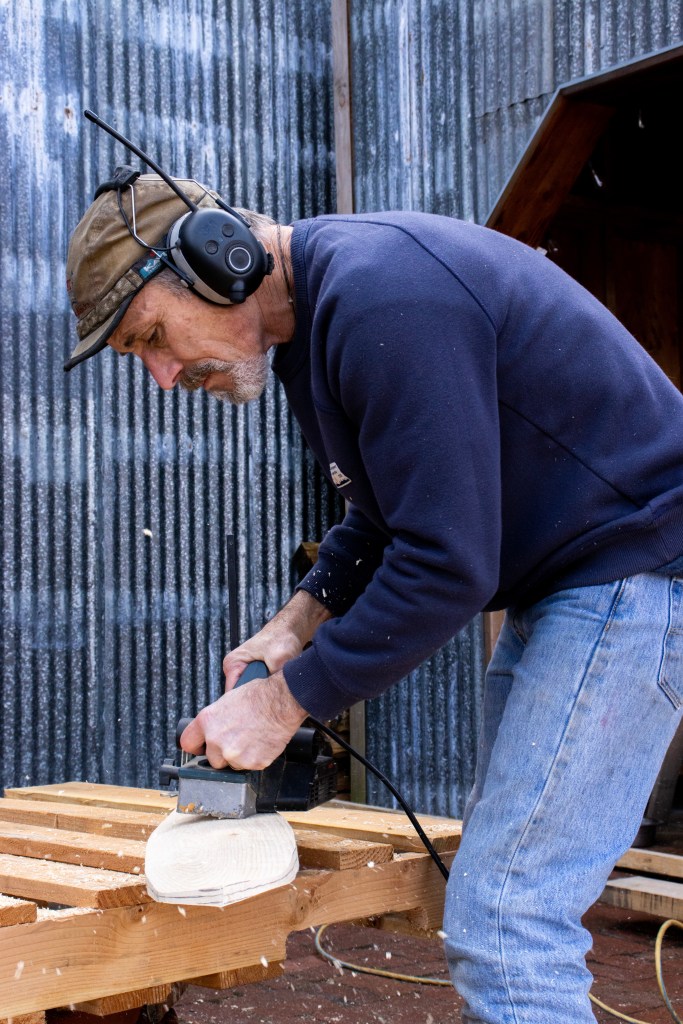
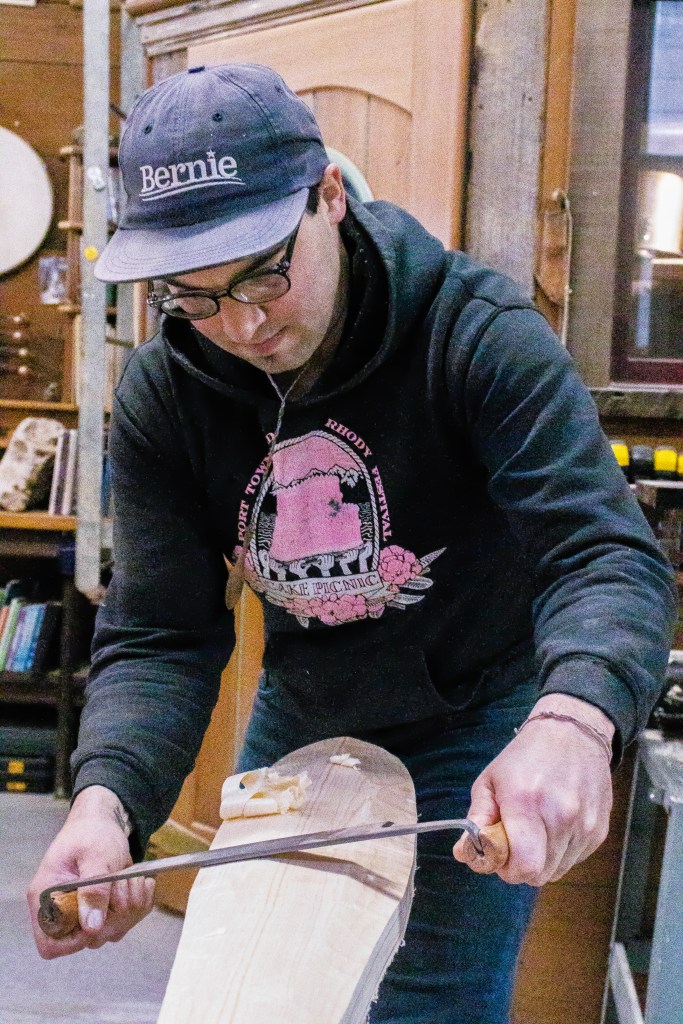
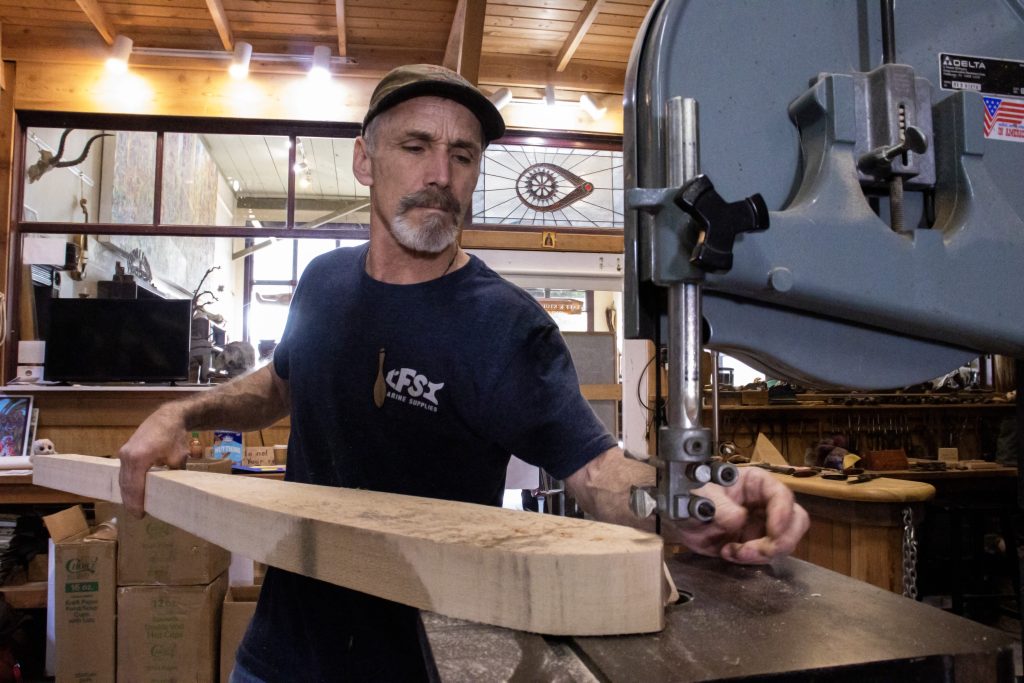
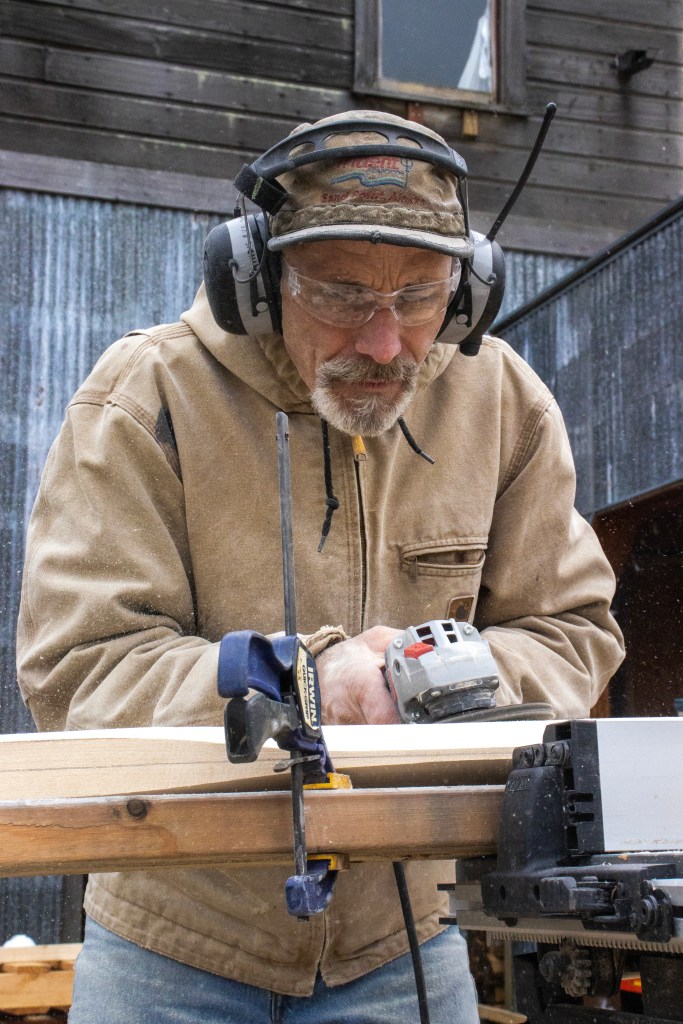
Mike Ferguson tallando a mano un remo tradicional. | Foto by Ruby Cayenne. 

“Los llevaron a miles de millas y se mezclaron con los pueblos indígenas de la costa de California, y siguen aquí. Algunos de ellos se han unido a nosotros en esta construcción. Es un momento de abrazar su herencia y de sanación para ellos,” dijo Daniels-Aygagnax̂. 

“Empezamos reuniéndonos con la gente Wiyot y pidiendo la bendición tribal para empezar el proyecto, ya que estamos en tierras ancestrales Wiyot,” dijo Daniels-Aygagnax̂. Recibió la bendición del gobierno tribal de la isla de Saint Paul, Alaska, y de la tribu Qawalangin de Unalaska. Al principio de la construcción, Perry Lincoln y su sobrina, ambos miembros de la tribu Wailaki, entonaron una canción de bendición.

Mike Ferguson es un activista político liberal y descendiente del pueblo Unangax̂ por parte de su madre. De adulto, ha encontrado una reconexión con su cultura a través de la construcción de embarcaciones indígenas. Su prima, Kaneshia McGlashan-Price, es miembro de la tribu Unangax̂ y ha ayudado a construir el nigilax̂.

“Creo que eso lo ha convertido en un proceso de grupo cohesionado, pero también nos ha permitido conocernos. Ha sido un proceso intenso, personal e interpersonalmente. Nos ha permitido crecer a cada uno de nosotros,” dijo Ferguson al hablar del proceso de construcción.

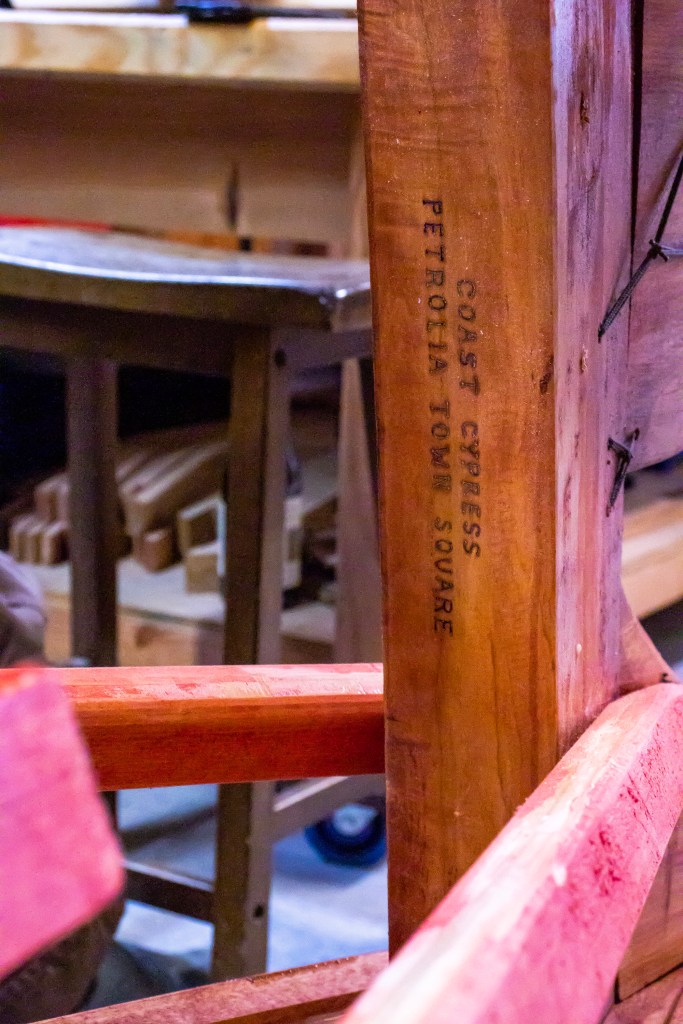
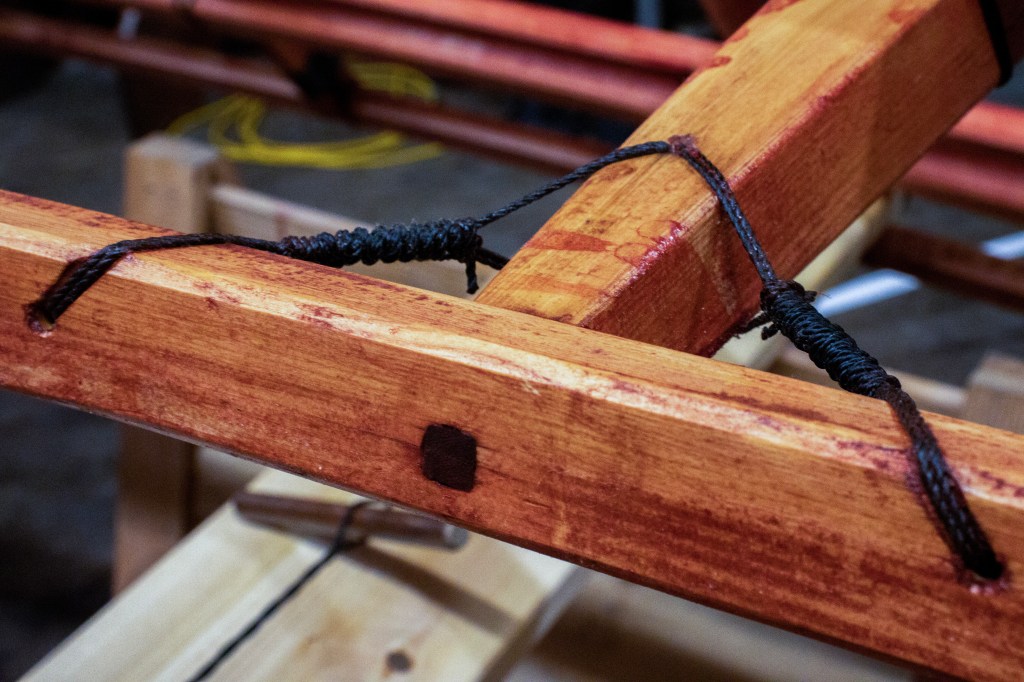
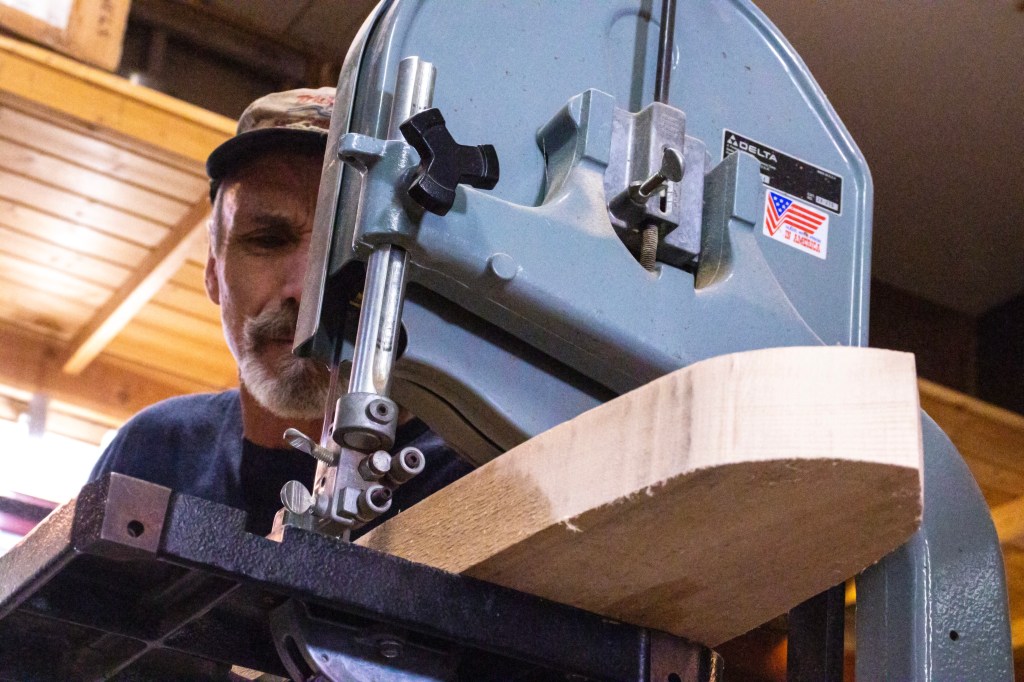
Según Daniels-Aygagnax̂, la búsqueda de la madera utilizada en el nigilax̂ empieza en la playa y se recoge de forma tradicional para utilizarla en partes curvas de la embarcación, como la proa y la popa. Se están utilizando alternativas sintéticas a algunos de los materiales utilizados tradicionalmente, como las barbas de ballena y la piel de león marino, por motivos de sostenibilidad. Las herramientas manuales de acero y las herramientas eléctricas que se utilizan difieren de las herramientas de marfil y piedra utilizadas tradicionalmente.

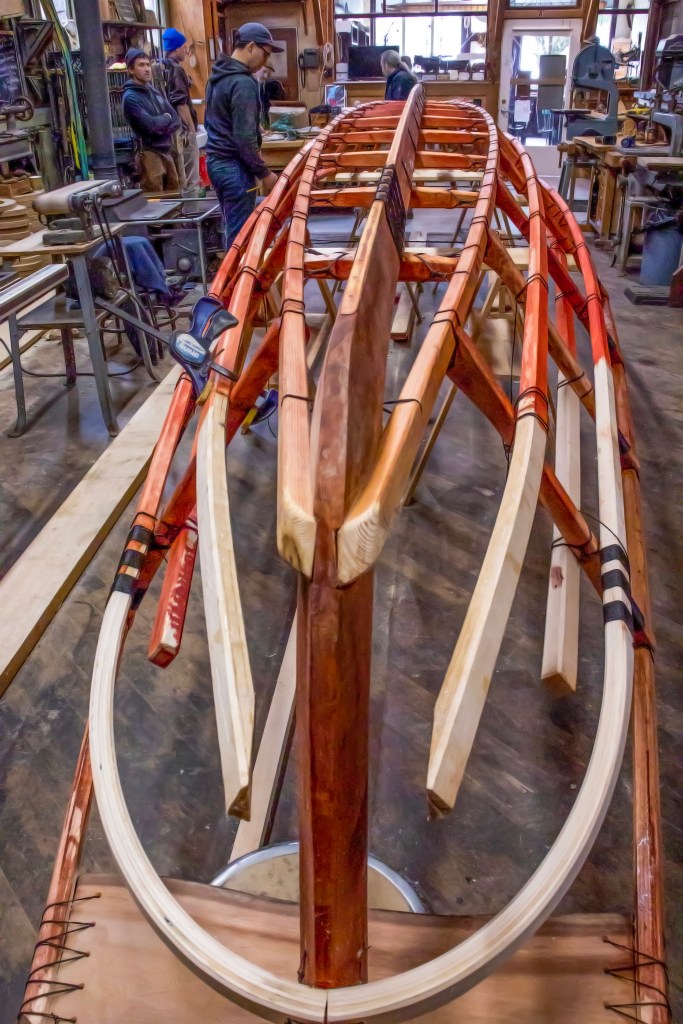
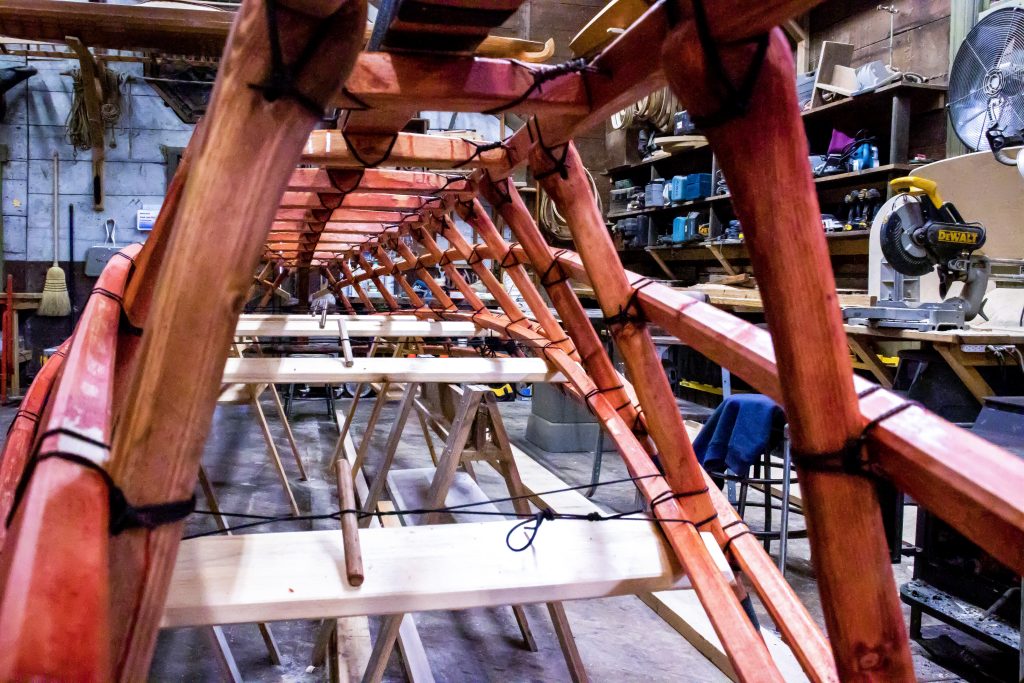
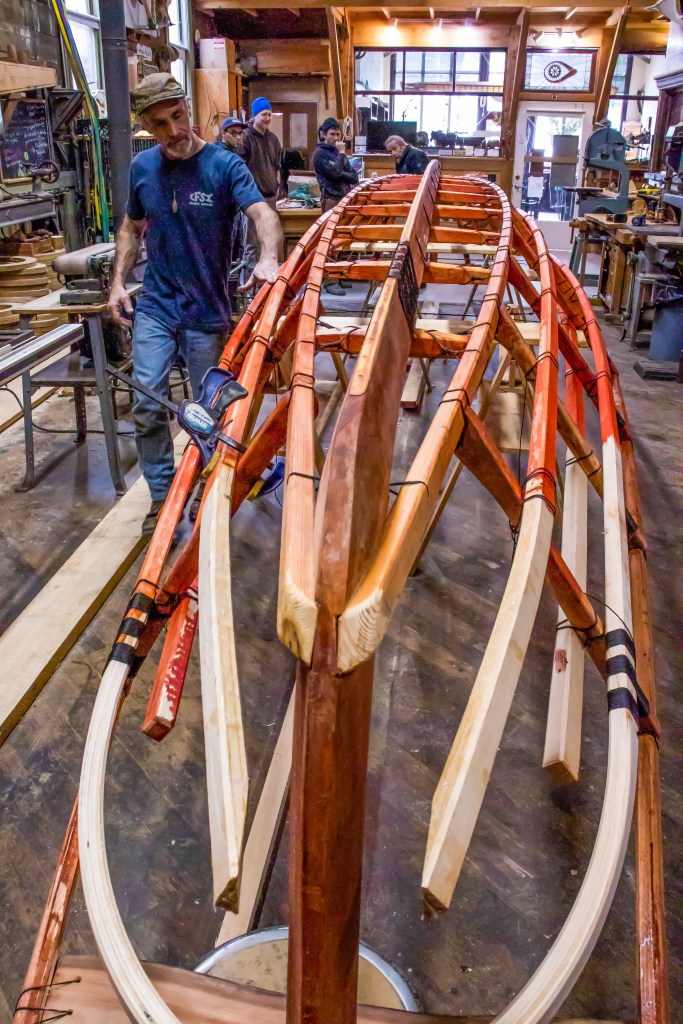
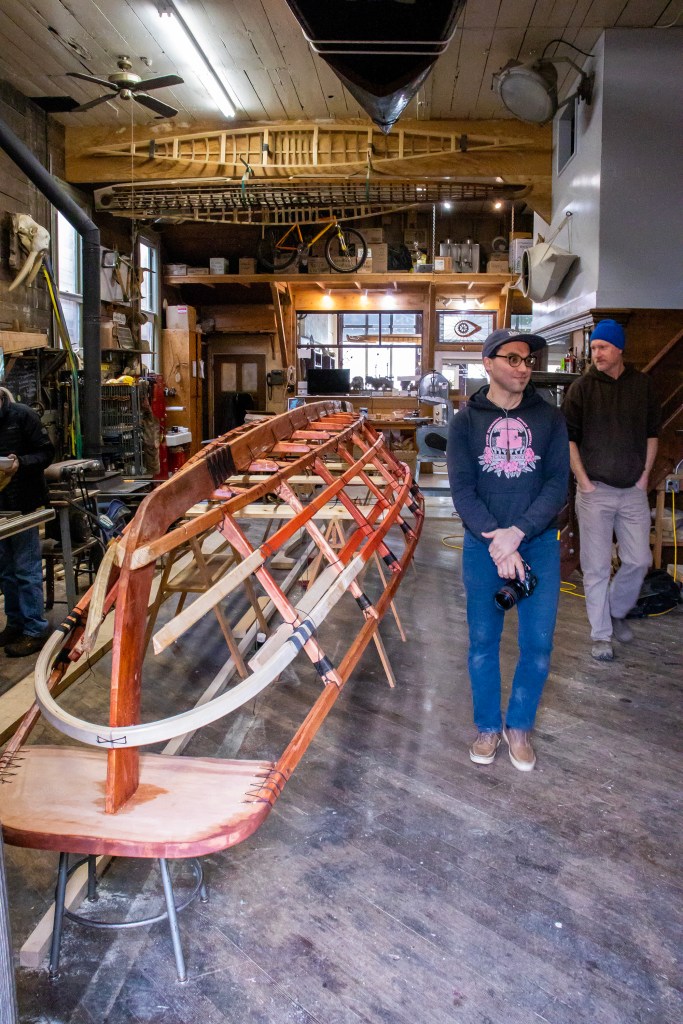
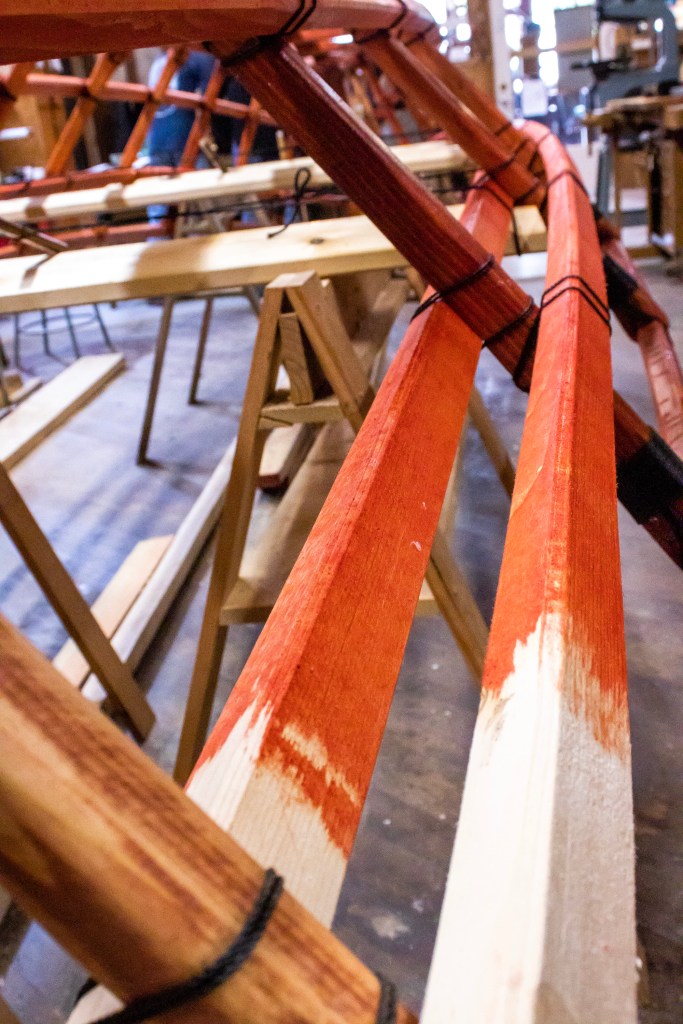
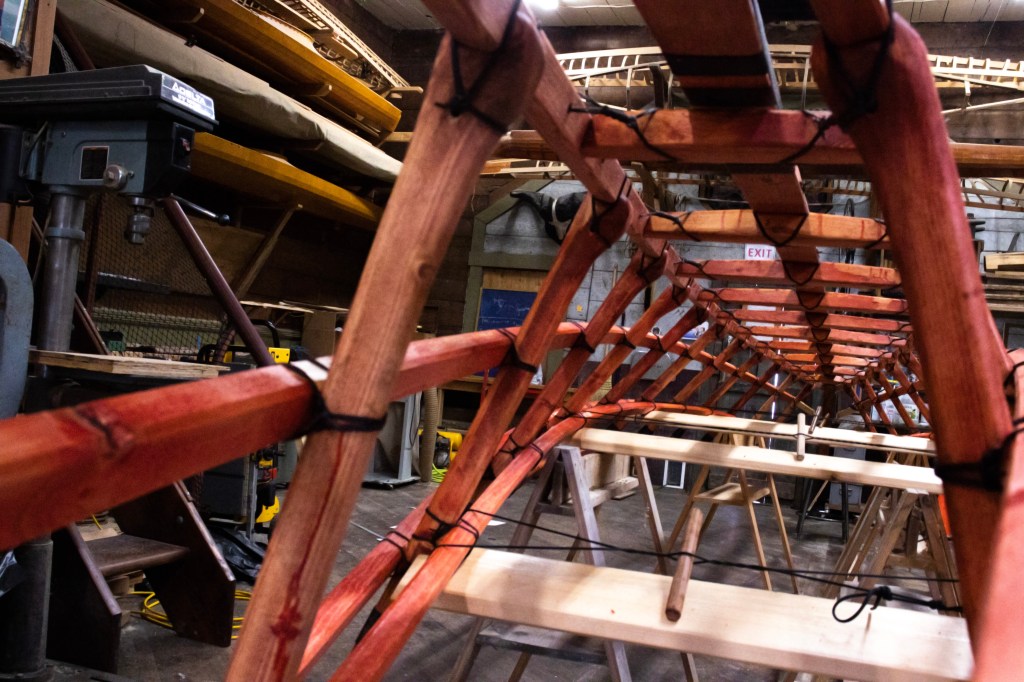
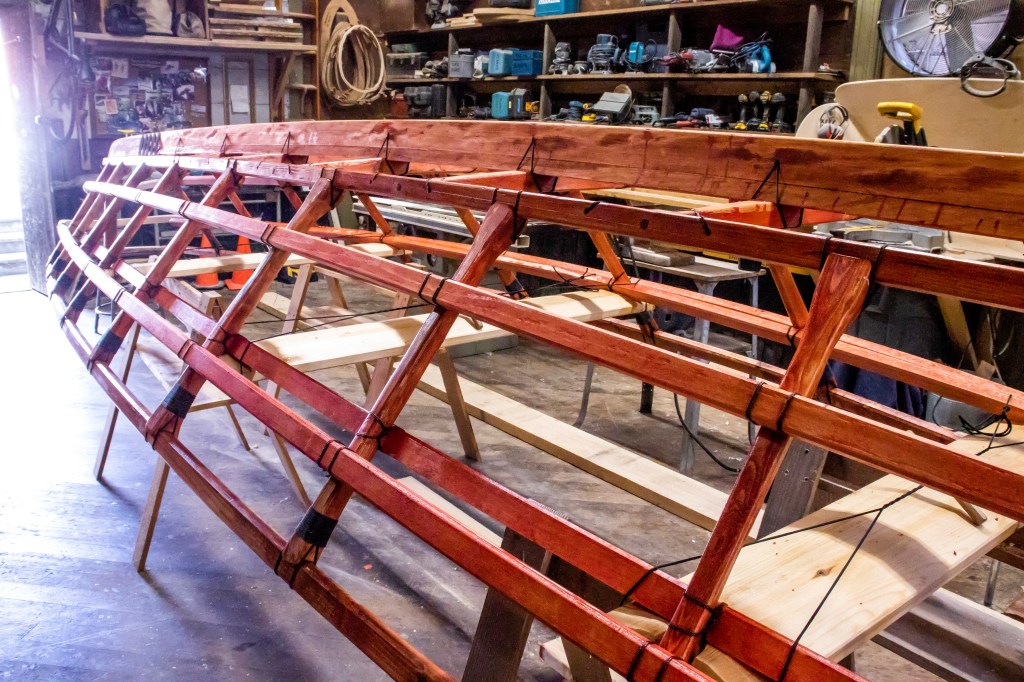
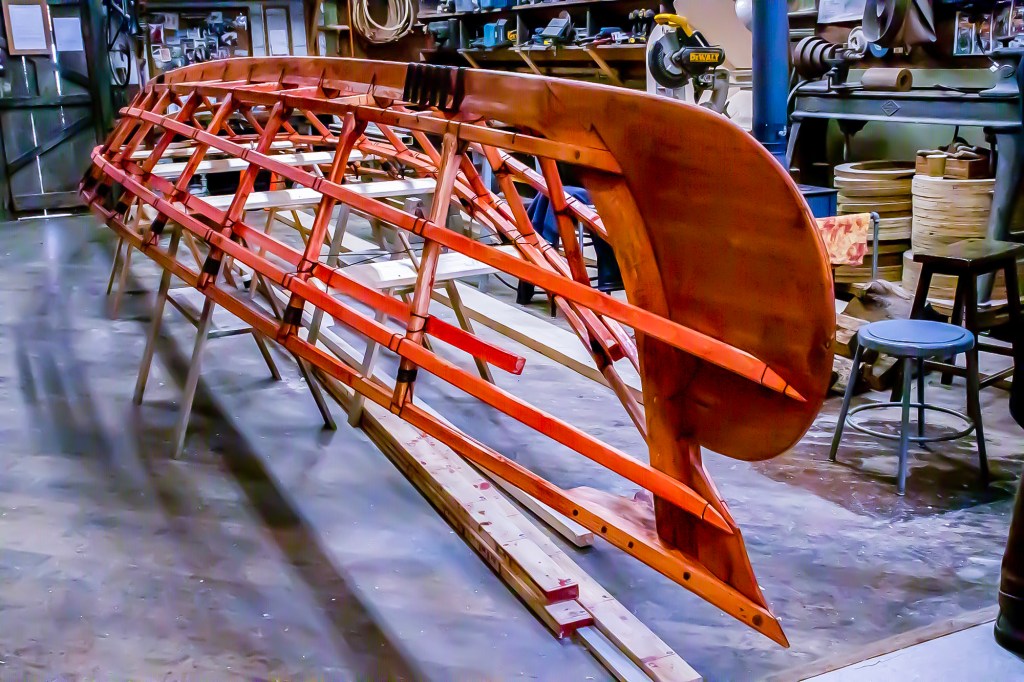
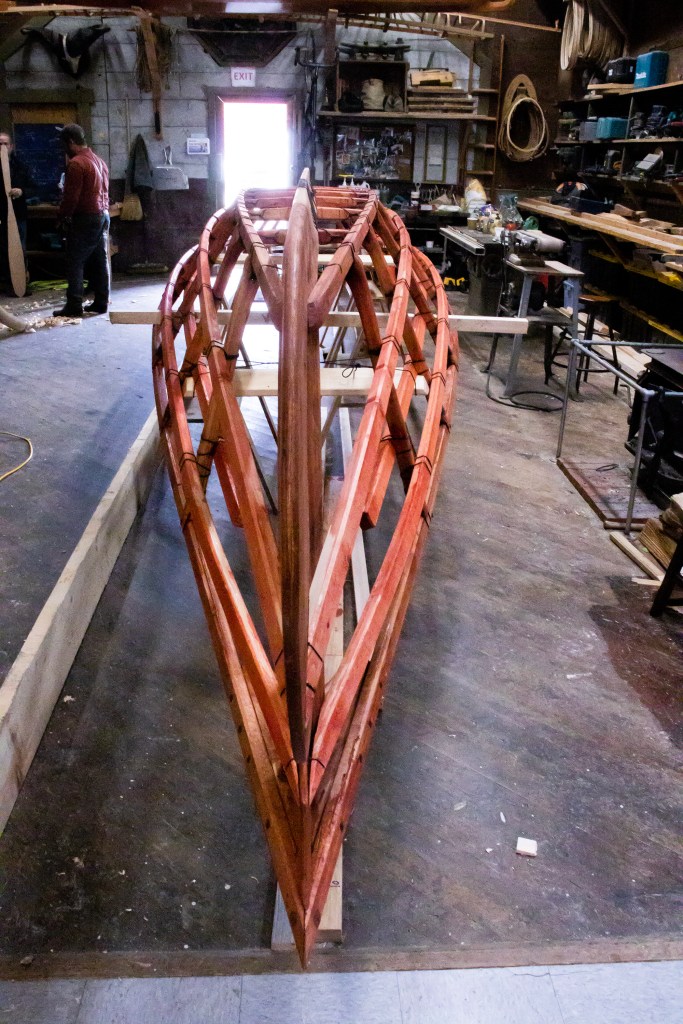
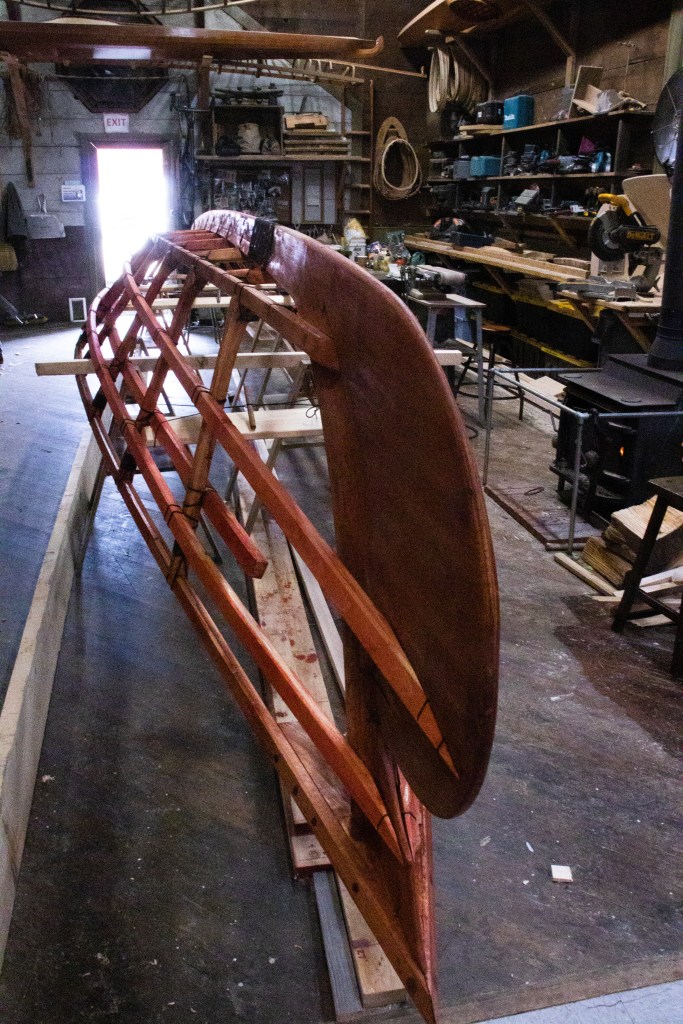
El navío nigilax̂ en Mind’s Eye Factory

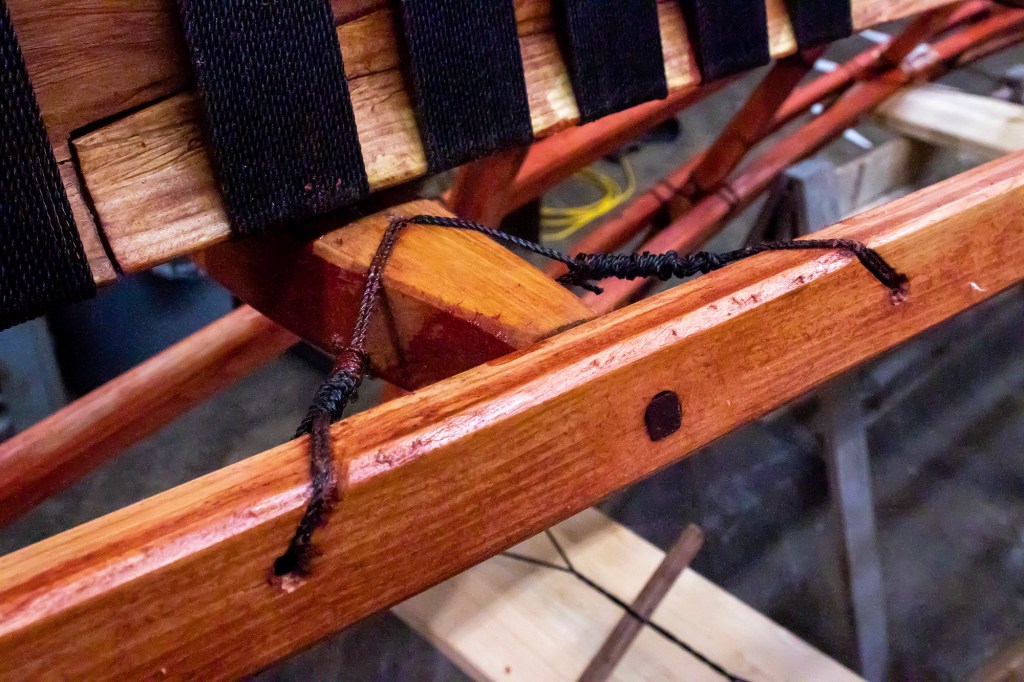
“Sinceramente, hay cierto trauma por hacer los latigazos, que llegaron a dolerme mucho en las manos,” dijo Ferguson. “Pasar de un trozo plano de madera a darle forma en algo hermoso que va a ser utilizado por alguien, es gratificante.”

El Día de los Nativos en el Fuerte de Alaska se celebra en Metini todos los años y fue organizado por primera vez por una mujer Unangax̂ hace varios años. En este acto se pondrá en marcha esta primavera el nigilax̂ construido en Humboldt. Está previsto que asistan grupos de danza de la tribu Unangax̂, Kashia Band of Pomo Indians y la tribu Wiyot.

Daniels-Aygagnax̂ recibió el nombre de Aygagnax̂ de un mentor Unangax̂, cuya traducción más aproximada es “el que camina.” Lleva 30 años practicando la construcción de barcos indígenas y enseña esta habilidad.

“Trabajo para sanar y crear mejores ambientes comunitarios que puedan empoderar a las personas para que vivan la vida que quieren vivir,” dijo Ferguson.

Unangax̂ nigilax̂ built in community partnership

by Ruby Cayenne

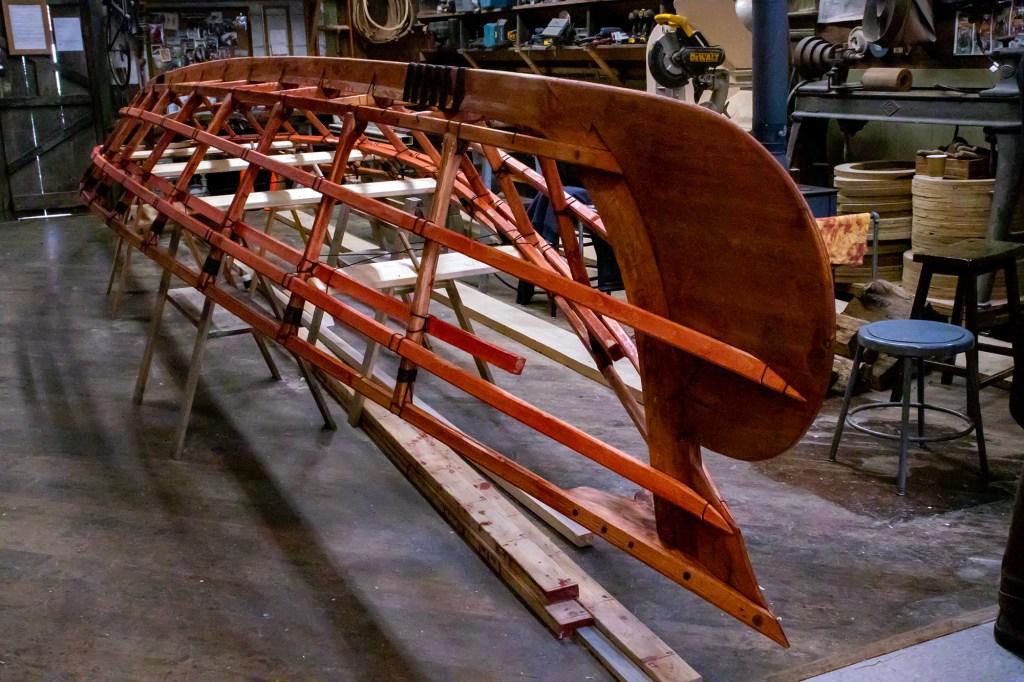
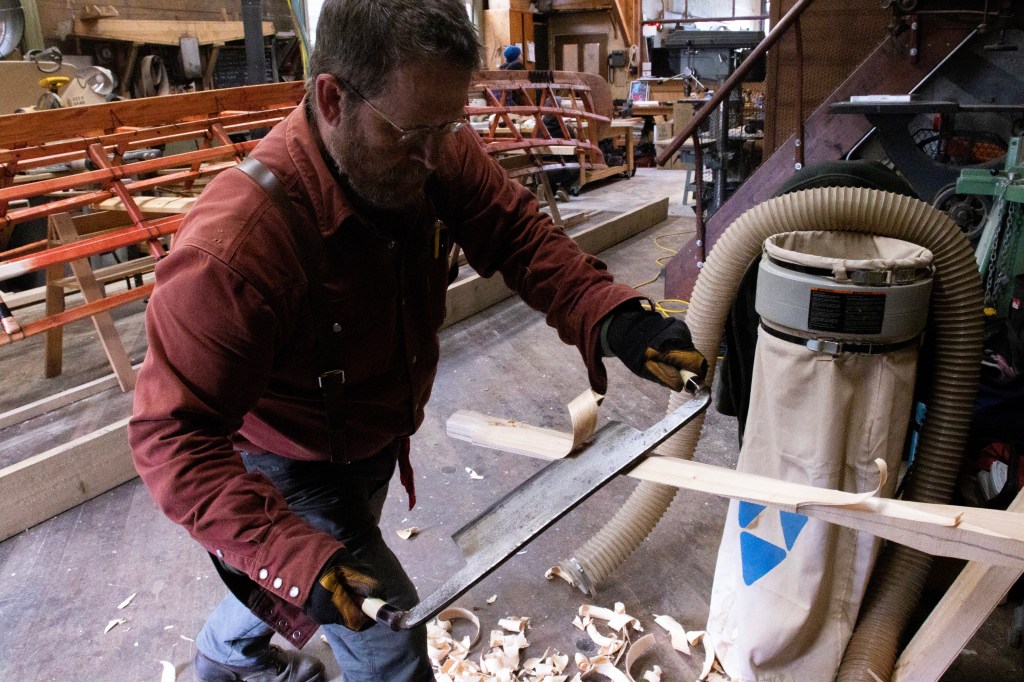
The nigilax̂ vessel from below. | Photo by Ruby Cayenne

Editor’s Note: Ruby Cayenne’s family has participated in the building of the nigilax̂ at Mind’s Eye Factory.

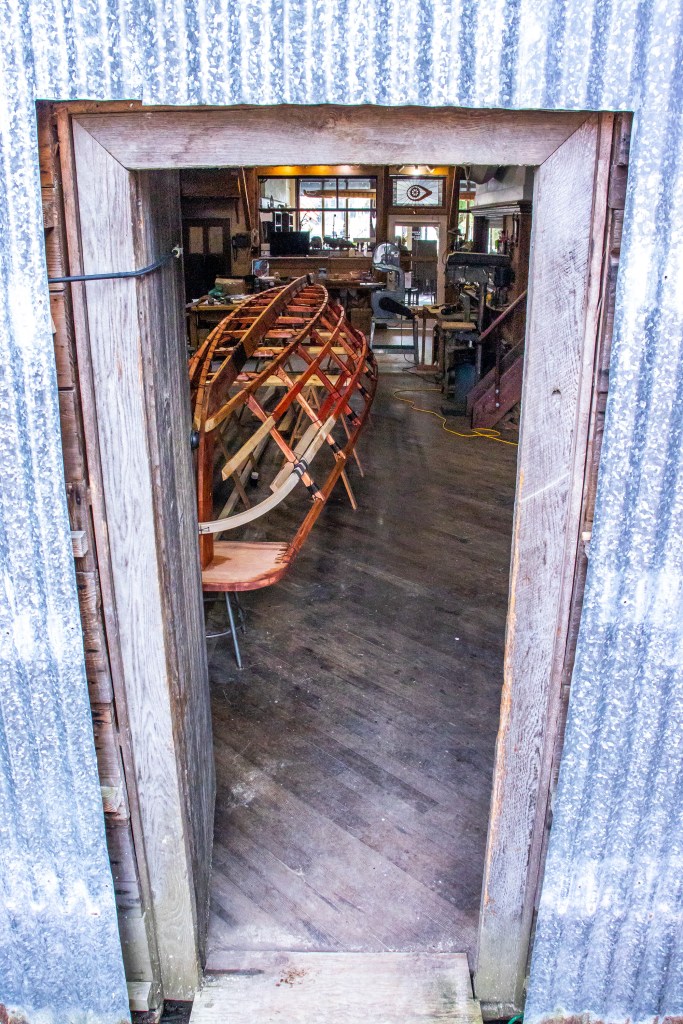
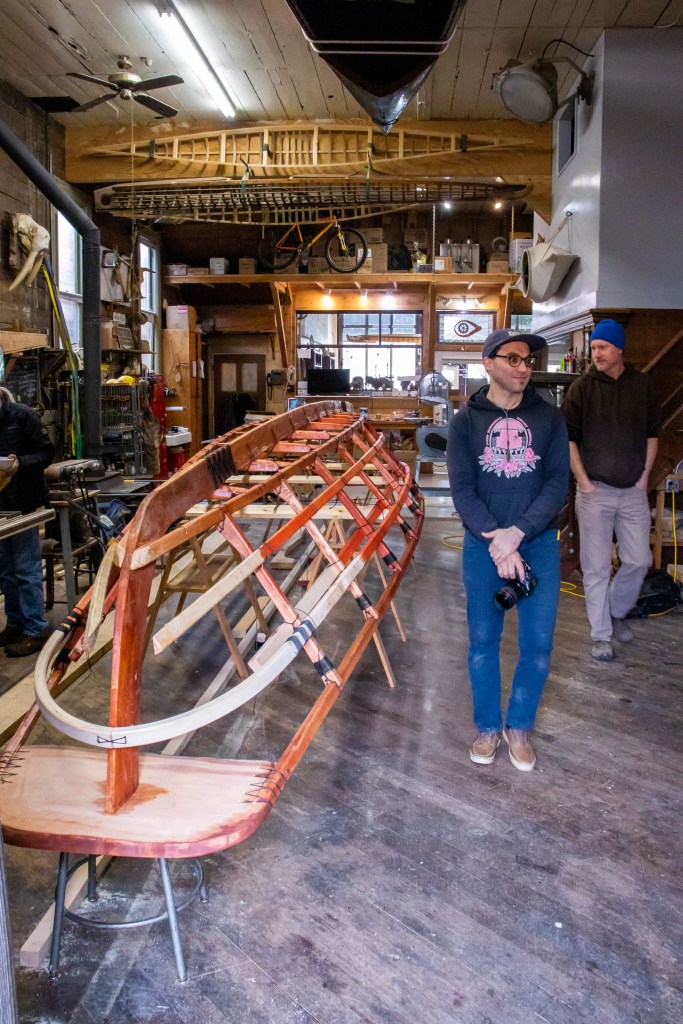
A Journey Across Time is an intertribal and community project bringing to life one of the first nigilax̂ in many centuries, the traditional vessel of the Unangax̂ people of Unalaska. It is being built at Mind’s Eye Manufactory in Ferndale, owned and run by Marc Daniels-Aygagnax̂.

Centuries ago, all the nigilax̂ vessels in existence were intentionally destroyed by Russian colonizers who arrived with extractive intentions. They enslaved many of the Unangax̂ people to take advantage of their superior hunting abilities and took “Unangan women and children hostage, demanding furs in exchange for their lives,” the National Institute of Health said.

Many Unangax̂ people were forcefully taken on an otter hunt that spanned the continent from Alaska, and down through the pacific coast. They stopped in what is now called Metini by Indigenous peoples and Fort Ross, CA by the U.S. government.

“They were taken thousands of miles and intermarried with the native people on the California coast, and they’re still here. Some of them have joined us on this build. It is a time of embracing their heritage and healing for them,” Daniels-Aygagnax̂ said.

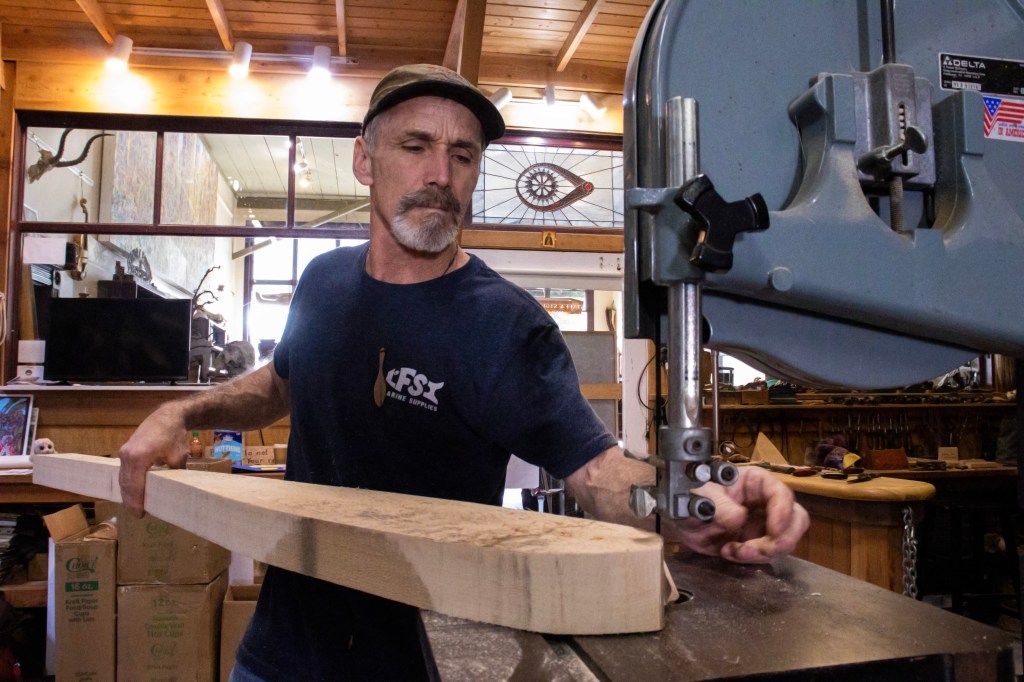
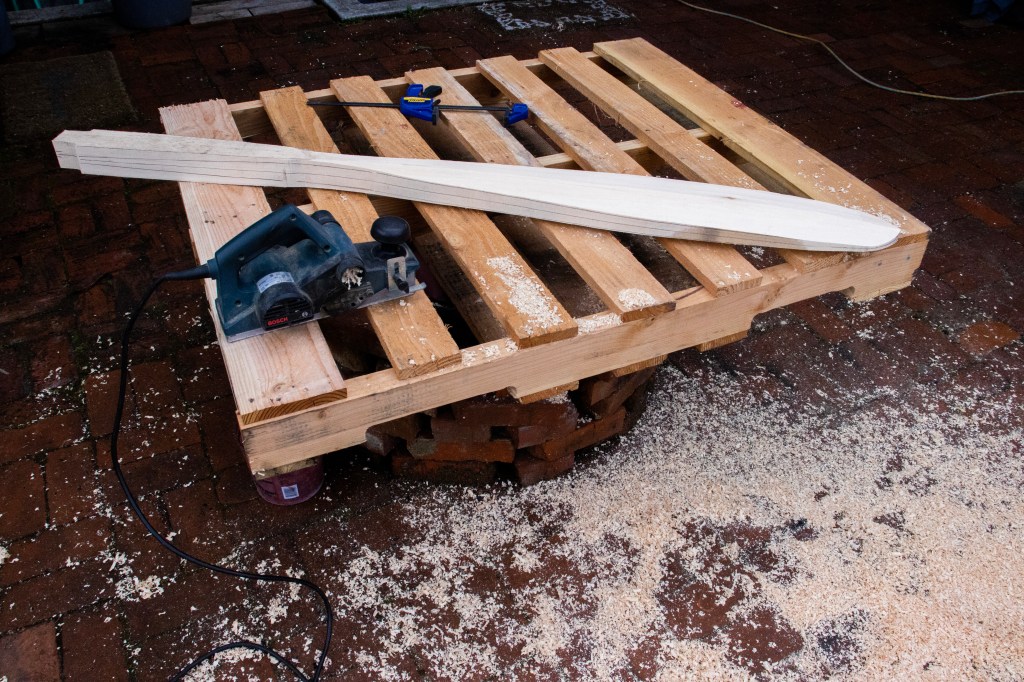
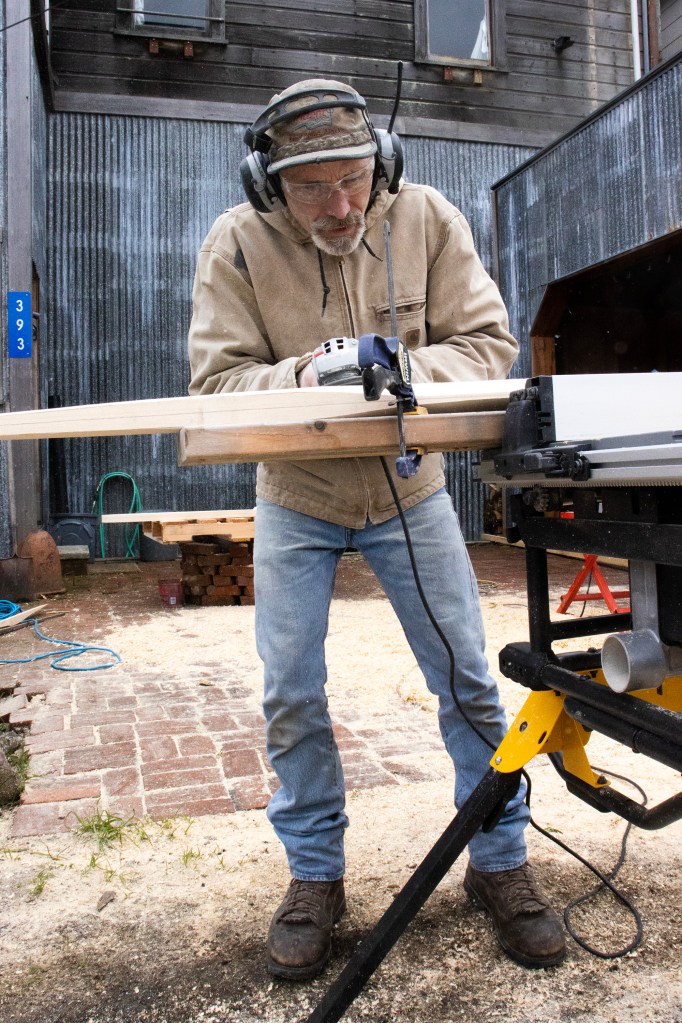
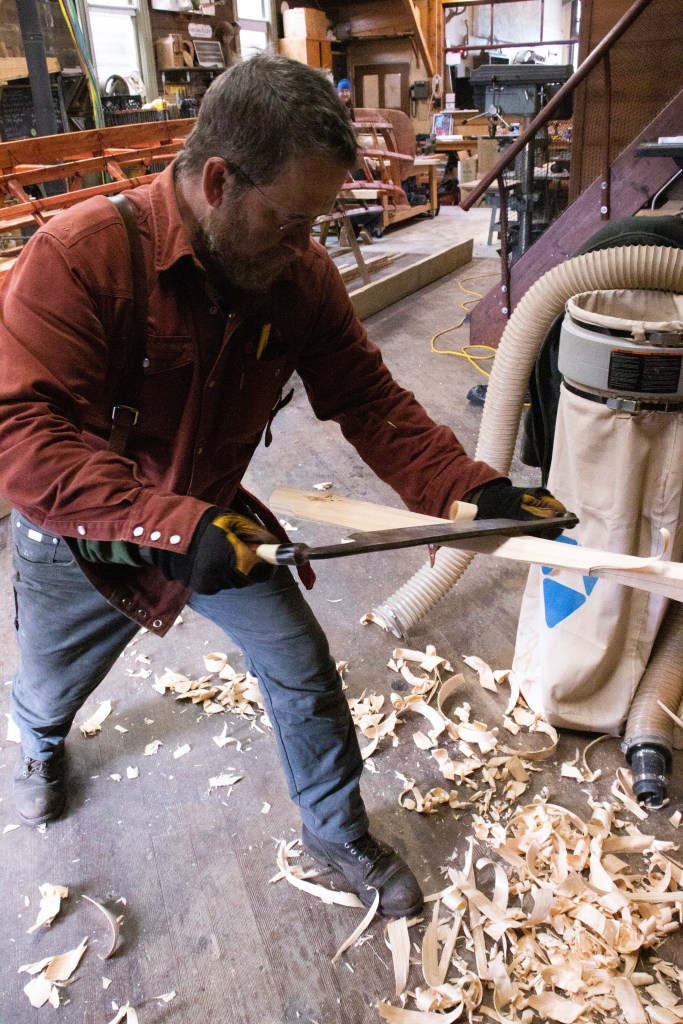
Marc Daniels-Aygagnax̂ and Mike Ferguson carving a traditional paddle. | Photo by Ruby Cayenne

“We started off by meeting with Wiyot people and asking for the tribal blessing to begin the project since we’re on Wiyot ancestral lands,” Daniels-Aygagnax̂ said. He received blessings from the tribal government of Saint Paul Island, Alaska and the Qawalangin Tribe of Unalaska. At the beginning of the build, Perry Lincoln and his niece, both members of the Wailaki Tribe, sang a song of blessing.

Mike Ferguson is a liberal political activist and a descendant of the Unangax̂ people on his mother’s side. In adulthood, he has been finding a reconnection to his culture through Indigenous boat building. His cousin, Kaneshia McGlashan-Price, is a Unangax̂ tribe member who has been helping build the nigilax̂.

“I feel that’s really made it both a cohesive group process, but also has allowed us to get to know each other. It’s been an intense process, personally and interpersonally. It’s allowed each of us to grow,” Ferguson said when speaking about the building process. 

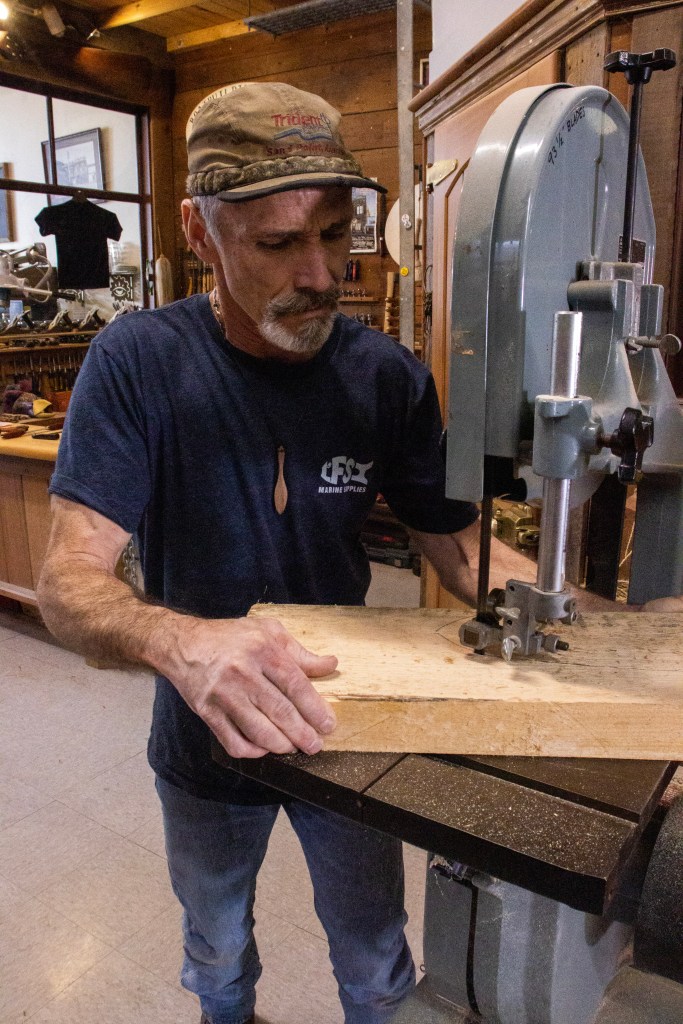
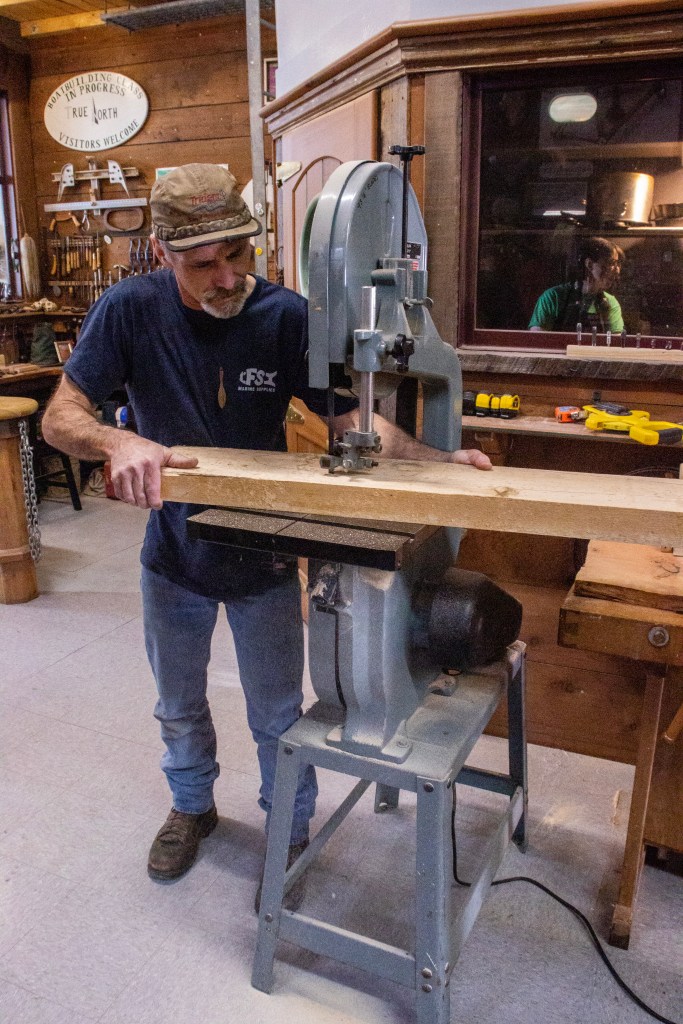
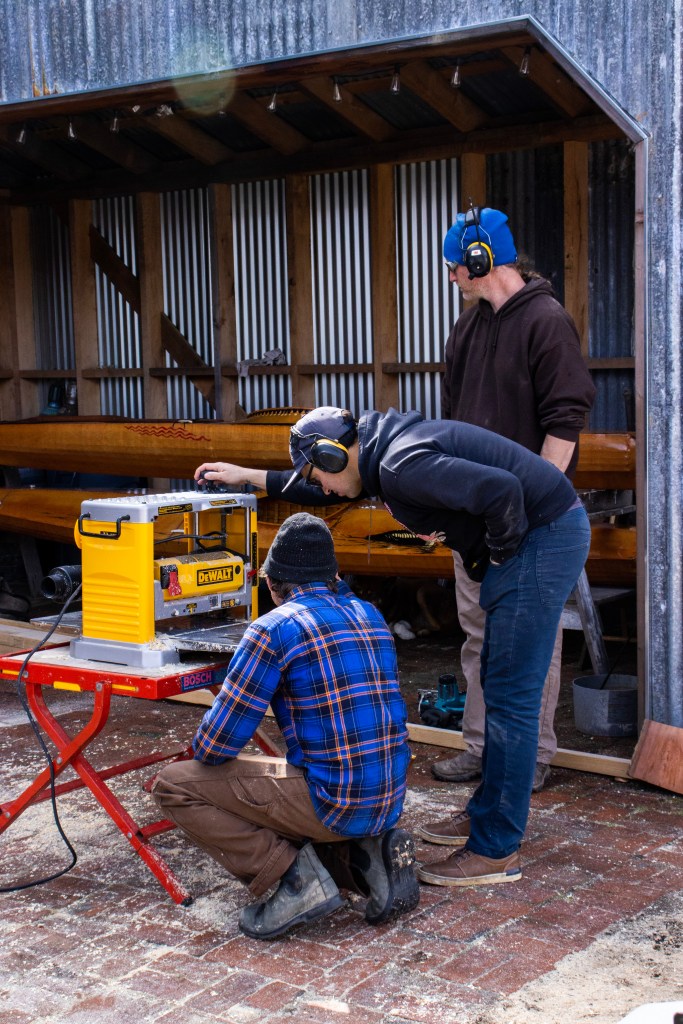
Marc Daniels-Aygagnax̂ carving a paddle with modern machinery. | Photo by Ruby Cayenne

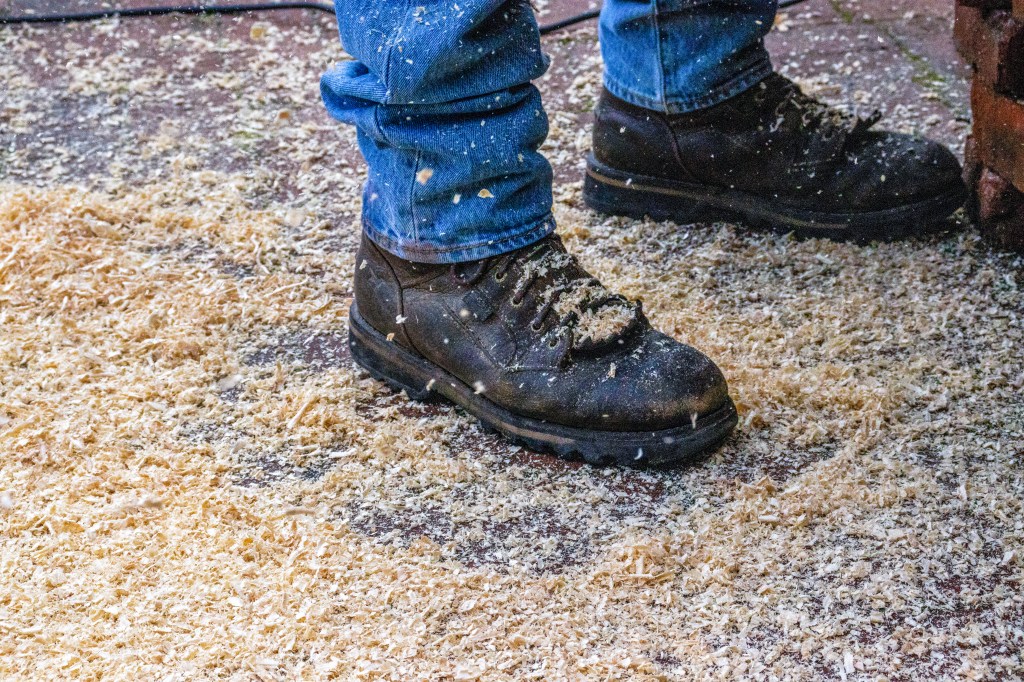
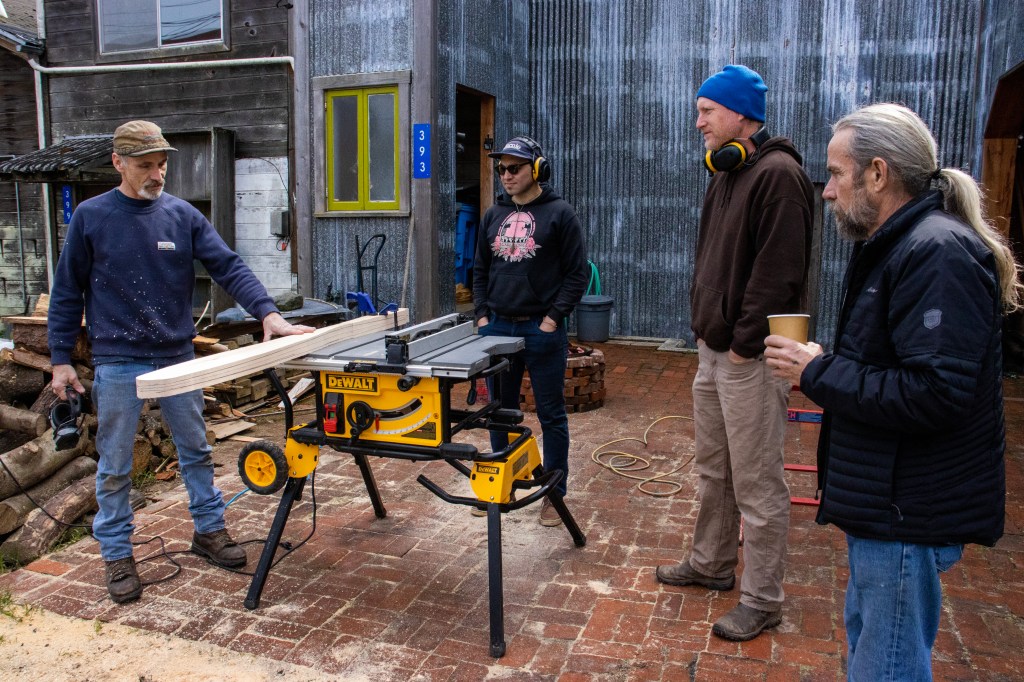
According to Daniels-Aygagnax̂, search for wood used in the nigilax̂ starts on the beach and is collected in the traditional way to be used in curved parts of the boat such as the bow and stern. Synthetic alternatives to some of the traditionally used materials like whale baleen and sea lion skin are being used for sustainability purposes. Steel edged hand tools and power tools being used differ from the ivory and stone tools used traditionally.

“Honestly there’s some trauma from doing the lashings, which became very painful on my hands,” Ferguson said. “To go from a flat piece of wood, to shape it into something beautiful that’s going to be used by somebody, is rewarding.”

Alaska Native Day at the Fort is held at Metini yearly and was first organized by an Unangax̂ woman several years ago. This event is where the nigilax̂ built in Humboldt will be launched this spring. There are plans to have dance groups from the Unangax̂ tribe, Kashia Band of Pomo Indians and Wiyot tribe in attendance. 

Daniels-Aygagnax̂ was given the name Aygagnax̂ by an Unangax̂ mentor, with the closest translation being “one who walks.” He has been practicing Indigenous boat building for 30 years and teaches the skill. 

“I work towards healing and creating better community environments that can empower people to live the lives that they want to live,” Ferguson said.