by Ruby Cayenne
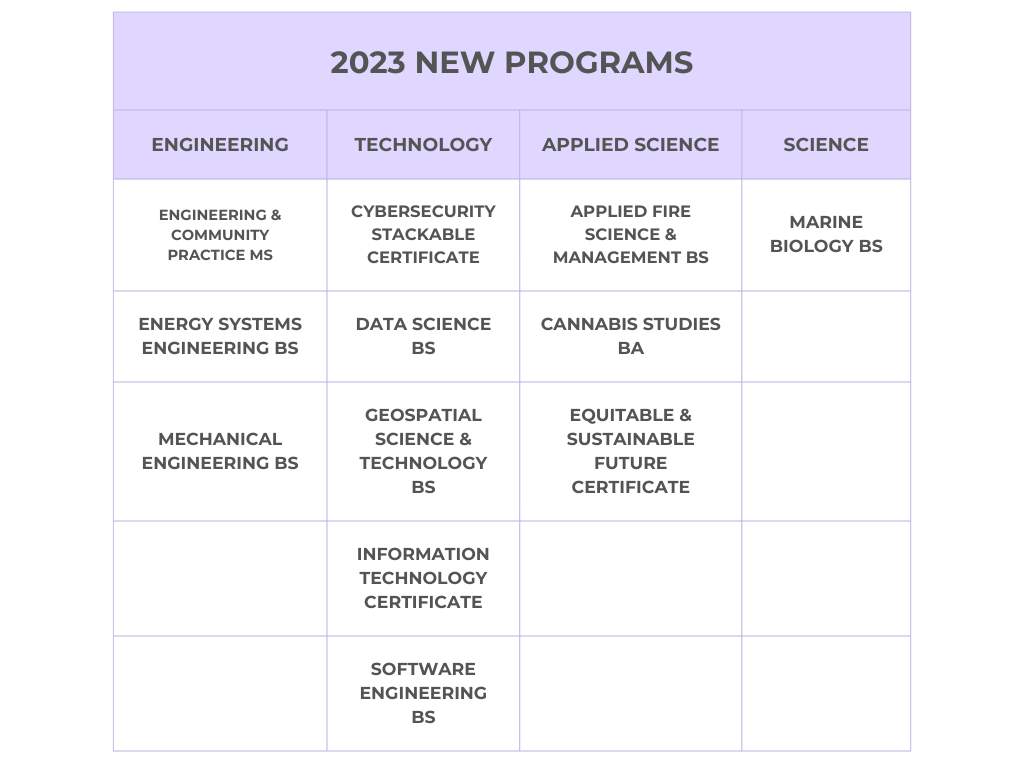
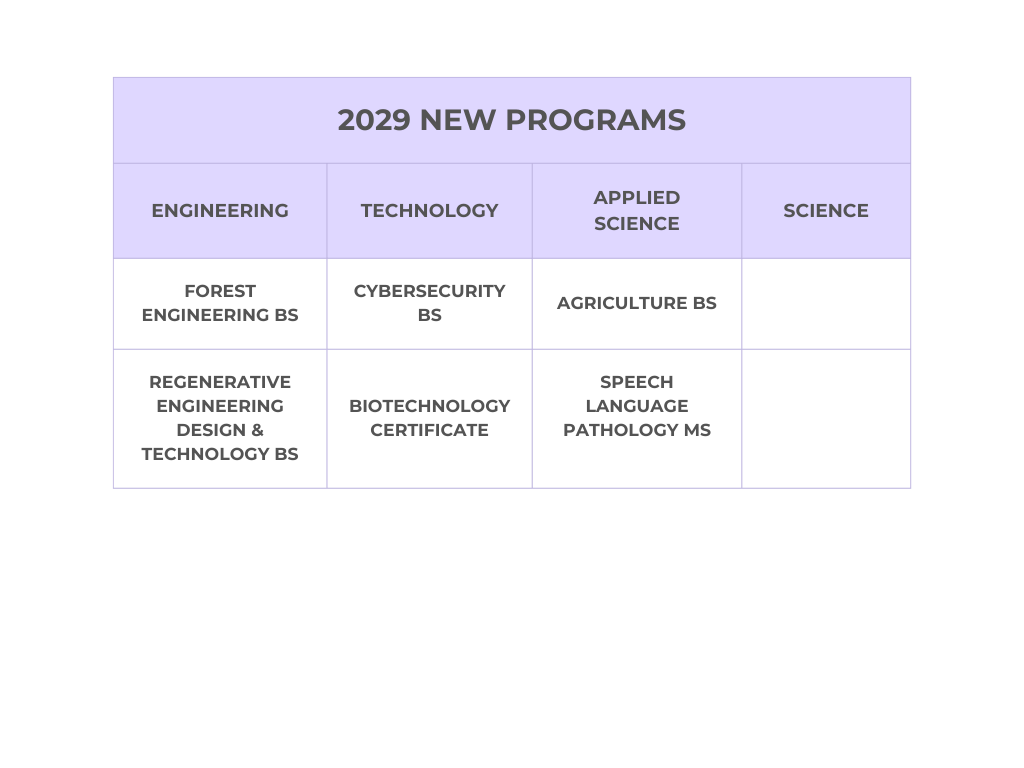
As Cal Poly Humboldt continues to expand, the university is actively adding new programs within various departments and hiring new faculty, being twelve new programs in fall of 2023 and spring 2024 and approximately 39 faculty. Engineering, technology, applied science, and science are the departments that have added new programs.
The College of Natural Resources and Sciences (CNRS) gained seven new programs for the 2023-2024 academic year, especially because engineering falls under that umbrella. According to Eric Riggs, Dean of CNRS, in many ways having all of these programs together is a huge advantage because they are able to cross-pollinate all of these disciplines.
Riggs expressed that the university is focusing on making sure that they implement the Cal State system while also “constantly acknowledging the needs of society, not just sort of doing science for its own sake and then applying it without consequence.”
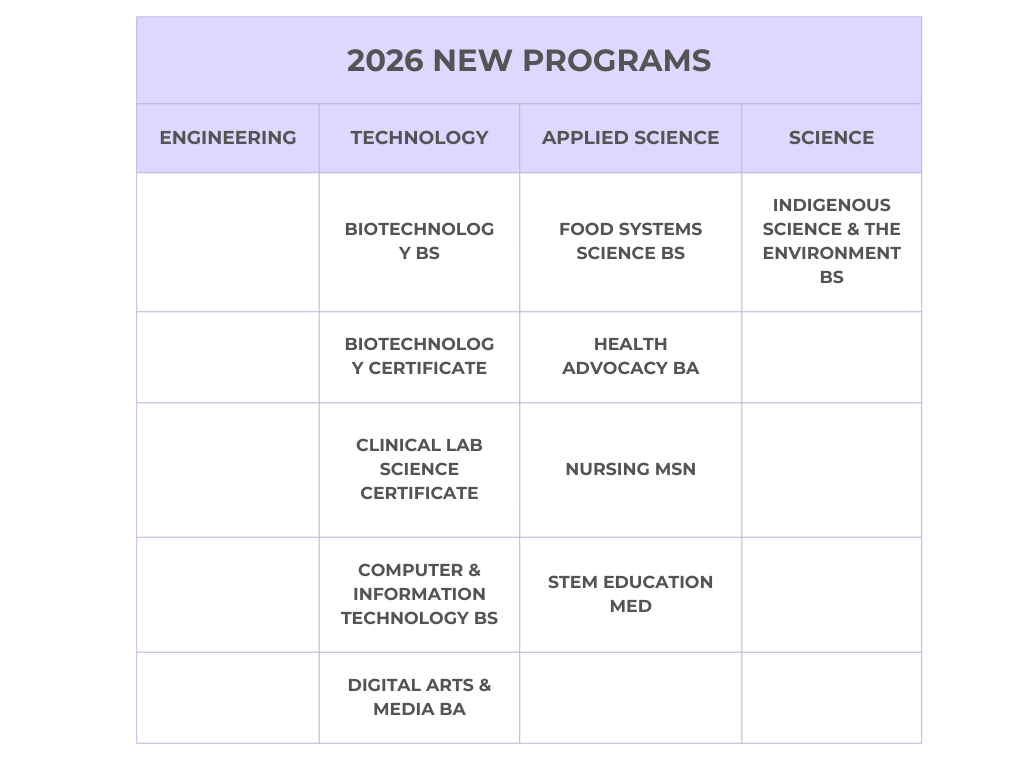
An individualized degree program (IDP) has been added which allows students to either get a general bachelor’s degree from Cal Poly Humboldt or sit down with the IDP director, Rebecca Robertson, and create a degree that is unique to what a student wants.
“There are testimonials already from a number of students who are like, this prevented me from dropping out, or this made me come back to school,” Jenn Capps, Provost of CPH said when speaking about the IDP program.
According to Capps, the decision to develop all the new programs came from listening to students, faculty, and employers, reviewing workforce demand data, looking at which programs campuses have that are in high demand but are also competitive and thinking about what programs are best suited for students who are interested in going to graduate school.
Some of the new faculty were purposefully chosen to work in multiple colleges at the university. “There’s also been some intentionality in the new programs and in the faculty hires to look for connections between the colleges, because I think in our vision of what it means to be a polytechnic is we advance that kind of unified vision,” Riggs said.
While the College of Arts, Humanities, and Social Sciences (CAHS) did not receive as many new programs as CNRS, there have been a number of new hires within the college, and a few cross-disciplinary programs that involve CAHS.
“I would argue that journalism, the arts, for example, and then other fields also are polytechnic in nature in that there applies direct learning that is done with the learning experience, but then the work and the way it engages directly with the community,” Jeffery Crane, Dean of the College of Arts, Humanities, and Social Sciences said.
In 2022, 22 new faculty were brought on to aid in these new programs and others that aren’t polytechnic-related such as arts, humanities, ethnic studies, social sciences, and professional studies. For the academic year 2023-2024, another 17 faculty were hired.
To ensure the hiring of diverse faculty and staff, Cal Poly Humboldt has implemented a number of strategies. Go to http://www.humboldt.edu/about/polytechnic/staff-and-faculty-faqs for a complete list and additional details. For faculty hired for the academic year 2022-2023, over 50 percent of the faculty are BIPOC, according to Capps. Numbers are not yet available for 2023-2024.
Groups such as the BIPOC Faculty Affinity Group have been in place for many years, but recently, a BIPOC Staff Affinity Group has been developed, which according to Capps, had 60 to 80 people attend the first meeting who were seeking out support.
The most recent professional development day for faculty and staff focused on the university’s anti-racism action plan and highlighted combatting unconscious biases. “We had over 250 people come from campus,” Capps said.
Some of the things this extra support has done are ongoing program orientations and connecting faculty with people beyond their respective departments which develops inter-disciplinary collaboration. New hires are also given help with less institution-related topics such as where to find good healthcare providers or good places to eat to further orient them to the community.
“We were researching the acceptance numbers in the spring, and we were quite worried. So, I’m glad that the amount of students who have actually come is more appropriate to the amount of faculty to give them that really thorough experience. It’s a little bit more one-on-one, you know, classroom space, lab space, housing is an issue, I mean, all of it is wrapped together,” Riggs said.
 Ruby Cayenne